San Francisco expands CRV pilot with bottle-bank trucks, partners; early rollout returns nearly $5,000 to residents
March 22, 2022 | San Francisco City, San Francisco County, California
This article was created by AI summarizing key points discussed. AI makes mistakes, so for full details and context, please refer to the video of the full meeting. Please report any errors so we can fix them. Report an error »
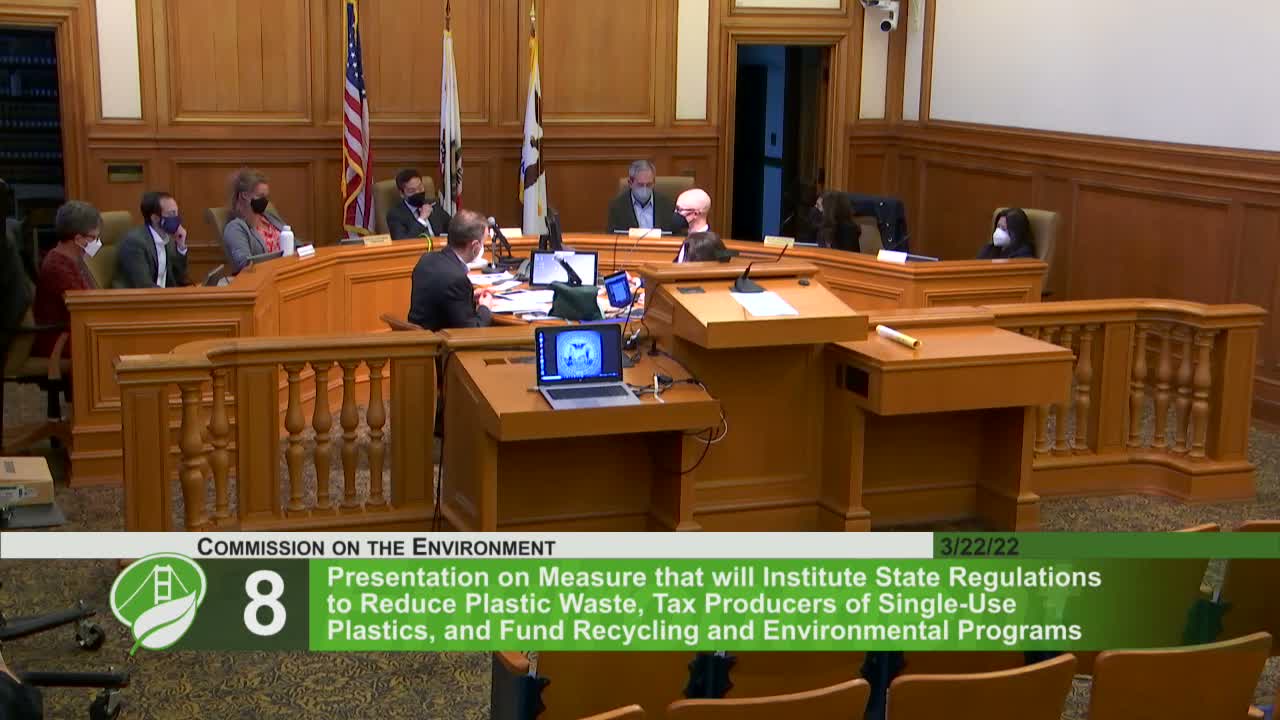
San Francisco's Department of the Environment presented an update March 22 on a pilot program to expand access to California Redemption Value bottle and can redemption across the city.
Kevin Drew, the department's CRV coordinator, said the pilot uses leased bottle-bank trucks operated with the Conservation Corps, barcoded collection bags and an image-based counting system modeled on Oregon's BottleDrop tech. Drew said the program aims to increase equitable access to redemption, create jobs and help recover material streams that have declined since the 1990s.
Drew reported early metrics from the pilot: over 1,000 people have signed up for accounts, about 742 bags have been returned, nearly 90,000 containers have been redeemed and roughly $5,000 has been issued back to participants so far. The pilot currently uses two leased sites with plans to add pop-up locations and outreach through library branches and schools.
On funding, Drew said the pilot spent a $500,000 CalRecycle competitive grant to launch operations, uses a city per-capita allocation from unredeemed CRV funds (about $200,000 per year) and has begun spending $1 million from a state allocation secured by Assemblymember Phil Ting designated for five pilot programs. Drew said the long-term goal is that retailers and producers participate in funding/redemption structures rather than the city running the system indefinitely.
Commissioners asked about language access and neighborhood distribution; Drew said outreach materials and site staff are available in three languages including Cantonese, and that the department aims for roughly three sites per supervisorial district by the end of 2023 if the pilot expands. Commissioners praised the program's design and requested help identifying neighborhood sites, schools and community partners to host pop-ups.
Next steps: expand site footprint with additional leased and pop-up locations, continue outreach in multiple languages, track costs and benefits to inform statewide policy recommendations.
Kevin Drew, the department's CRV coordinator, said the pilot uses leased bottle-bank trucks operated with the Conservation Corps, barcoded collection bags and an image-based counting system modeled on Oregon's BottleDrop tech. Drew said the program aims to increase equitable access to redemption, create jobs and help recover material streams that have declined since the 1990s.
Drew reported early metrics from the pilot: over 1,000 people have signed up for accounts, about 742 bags have been returned, nearly 90,000 containers have been redeemed and roughly $5,000 has been issued back to participants so far. The pilot currently uses two leased sites with plans to add pop-up locations and outreach through library branches and schools.
On funding, Drew said the pilot spent a $500,000 CalRecycle competitive grant to launch operations, uses a city per-capita allocation from unredeemed CRV funds (about $200,000 per year) and has begun spending $1 million from a state allocation secured by Assemblymember Phil Ting designated for five pilot programs. Drew said the long-term goal is that retailers and producers participate in funding/redemption structures rather than the city running the system indefinitely.
Commissioners asked about language access and neighborhood distribution; Drew said outreach materials and site staff are available in three languages including Cantonese, and that the department aims for roughly three sites per supervisorial district by the end of 2023 if the pilot expands. Commissioners praised the program's design and requested help identifying neighborhood sites, schools and community partners to host pop-ups.
Next steps: expand site footprint with additional leased and pop-up locations, continue outreach in multiple languages, track costs and benefits to inform statewide policy recommendations.
View the Full Meeting & All Its Details
This article offers just a summary. Unlock complete video, transcripts, and insights as a Founder Member.
✓
Watch full, unedited meeting videos
✓
Search every word spoken in unlimited transcripts
✓
AI summaries & real-time alerts (all government levels)
✓
Permanent access to expanding government content
30-day money-back guarantee
