San Francisco panel advances rate order after multi-hour hearing on refuse rates, contamination and processing
May 23, 2023 | San Francisco City, San Francisco County, California
This article was created by AI summarizing key points discussed. AI makes mistakes, so for full details and context, please refer to the video of the full meeting. Please report any errors so we can fix them. Report an error »
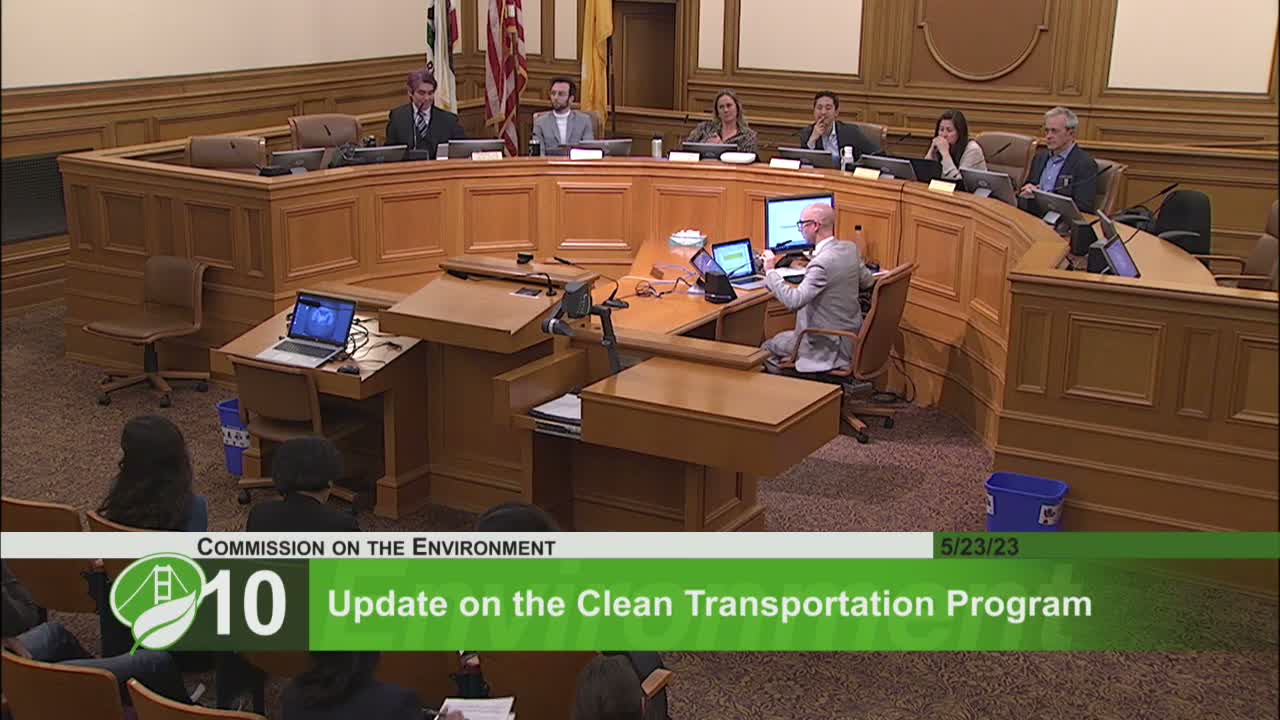
A multi-hour hearing on May 23 brought the San Francisco Commission on the Environment, the controller's office and Recology into detailed review of the city's refuse-rate proposal and related programs.
Jay Liao, refuse rate administrator at the Controller's Office, outlined the Prop F-driven rate-setting process and an extensive interrogatory record that has produced hundreds of questions and responses. He said the office is still finalizing a proposed rate order and emphasized transparency measures including reporting requirements and public interrogatories.
Consultant Dave Hilton of HF&H presented jurisdictional comparisons and reviewed Recology's profit request. "Recology requested 9.89% profit margin," Hilton said, and the analysis found that margin lies within the wide range observed in municipal contracts though it exceeds public-company benchmarks. The consultant flagged the variability of municipal profit allowances and recommended careful scrutiny.
Recology's team said pandemic-era volume declines and fixed operating costs drove the company's financial request. "Because disposal is only a portion of what makes up the rate paid by our customers, the requested rate increase is 3.9%," a Recology presenter stated, describing operational pressures including lower tonnage, labor and disposal costs.
Much of the hearing focused on contamination in the organics and recycling streams. Recology reported that up to 24% of material in the organics stream is non-compostable and proposed an organics pre-processing investment and an interim trommel system. Maurice Quillen, Recology general manager, said demonstration testing removed measurable deleterious material and that an interim trommel could process 10–15 tons per hour in early trials.
The controller's office and departmental staff urged caution on both technology and revenue assumptions. Jay Liao and department staff questioned whether projected contamination-fee revenues (Recology estimated up to $5 million) were adequately proven and recommended pilot verification of any camera-based enforcement and organics-processing technologies before large-scale deployment.
The commission's resolution—moved and passed during the meeting—called for: verification studies of camera systems proposed for onboard contamination monitoring; testing of lower-cost organics pre-processing options (screens or interim systems) before committing to long-term leases; clearer reporting on use of impound and incentive accounts; and either restructuring or temporarily suspending the current 0-waste incentive encumbrance until a more transparent, outcome-linked model is devised.
Commissioners and Recology also discussed weekend neighborhood cleanups, contamination charges, and whether manual sorters would be a viable short-term solution; Recology said manual sorting would be far more expensive than mechanical screening. Several commissioners asked staff to consult the City Attorney about data and privacy implications of onboard cameras. The commission added amendment language asking staff to confirm compliance with applicable privacy laws prior to expanded camera use.
Next steps: the controller's office expects to finalize and post a proposed rate order within weeks for the refuse rate board to decide. The commission asked for follow-up information about pilot results, the nexus of impound-account funding to specific programs, and clearer metrics for diversion and recovery.
Jay Liao, refuse rate administrator at the Controller's Office, outlined the Prop F-driven rate-setting process and an extensive interrogatory record that has produced hundreds of questions and responses. He said the office is still finalizing a proposed rate order and emphasized transparency measures including reporting requirements and public interrogatories.
Consultant Dave Hilton of HF&H presented jurisdictional comparisons and reviewed Recology's profit request. "Recology requested 9.89% profit margin," Hilton said, and the analysis found that margin lies within the wide range observed in municipal contracts though it exceeds public-company benchmarks. The consultant flagged the variability of municipal profit allowances and recommended careful scrutiny.
Recology's team said pandemic-era volume declines and fixed operating costs drove the company's financial request. "Because disposal is only a portion of what makes up the rate paid by our customers, the requested rate increase is 3.9%," a Recology presenter stated, describing operational pressures including lower tonnage, labor and disposal costs.
Much of the hearing focused on contamination in the organics and recycling streams. Recology reported that up to 24% of material in the organics stream is non-compostable and proposed an organics pre-processing investment and an interim trommel system. Maurice Quillen, Recology general manager, said demonstration testing removed measurable deleterious material and that an interim trommel could process 10–15 tons per hour in early trials.
The controller's office and departmental staff urged caution on both technology and revenue assumptions. Jay Liao and department staff questioned whether projected contamination-fee revenues (Recology estimated up to $5 million) were adequately proven and recommended pilot verification of any camera-based enforcement and organics-processing technologies before large-scale deployment.
The commission's resolution—moved and passed during the meeting—called for: verification studies of camera systems proposed for onboard contamination monitoring; testing of lower-cost organics pre-processing options (screens or interim systems) before committing to long-term leases; clearer reporting on use of impound and incentive accounts; and either restructuring or temporarily suspending the current 0-waste incentive encumbrance until a more transparent, outcome-linked model is devised.
Commissioners and Recology also discussed weekend neighborhood cleanups, contamination charges, and whether manual sorters would be a viable short-term solution; Recology said manual sorting would be far more expensive than mechanical screening. Several commissioners asked staff to consult the City Attorney about data and privacy implications of onboard cameras. The commission added amendment language asking staff to confirm compliance with applicable privacy laws prior to expanded camera use.
Next steps: the controller's office expects to finalize and post a proposed rate order within weeks for the refuse rate board to decide. The commission asked for follow-up information about pilot results, the nexus of impound-account funding to specific programs, and clearer metrics for diversion and recovery.
Don't Miss a Word: See the Full Meeting!
Go beyond summaries. Unlock every video, transcript, and key insight with a Founder Membership.
✓
Get instant access to full meeting videos
✓
Search and clip any phrase from complete transcripts
✓
Receive AI-powered summaries & custom alerts
✓
Enjoy lifetime, unrestricted access to government data
30-day money-back guarantee
