City reports 63 kiosks, 204 mail‑back locations and $7.7M in producer‑funded medicine‑disposal services; staff proposes regulatory changes
August 29, 2023 | San Francisco City, San Francisco County, California
This article was created by AI summarizing key points discussed. AI makes mistakes, so for full details and context, please refer to the video of the full meeting. Please report any errors so we can fix them. Report an error »
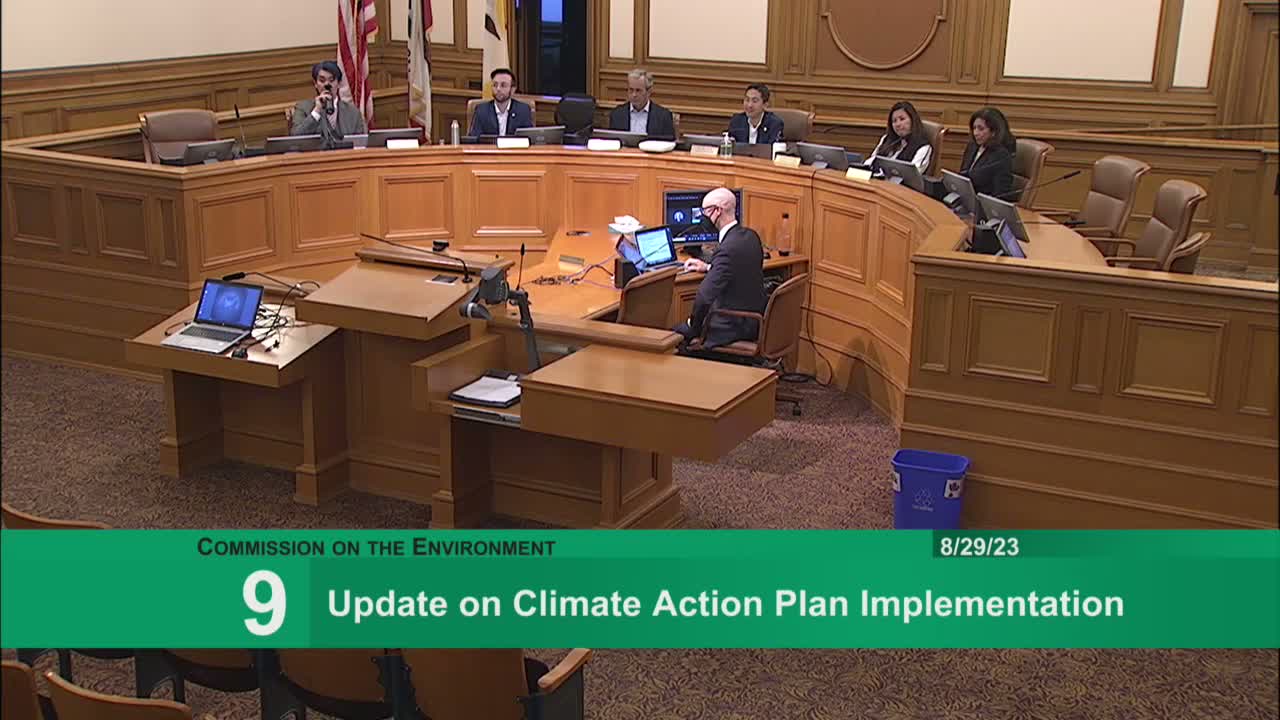
San Francisco staff on Aug. 29 provided a comprehensive update on the Safe Drug Disposal Stewardship Ordinance and proposed regulatory changes to strengthen medicine‑disposal services across the city.
Program manager Paolo (Polly) Haya and analyst Chris Lester said SFE oversees implementation of the 2015 ordinance, which uses an extended‑producer‑responsibility model that requires medicine producers selling in San Francisco to fund and operate a collection program. Since 2017 producers and program operators have spent roughly $7.7–8.0 million providing collection and disposal services at no cost to the city or ratepayers.
Lester described the current system: 63 drop‑off kiosks located at pharmacies, hospitals and law‑enforcement facilities and 204 mail‑back envelope distribution locations at medical or veterinary offices. He noted federal DEA rules limit kiosk placement to pharmacies and law‑enforcement locations, which constrains coverage in neighborhoods with few pharmacies. Staff said residents prefer in‑person drop‑off kiosks over mail‑back envelopes based on usage data.
A significant change occurred when Walgreens joined MedProject in late January 2023, adding 24 locations and improving kiosk coverage — enabling placements in neighborhoods (Bayview, Outer Mission, Outer Sunset) that previously had sparse options. Staff showed maps and operation‑cost charts and said MedProject operates most kiosks while Inmar supplements collection with mail‑back distribution.
Because mail‑back services are less used, staff proposed regulatory updates that would require program operators who fall short of the five‑kiosk per supervisorial‑district convenience standard to host one‑day collection events, formalize coordinated promotion and create a process to integrate additional program operators.
Commissioners asked about language accessibility of kiosk signage and targeted outreach to seniors and limited‑English communities. Staff said outreach materials must be provided in five required languages (English, Spanish, Chinese, Russian and Tagalog) and that operators sometimes rely on visuals; staff indicated willingness to work with operators to improve multi‑lingual signage and local partnerships for one‑day events.
Program manager Paolo (Polly) Haya and analyst Chris Lester said SFE oversees implementation of the 2015 ordinance, which uses an extended‑producer‑responsibility model that requires medicine producers selling in San Francisco to fund and operate a collection program. Since 2017 producers and program operators have spent roughly $7.7–8.0 million providing collection and disposal services at no cost to the city or ratepayers.
Lester described the current system: 63 drop‑off kiosks located at pharmacies, hospitals and law‑enforcement facilities and 204 mail‑back envelope distribution locations at medical or veterinary offices. He noted federal DEA rules limit kiosk placement to pharmacies and law‑enforcement locations, which constrains coverage in neighborhoods with few pharmacies. Staff said residents prefer in‑person drop‑off kiosks over mail‑back envelopes based on usage data.
A significant change occurred when Walgreens joined MedProject in late January 2023, adding 24 locations and improving kiosk coverage — enabling placements in neighborhoods (Bayview, Outer Mission, Outer Sunset) that previously had sparse options. Staff showed maps and operation‑cost charts and said MedProject operates most kiosks while Inmar supplements collection with mail‑back distribution.
Because mail‑back services are less used, staff proposed regulatory updates that would require program operators who fall short of the five‑kiosk per supervisorial‑district convenience standard to host one‑day collection events, formalize coordinated promotion and create a process to integrate additional program operators.
Commissioners asked about language accessibility of kiosk signage and targeted outreach to seniors and limited‑English communities. Staff said outreach materials must be provided in five required languages (English, Spanish, Chinese, Russian and Tagalog) and that operators sometimes rely on visuals; staff indicated willingness to work with operators to improve multi‑lingual signage and local partnerships for one‑day events.
View the Full Meeting & All Its Details
This article offers just a summary. Unlock complete video, transcripts, and insights as a Founder Member.
✓
Watch full, unedited meeting videos
✓
Search every word spoken in unlimited transcripts
✓
AI summaries & real-time alerts (all government levels)
✓
Permanent access to expanding government content
30-day money-back guarantee
