Environment Department lays out FY24–25 priorities as midyear budget cuts loom
December 04, 2023 | San Francisco City, San Francisco County, California
This article was created by AI summarizing key points discussed. AI makes mistakes, so for full details and context, please refer to the video of the full meeting. Please report any errors so we can fix them. Report an error »
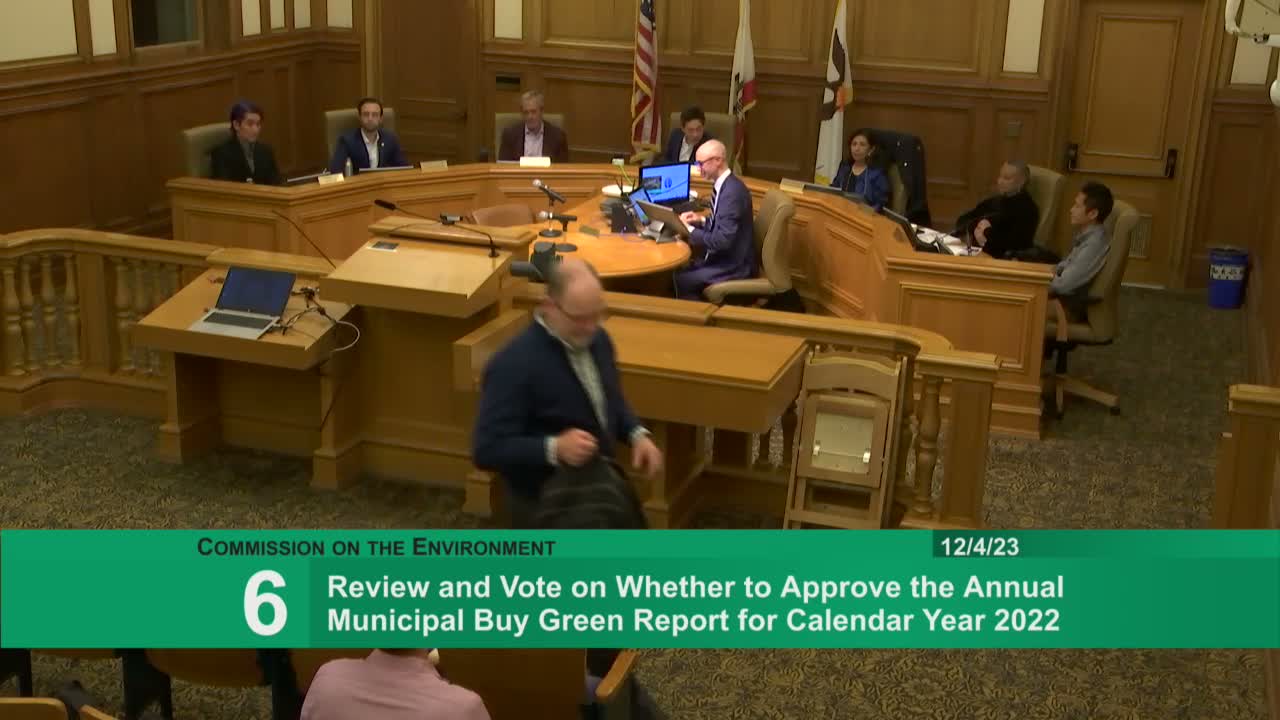
Department leadership and program managers briefed the commission on priorities for fiscal year 2024–25, framed by the mayor
nd mayoral team
nnounced midyear general fund reductions totaling $75 million in the current fiscal year (about $35 million ongoing). Deputy director Leo Chi and program managers described a 1–2 year horizon focused on highest‑priority policies and implementation.
Cindy Comerford (climate program) said the department will begin a 2025 update of San Francisco's Climate Action Plan, advance building decarbonization policies (targeting residential or commercial work through a task force) and pursue financing strategies to overcome cost barriers for decarbonization. "Building decarbonization has shown to be really successful… our biggest obstacle is probably financing," Comerford said.
Clean transportation priorities (presented by Hannah Troon) include expanding publicly accessible charging in disadvantaged communities, a curbside‑charging feasibility study with SFMTA and community engagement in Bayview Hunters Point, and doubling an e‑bike pilot. The department also outlined plans to publish a medium/heavy‑duty electrification plan for municipal and small/medium fleets.
Ryan Ramos (energy program) highlighted BayREN‑funded programs and a $400,000 US Department of Energy buildings upgrade challenge prize awarded to the department to develop an implementation plan to install 200 heat pumps in homes in a disadvantaged community; the prize unlocks an additional $400,000 for a small pilot if implementation materials are submitted.
Paolo O'Heia (toxics reduction) described plans to implement the healthier, cleaner, quieter communities act (the gas‑powered landscaping equipment ban), including creating an incentive program for electric landscaping equipment, expanding lithium‑battery collection options and certifying 150 green businesses with targeted outreach to historically underrepresented communities.
Zero waste priorities include drafting a deconstruction and reuse ordinance, pushing a reusable foodware ordinance (targeting large venues and to‑go systems) and testing technologies to better separate compostables and recyclables from trash to meet 2030 diversion targets.
Policy & Public Affairs noted priorities on grant acquisition and distribution to community partners, press relations and commission support. Program managers said many initiatives rely on state and federal grants; staff emphasized the constrained general‑fund environment and the department's focus on technical and cross‑agency solutions.
Commissioners asked about using artificial intelligence tools across programs, data on heat‑pump installations and outreach/volunteer programs for community engagement; staff said some volunteer models had existed and DOE prize work will analyze implementation barriers.
The commission did not take a formal vote on priorities; staff will incorporate commissioner feedback into the budget process and schedule follow‑up briefings in early 2024.
nd mayoral team
nnounced midyear general fund reductions totaling $75 million in the current fiscal year (about $35 million ongoing). Deputy director Leo Chi and program managers described a 1–2 year horizon focused on highest‑priority policies and implementation.
Cindy Comerford (climate program) said the department will begin a 2025 update of San Francisco's Climate Action Plan, advance building decarbonization policies (targeting residential or commercial work through a task force) and pursue financing strategies to overcome cost barriers for decarbonization. "Building decarbonization has shown to be really successful… our biggest obstacle is probably financing," Comerford said.
Clean transportation priorities (presented by Hannah Troon) include expanding publicly accessible charging in disadvantaged communities, a curbside‑charging feasibility study with SFMTA and community engagement in Bayview Hunters Point, and doubling an e‑bike pilot. The department also outlined plans to publish a medium/heavy‑duty electrification plan for municipal and small/medium fleets.
Ryan Ramos (energy program) highlighted BayREN‑funded programs and a $400,000 US Department of Energy buildings upgrade challenge prize awarded to the department to develop an implementation plan to install 200 heat pumps in homes in a disadvantaged community; the prize unlocks an additional $400,000 for a small pilot if implementation materials are submitted.
Paolo O'Heia (toxics reduction) described plans to implement the healthier, cleaner, quieter communities act (the gas‑powered landscaping equipment ban), including creating an incentive program for electric landscaping equipment, expanding lithium‑battery collection options and certifying 150 green businesses with targeted outreach to historically underrepresented communities.
Zero waste priorities include drafting a deconstruction and reuse ordinance, pushing a reusable foodware ordinance (targeting large venues and to‑go systems) and testing technologies to better separate compostables and recyclables from trash to meet 2030 diversion targets.
Policy & Public Affairs noted priorities on grant acquisition and distribution to community partners, press relations and commission support. Program managers said many initiatives rely on state and federal grants; staff emphasized the constrained general‑fund environment and the department's focus on technical and cross‑agency solutions.
Commissioners asked about using artificial intelligence tools across programs, data on heat‑pump installations and outreach/volunteer programs for community engagement; staff said some volunteer models had existed and DOE prize work will analyze implementation barriers.
The commission did not take a formal vote on priorities; staff will incorporate commissioner feedback into the budget process and schedule follow‑up briefings in early 2024.
View the Full Meeting & All Its Details
This article offers just a summary. Unlock complete video, transcripts, and insights as a Founder Member.
✓
Watch full, unedited meeting videos
✓
Search every word spoken in unlimited transcripts
✓
AI summaries & real-time alerts (all government levels)
✓
Permanent access to expanding government content
30-day money-back guarantee
