Entertainment Commission approves alternating-Sunday entertainment for Micro Black with sound limits
August 01, 2023 | San Francisco City, San Francisco County, California
This article was created by AI summarizing key points discussed. AI makes mistakes, so for full details and context, please refer to the video of the full meeting. Please report any errors so we can fix them. Report an error »
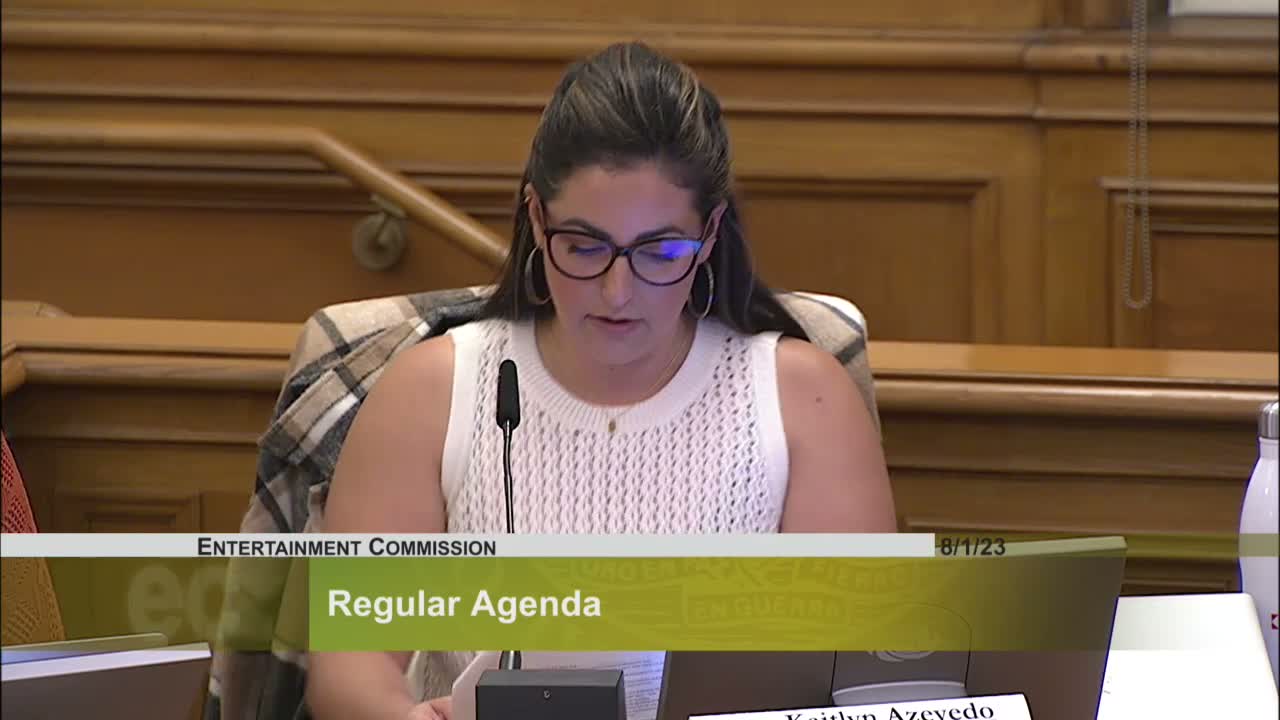
SAN FRANCISCO — The San Francisco Entertainment Commission voted unanimously on Aug. 1 to approve a limited live-performer (LLP) permit for Micro Black, a boutique and community venue at 2323 Market Street, allowing outdoor amplified sound on alternating Sundays between 3 p.m. and 7 p.m., with conditions intended to limit neighborhood impacts.
The vote (5–0) adopted staff recommendation A as amended by Commissioner (mover) to allow entertainment on alternate Sundays and included staff-set internal sound-abatement limits of 78 dBA and 83 dBC, a requirement to notify the commission and interested neighbors at least seven days before events, a cap of 15 additional one-hour entertainment events per calendar year (with live musicians no more than six times), and a staff follow-up check-in to assess impacts.
The permit had been the subject of repeated hearings stretching back to June 20 and July 18 as neighbors and the applicant sought compromise. Deputy Director Azevedo told the commission staff had prepared a timeline of outreach and that most conditions were agreed; the remaining dispute focused on how often Micro Black could host Sunday DJ events.
“Starting with the outbreak of the war in Ukraine … the idea of adding a queer social club to my already existing pop up at a time was born,” owner Jules said in remarks to commissioners, describing the business as a woman- and queer-led space intended to support artists and provide a safe meeting place. Jules asked the commission not to impose a 6 p.m. shutoff that would limit retail viability.
Opponents who live in units above or near Micro Black urged stricter limits or denial. “Micro Black was having permitted after-hours parties lasting well past 2 a.m.,” resident Evan Knopf told commissioners, arguing the applicant’s weekly proposal would amount to roughly 67 events per year versus a neighbors’ proposal of 15 events per year and asking for a six-month trial if approved.
Commissioners repeatedly framed the decision as a balance between protecting long-term residents’ right to quiet enjoyment and supporting a rare women- and queer-owned small business in the Castro. Commissioner Thomas said splitting the difference by limiting the frequency was a reasonable compromise to try and rebuild trust between the parties.
Staff noted the permit places the business under the Entertainment Commission’s regulatory purview, enabling the commission to recondition or enforce permit conditions if violations occur. The commission instructed staff to place a follow-up check-in on its calendar and encouraged continued direct neighbor–business communication and use of mediation resources offered by the Castro Cultural District and local merchant groups.
The motion to adopt staff recommendation A as amended passed on a roll-call vote with all five commissioners present voting aye. The commission also asked staff to monitor compliance and return if community conditions warrant further action.
What’s next: Staff will schedule a check-in to assess whether the alternate-Sunday arrangement works for neighbors and the business; enforcement or reconditioning remains possible if permit conditions are violated.
The vote (5–0) adopted staff recommendation A as amended by Commissioner (mover) to allow entertainment on alternate Sundays and included staff-set internal sound-abatement limits of 78 dBA and 83 dBC, a requirement to notify the commission and interested neighbors at least seven days before events, a cap of 15 additional one-hour entertainment events per calendar year (with live musicians no more than six times), and a staff follow-up check-in to assess impacts.
The permit had been the subject of repeated hearings stretching back to June 20 and July 18 as neighbors and the applicant sought compromise. Deputy Director Azevedo told the commission staff had prepared a timeline of outreach and that most conditions were agreed; the remaining dispute focused on how often Micro Black could host Sunday DJ events.
“Starting with the outbreak of the war in Ukraine … the idea of adding a queer social club to my already existing pop up at a time was born,” owner Jules said in remarks to commissioners, describing the business as a woman- and queer-led space intended to support artists and provide a safe meeting place. Jules asked the commission not to impose a 6 p.m. shutoff that would limit retail viability.
Opponents who live in units above or near Micro Black urged stricter limits or denial. “Micro Black was having permitted after-hours parties lasting well past 2 a.m.,” resident Evan Knopf told commissioners, arguing the applicant’s weekly proposal would amount to roughly 67 events per year versus a neighbors’ proposal of 15 events per year and asking for a six-month trial if approved.
Commissioners repeatedly framed the decision as a balance between protecting long-term residents’ right to quiet enjoyment and supporting a rare women- and queer-owned small business in the Castro. Commissioner Thomas said splitting the difference by limiting the frequency was a reasonable compromise to try and rebuild trust between the parties.
Staff noted the permit places the business under the Entertainment Commission’s regulatory purview, enabling the commission to recondition or enforce permit conditions if violations occur. The commission instructed staff to place a follow-up check-in on its calendar and encouraged continued direct neighbor–business communication and use of mediation resources offered by the Castro Cultural District and local merchant groups.
The motion to adopt staff recommendation A as amended passed on a roll-call vote with all five commissioners present voting aye. The commission also asked staff to monitor compliance and return if community conditions warrant further action.
What’s next: Staff will schedule a check-in to assess whether the alternate-Sunday arrangement works for neighbors and the business; enforcement or reconditioning remains possible if permit conditions are violated.
Don't Miss a Word: See the Full Meeting!
Go beyond summaries. Unlock every video, transcript, and key insight with a Founder Membership.
✓
Get instant access to full meeting videos
✓
Search and clip any phrase from complete transcripts
✓
Receive AI-powered summaries & custom alerts
✓
Enjoy lifetime, unrestricted access to government data
30-day money-back guarantee
