Entertainment commission approves consent agenda and multiple venue and public‑space permits
February 06, 2024 | San Francisco City, San Francisco County, California
This article was created by AI summarizing key points discussed. AI makes mistakes, so for full details and context, please refer to the video of the full meeting. Please report any errors so we can fix them. Report an error »
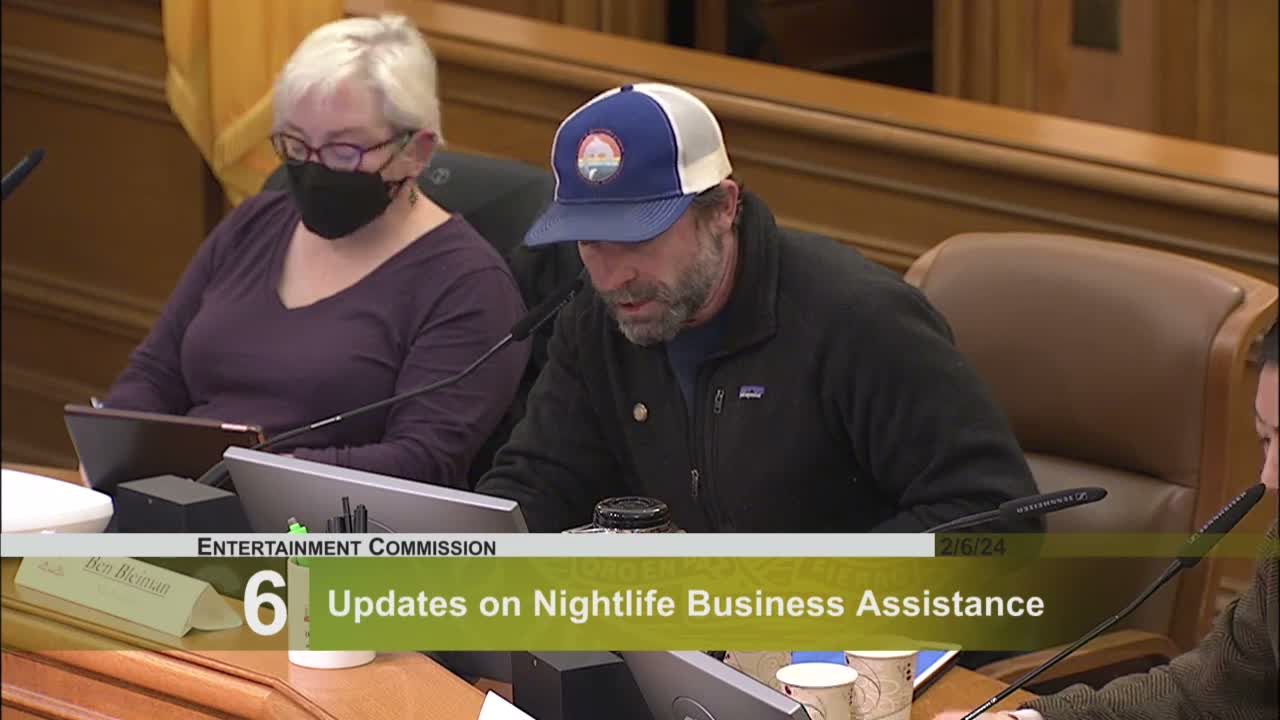
At its Feb. 6 meeting the San Francisco Entertainment Commission approved a multi-item consent agenda and granted a series of regular permits and amendments intended to expand daytime programming and small‑venue performance across the city.
Deputy Director Azevedo introduced a six‑item consent agenda, which commissioners approved in a single unanimous vote. On the regular agenda the commission approved:
- A Limited Live Performance permit for Roca Acor (801 Montgomery Street) including outdoor amplified sound in a parklet and indoor entertainment; manager Miho Kawaguchi described small background speakers and occasional small musical acts. (approved unanimously)
- An amendment to allow daily lunchtime programming at Fulton Plaza (Civic Center CBD) between Feb. 8 and Aug. 30, with staff‑recommended conditions and Good Neighbor Policy requirements; Marlo Sandler said programming would be light, managed by on‑site technicians and ambassadors. (approved unanimously)
- An amendment for Landing at Leidesdorff (Downtown SF Partnership) to allow more flexible daily activations between Feb. 8 and July 20, with limits on amplified performance types; Denise Barnhart said requests were for flexibility rather than daily programming seven days a week. (approved unanimously)
- A Mid Market Foundation program called 'Buskit' to hire local musicians for sidewalk performances along Market Street March–December, with staff recommending Good Neighbor Policy compliance; Rob Reddy said the program aims to put about $150,000 into local musicians’ pockets. (approved unanimously)
- A Limited Live Performance permit for Wave Collective (663 Haight St.), an artist‑run gallery and community event space seeking limited outdoor patio activations; owner Jamila discussed outreach and sound limits. (approved unanimously)
- A POE permit for Zoe (579 Howard St.) to host indoor live music, DJs, comedy and karaoke; owners said indoor activities would be limited and staff had set internal sound limits. (approved unanimously)
Commissioners and staff repeatedly emphasized application of the Good Neighbor Policy and the need for outreach and sound limits. Several items included staff‑set internal or external decibel limits and conditions requiring organizers to provide contact information for neighbors.
Deputy Director Azevedo introduced a six‑item consent agenda, which commissioners approved in a single unanimous vote. On the regular agenda the commission approved:
- A Limited Live Performance permit for Roca Acor (801 Montgomery Street) including outdoor amplified sound in a parklet and indoor entertainment; manager Miho Kawaguchi described small background speakers and occasional small musical acts. (approved unanimously)
- An amendment to allow daily lunchtime programming at Fulton Plaza (Civic Center CBD) between Feb. 8 and Aug. 30, with staff‑recommended conditions and Good Neighbor Policy requirements; Marlo Sandler said programming would be light, managed by on‑site technicians and ambassadors. (approved unanimously)
- An amendment for Landing at Leidesdorff (Downtown SF Partnership) to allow more flexible daily activations between Feb. 8 and July 20, with limits on amplified performance types; Denise Barnhart said requests were for flexibility rather than daily programming seven days a week. (approved unanimously)
- A Mid Market Foundation program called 'Buskit' to hire local musicians for sidewalk performances along Market Street March–December, with staff recommending Good Neighbor Policy compliance; Rob Reddy said the program aims to put about $150,000 into local musicians’ pockets. (approved unanimously)
- A Limited Live Performance permit for Wave Collective (663 Haight St.), an artist‑run gallery and community event space seeking limited outdoor patio activations; owner Jamila discussed outreach and sound limits. (approved unanimously)
- A POE permit for Zoe (579 Howard St.) to host indoor live music, DJs, comedy and karaoke; owners said indoor activities would be limited and staff had set internal sound limits. (approved unanimously)
Commissioners and staff repeatedly emphasized application of the Good Neighbor Policy and the need for outreach and sound limits. Several items included staff‑set internal or external decibel limits and conditions requiring organizers to provide contact information for neighbors.
Don't Miss a Word: See the Full Meeting!
Go beyond summaries. Unlock every video, transcript, and key insight with a Founder Membership.
✓
Get instant access to full meeting videos
✓
Search and clip any phrase from complete transcripts
✓
Receive AI-powered summaries & custom alerts
✓
Enjoy lifetime, unrestricted access to government data
30-day money-back guarantee
