City staff outlines bills, entertainment‑zone plan and new downtown nightlife grants
May 21, 2024 | San Francisco City, San Francisco County, California
This article was created by AI summarizing key points discussed. AI makes mistakes, so for full details and context, please refer to the video of the full meeting. Please report any errors so we can fix them. Report an error »
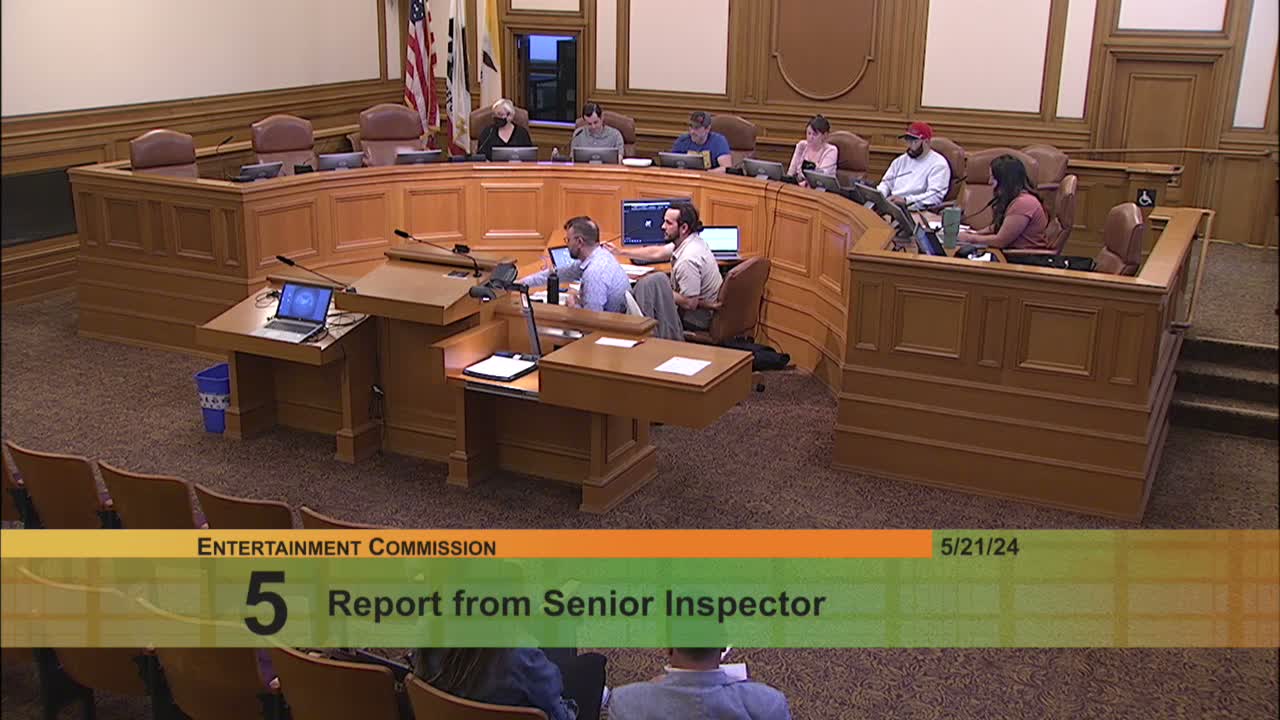
City nightlife and business assistance staff presented a broad update on state and local actions affecting nightlife and entertainment on May 21, telling the Entertainment Commission they are tracking several state bills and local implementation proposals and have launched a downtown grant program for nightlife revitalization.
Ben Van Houten summarized three state measures the office is following (identified in staff remarks as SB 969 on the Senate consent calendar, Assemblymember Haney’s cannabis‑cafes bill, and Assemblymember Ting’s neighborhood liquor program expansion) and highlighted AB 2,375 and other draft proposals tied to drink‑testing kits and availability of drink lids. Van Houten said the Mayor has introduced implementing legislation to create an ‘‘entertainment zone’’ framework under SB 76 (a state law enabling San Francisco to designate such zones) and that the administration plans to designate one initial zone on Front Street between Sacramento and California streets.
On city policy, Van Houten described two implementation proposals: an outdoor event fee waiver for certain street‑closure community events and an annual food‑vendor permit to reduce repetitive inspection and fee burdens for frequent vendors. He reviewed elements of the recently released business tax‑reform recommendations, which would expand the small‑business exemption up to $5 million in gross receipts and reduce taxes on restaurants, bars and arts and entertainment businesses.
Van Houten also announced the Downtown Entertainment and Nightlife Revitalization Grants (Downtown Energy Grant Program), intended to help existing nightlife and arts businesses collaborate on programming and activation; staff said priority consideration will be given to applications submitted by June 15 and pointed stakeholders to the SF New Deal website for details. He closed with an update on the SF Live concert series, a free program of locally curated performances running through November.
Commissioners asked clarifying questions about where entertainment zones might be proposed and how potential legislation would be implemented; Van Houten said the first zone is the only one that is fully proposed and emphasized extensive stakeholder coordination would be required for additional zones.
Next steps: Staff will continue stakeholder outreach on drink‑spiking policy, food‑vendor permitting and the entertainment‑zone implementation framework and will provide application details for the downtown grant program.
Ben Van Houten summarized three state measures the office is following (identified in staff remarks as SB 969 on the Senate consent calendar, Assemblymember Haney’s cannabis‑cafes bill, and Assemblymember Ting’s neighborhood liquor program expansion) and highlighted AB 2,375 and other draft proposals tied to drink‑testing kits and availability of drink lids. Van Houten said the Mayor has introduced implementing legislation to create an ‘‘entertainment zone’’ framework under SB 76 (a state law enabling San Francisco to designate such zones) and that the administration plans to designate one initial zone on Front Street between Sacramento and California streets.
On city policy, Van Houten described two implementation proposals: an outdoor event fee waiver for certain street‑closure community events and an annual food‑vendor permit to reduce repetitive inspection and fee burdens for frequent vendors. He reviewed elements of the recently released business tax‑reform recommendations, which would expand the small‑business exemption up to $5 million in gross receipts and reduce taxes on restaurants, bars and arts and entertainment businesses.
Van Houten also announced the Downtown Entertainment and Nightlife Revitalization Grants (Downtown Energy Grant Program), intended to help existing nightlife and arts businesses collaborate on programming and activation; staff said priority consideration will be given to applications submitted by June 15 and pointed stakeholders to the SF New Deal website for details. He closed with an update on the SF Live concert series, a free program of locally curated performances running through November.
Commissioners asked clarifying questions about where entertainment zones might be proposed and how potential legislation would be implemented; Van Houten said the first zone is the only one that is fully proposed and emphasized extensive stakeholder coordination would be required for additional zones.
Next steps: Staff will continue stakeholder outreach on drink‑spiking policy, food‑vendor permitting and the entertainment‑zone implementation framework and will provide application details for the downtown grant program.
View the Full Meeting & All Its Details
This article offers just a summary. Unlock complete video, transcripts, and insights as a Founder Member.
✓
Watch full, unedited meeting videos
✓
Search every word spoken in unlimited transcripts
✓
AI summaries & real-time alerts (all government levels)
✓
Permanent access to expanding government content
30-day money-back guarantee
