City outlines trans and gender‑nonconforming homelessness initiative; staff stress safety and nonprofit capacity building
July 06, 2023 | San Francisco City, San Francisco County, California
This article was created by AI summarizing key points discussed. AI makes mistakes, so for full details and context, please refer to the video of the full meeting. Please report any errors so we can fix them. Report an error »
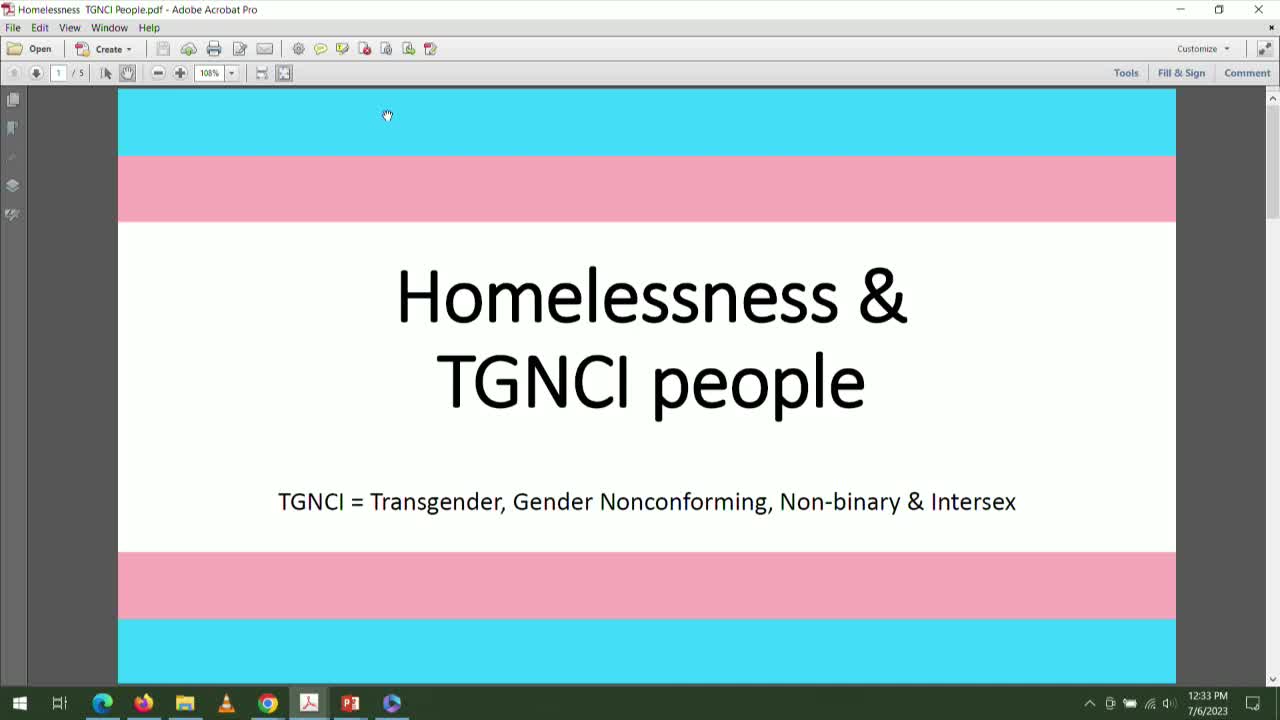
HSH staff with the Office of Trans Initiatives and the Department of Public Health briefed the commission on an initiative to end homelessness for transgender and gender‑nonconforming (TGNC) people. Cynthia Najendra, HSH deputy director for planning, performance and strategy, said the population is particularly vulnerable to violence and unsheltered homelessness and that the initiative centers safety, culturally responsive services, and capacity building for providers.
Najendra said HSH has used landscape analyses, partner surveys and community interviews to shape the initiative. Staff identified several operational priorities: flexible rental subsidies and dedicated permanent housing placements; nonprofit capacity building and technical assistance to scale organizations that will implement housing and support services; cross‑training and inclusion at shelter access points so more spaces feel welcoming; and rapid housing problem‑solving to prevent shelter stays from becoming long‑term entrenchments.
Chief Equity Officer Anthony Bush and others emphasized care in public discussion so as not to expose people to risk and said more targeted outreach is needed to identify the population reliably because some people decline to identify in administrative systems. Najendra and Bush said some program detail is being operationalized now and that deeper community co‑design sessions and a work group will publish more specifics this summer.
Community commenters and commissioners repeatedly urged that any funded providers have meaningful TGNC leadership, that training and mental‑health consultation accompany housing placements, and that the city plan for rapid capacity building rather than expecting existing small organizations to absorb large contracts immediately. The department noted it is seeking technical assistance and has seeded some subsidy providers and capacity funds, but staff said the work will require continued co‑design with community partners and additional follow‑through at subsequent meetings.
Next steps: HSH will continue to operationalize subsidies and capacity work and will bring more detailed program designs and safety protocols to the commission in a future meeting.
Najendra said HSH has used landscape analyses, partner surveys and community interviews to shape the initiative. Staff identified several operational priorities: flexible rental subsidies and dedicated permanent housing placements; nonprofit capacity building and technical assistance to scale organizations that will implement housing and support services; cross‑training and inclusion at shelter access points so more spaces feel welcoming; and rapid housing problem‑solving to prevent shelter stays from becoming long‑term entrenchments.
Chief Equity Officer Anthony Bush and others emphasized care in public discussion so as not to expose people to risk and said more targeted outreach is needed to identify the population reliably because some people decline to identify in administrative systems. Najendra and Bush said some program detail is being operationalized now and that deeper community co‑design sessions and a work group will publish more specifics this summer.
Community commenters and commissioners repeatedly urged that any funded providers have meaningful TGNC leadership, that training and mental‑health consultation accompany housing placements, and that the city plan for rapid capacity building rather than expecting existing small organizations to absorb large contracts immediately. The department noted it is seeking technical assistance and has seeded some subsidy providers and capacity funds, but staff said the work will require continued co‑design with community partners and additional follow‑through at subsequent meetings.
Next steps: HSH will continue to operationalize subsidies and capacity work and will bring more detailed program designs and safety protocols to the commission in a future meeting.
Don't Miss a Word: See the Full Meeting!
Go beyond summaries. Unlock every video, transcript, and key insight with a Founder Membership.
✓
Get instant access to full meeting videos
✓
Search and clip any phrase from complete transcripts
✓
Receive AI-powered summaries & custom alerts
✓
Enjoy lifetime, unrestricted access to government data
30-day money-back guarantee
