SFHA finance report: HUD true-up expected; 906 EHV vouchers in use and deferred revenue noted
April 01, 2024 | San Francisco City, San Francisco County, California
This article was created by AI summarizing key points discussed. AI makes mistakes, so for full details and context, please refer to the video of the full meeting. Please report any errors so we can fix them. Report an error »
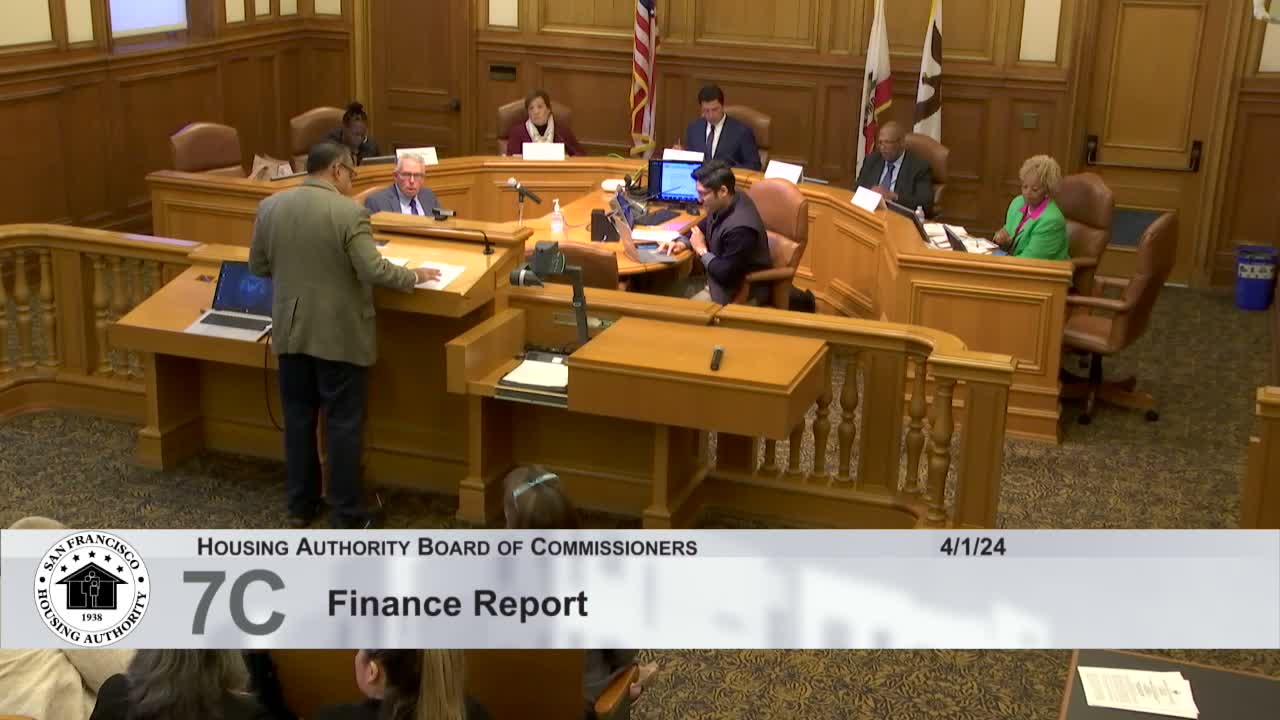
Roy Lobo, senior budget analyst, briefed the commission on April 1 about fiscal performance through Feb. 29, 2024 and voucher metrics.
Lobo said housing choice voucher subsidy revenue started the fiscal year below budget — creating a large timing gap that was about $300 million and had closed to roughly $80 million by the time of the report; staff expect HUD to true up funding before year-end. He also described approximately $1,400,000 in deferred revenue for Emergency Housing Vouchers (EHV) that cannot be recognized until expenses are invoiced and recorded.
On EHVs, Lobo reported the authority is administering 906 vouchers and that utilization and issuance-to-lease metrics compare favorably with state and national averages, but the issuance-to-lease time remains about 76 days.
Commissioners urged additional metrics, such as breakdowns of time-to-lease by voucher type and site, and asked for a midyear forecast in May that would incorporate expected near-term costs (including a planned IT infrastructure overhaul). The finance team said an investment fund account with US Bank is being finalized and the authority will provide details on restrictions and totals next month.
Next steps: staff will provide a six-month update at the May meeting with anticipated remaining-year costs, additional EHV breakdowns, and further detail on the planned IT upgrade and the status of the investment fund account.
Lobo said housing choice voucher subsidy revenue started the fiscal year below budget — creating a large timing gap that was about $300 million and had closed to roughly $80 million by the time of the report; staff expect HUD to true up funding before year-end. He also described approximately $1,400,000 in deferred revenue for Emergency Housing Vouchers (EHV) that cannot be recognized until expenses are invoiced and recorded.
On EHVs, Lobo reported the authority is administering 906 vouchers and that utilization and issuance-to-lease metrics compare favorably with state and national averages, but the issuance-to-lease time remains about 76 days.
Commissioners urged additional metrics, such as breakdowns of time-to-lease by voucher type and site, and asked for a midyear forecast in May that would incorporate expected near-term costs (including a planned IT infrastructure overhaul). The finance team said an investment fund account with US Bank is being finalized and the authority will provide details on restrictions and totals next month.
Next steps: staff will provide a six-month update at the May meeting with anticipated remaining-year costs, additional EHV breakdowns, and further detail on the planned IT upgrade and the status of the investment fund account.
Don't Miss a Word: See the Full Meeting!
Go beyond summaries. Unlock every video, transcript, and key insight with a Founder Membership.
✓
Get instant access to full meeting videos
✓
Search and clip any phrase from complete transcripts
✓
Receive AI-powered summaries & custom alerts
✓
Enjoy lifetime, unrestricted access to government data
30-day money-back guarantee
