LAFCO forwards Clean Power SF IRP review and consultant analysis to Board of Supervisors; Clean Power outlines outreach and modeling schedule
July 15, 2022 | San Francisco City, San Francisco County, California
This article was created by AI summarizing key points discussed. AI makes mistakes, so for full details and context, please refer to the video of the full meeting. Please report any errors so we can fix them. Report an error »
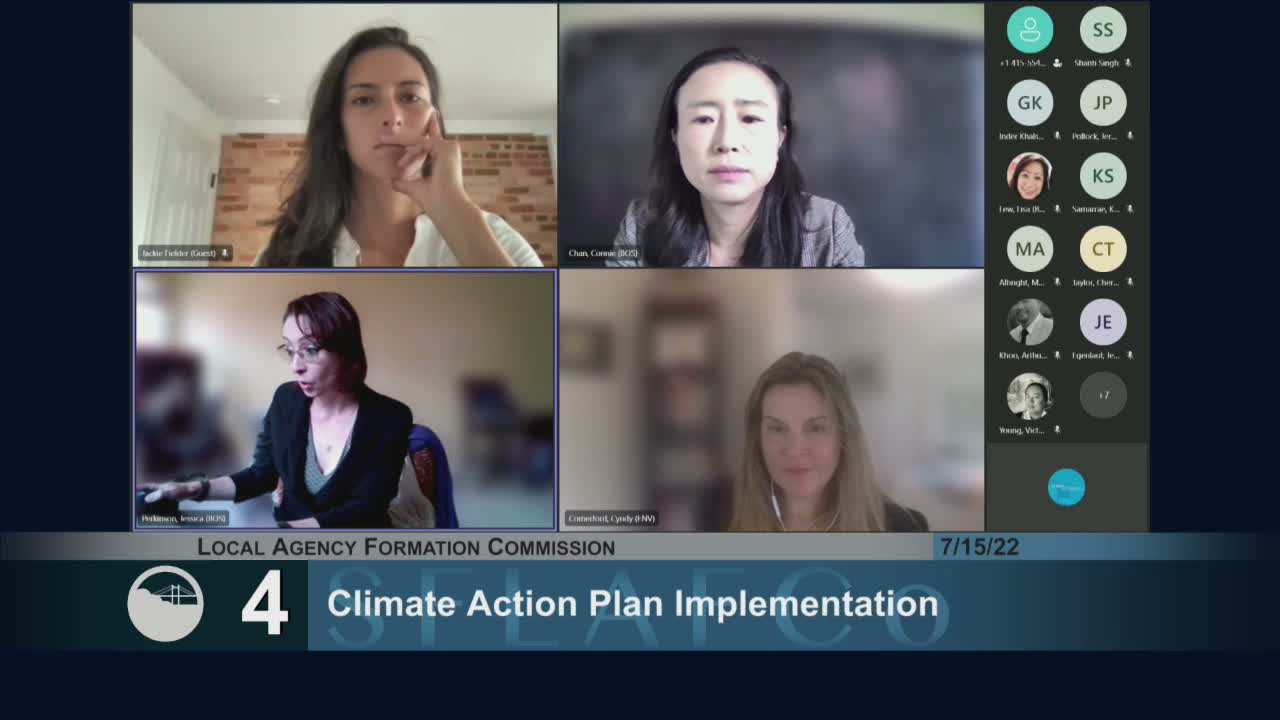
The Local Agency Formation Commission unanimously moved on materials related to Clean Power SF’s Integrated Resource Plan and asked staff to forward LAFCO’s analysis and the consultant (VanAr/Banner) memo to the Board of Supervisors as attachments to administrative‑code File 220652.
Chair Connie Chan moved the submission and Commissioner Jackie Fielder seconded; the roll call recorded three ayes (Fielder, Singh, Chan) and the motion passed. Jeremy Pollock, LAFCO’s executive officer, reviewed the 2020 IRP cycle and recommended subject‑matter expert support for the current review, noting that the 2020 process suffered a compressed public comment window because of CPUC scheduling.
Cheryl Taylor, Clean Power SF operations manager at the San Francisco Public Utilities Commission, presented the 2022 IRP process and timeline. She said the IRP is due to the California Public Utilities Commission on Nov. 1 and described two portfolio types: conforming portfolios that use CPUC inputs and alternate portfolios that incorporate local electrification assumptions (EV adoption, building electrification). Taylor said staff plan to model several portfolios (conforming and alternate) and to add an additional alternative portfolio informed by stakeholder feedback. “The plan is due by November 1,” she said.
Peter Gulotta (communications manager) summarized outreach to community organizations and online engagement: Clean Power SF ran an online survey and two virtual workshops; staff reported 67 survey responses and about 24 workshop participants representing community‑based groups. Survey themes showed majority support for a 100% renewable supply target and strong concern for affordability, reliability and equitable access. Clean Power SF plans a four‑week public comment period on the draft IRP in September, followed by an expected SFPUC commission recommendation in October and final CPUC filing by Nov. 1.
Commissioners focused questions on portfolio selection, local resource readiness and system reliability (public‑safety power shutdown planning and battery use cases). Commissioners asked Clean Power SF to continue quarterly updates to LAFCO and to ensure sufficient public review time; LAFCO attached its review and the VanAr/Banner analysis to the pending administrative‑code amendment file to give supervisors additional material when they consider the changes to contracting authority for the SFPUC general manager.
Public commenters suggested additional local projects (for example, a solar option at Sunset Reservoir South Basin), lifecycle issues for battery disposal and stronger demand‑management measures such as time‑of‑use pricing to shift EV loads. LAFCO’s action means the Board of Supervisors will receive LAFCO’s technical review as part of the legislative record for the administrative code amendment under File 220652.
Chair Connie Chan moved the submission and Commissioner Jackie Fielder seconded; the roll call recorded three ayes (Fielder, Singh, Chan) and the motion passed. Jeremy Pollock, LAFCO’s executive officer, reviewed the 2020 IRP cycle and recommended subject‑matter expert support for the current review, noting that the 2020 process suffered a compressed public comment window because of CPUC scheduling.
Cheryl Taylor, Clean Power SF operations manager at the San Francisco Public Utilities Commission, presented the 2022 IRP process and timeline. She said the IRP is due to the California Public Utilities Commission on Nov. 1 and described two portfolio types: conforming portfolios that use CPUC inputs and alternate portfolios that incorporate local electrification assumptions (EV adoption, building electrification). Taylor said staff plan to model several portfolios (conforming and alternate) and to add an additional alternative portfolio informed by stakeholder feedback. “The plan is due by November 1,” she said.
Peter Gulotta (communications manager) summarized outreach to community organizations and online engagement: Clean Power SF ran an online survey and two virtual workshops; staff reported 67 survey responses and about 24 workshop participants representing community‑based groups. Survey themes showed majority support for a 100% renewable supply target and strong concern for affordability, reliability and equitable access. Clean Power SF plans a four‑week public comment period on the draft IRP in September, followed by an expected SFPUC commission recommendation in October and final CPUC filing by Nov. 1.
Commissioners focused questions on portfolio selection, local resource readiness and system reliability (public‑safety power shutdown planning and battery use cases). Commissioners asked Clean Power SF to continue quarterly updates to LAFCO and to ensure sufficient public review time; LAFCO attached its review and the VanAr/Banner analysis to the pending administrative‑code amendment file to give supervisors additional material when they consider the changes to contracting authority for the SFPUC general manager.
Public commenters suggested additional local projects (for example, a solar option at Sunset Reservoir South Basin), lifecycle issues for battery disposal and stronger demand‑management measures such as time‑of‑use pricing to shift EV loads. LAFCO’s action means the Board of Supervisors will receive LAFCO’s technical review as part of the legislative record for the administrative code amendment under File 220652.
View the Full Meeting & All Its Details
This article offers just a summary. Unlock complete video, transcripts, and insights as a Founder Member.
✓
Watch full, unedited meeting videos
✓
Search every word spoken in unlimited transcripts
✓
AI summaries & real-time alerts (all government levels)
✓
Permanent access to expanding government content
30-day money-back guarantee
