Clean Power SF reports enrollment gains, outlines storage and EV programs
May 20, 2022 | San Francisco City, San Francisco County, California
This article was created by AI summarizing key points discussed. AI makes mistakes, so for full details and context, please refer to the video of the full meeting. Please report any errors so we can fix them. Report an error »
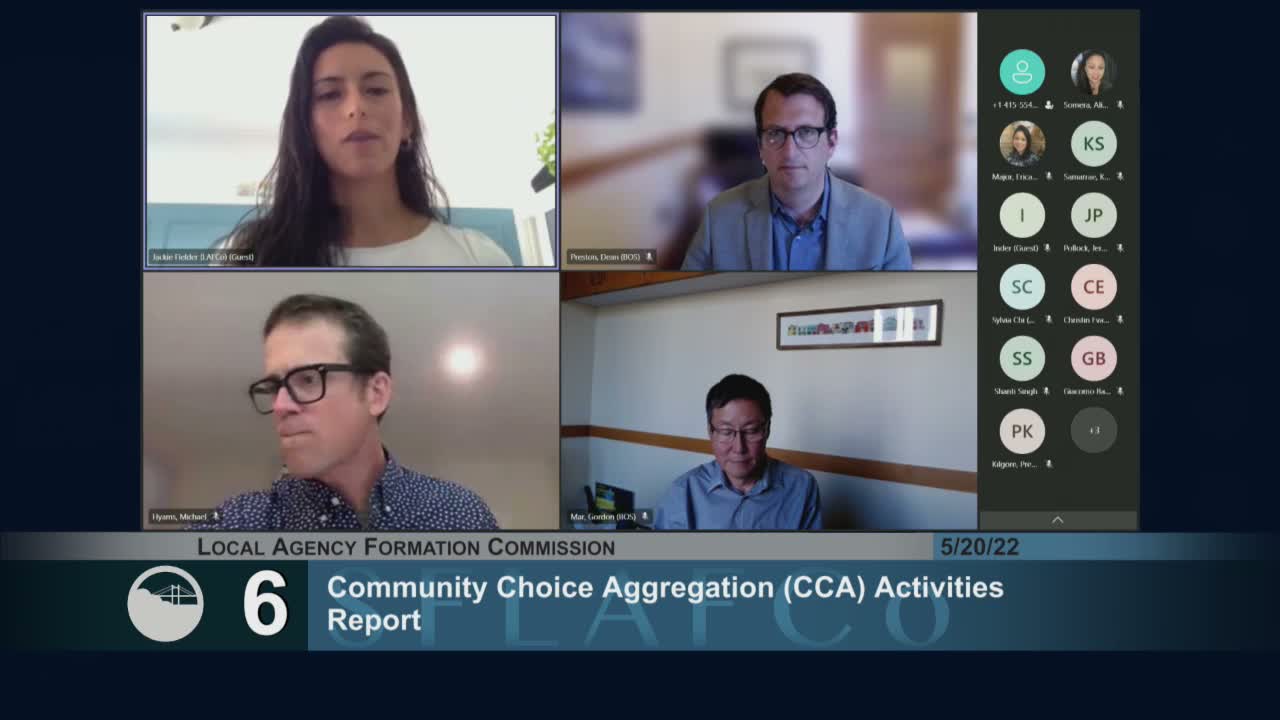
Mike Himes, director for Clean Power SF at the San Francisco Public Utilities Commission, briefed the commission on customer enrollments, new programs and procurement work.
Himes said Clean Power SF’s opt‑out rate has inched slightly upward to about 4.3%. The program’s SuperGreen 100% renewable product now serves more than 8,000 customer accounts and, while those accounts represent about 2.1% of enrollments, SuperGreen contributes more than 6% of Clean Power SF’s annual sales.
Himes highlighted new and forthcoming customer programs: EV Charge SF, designed to provide incentives and technical assistance to make new residential and commercial buildings EV‑ready and compliant with San Francisco’s EV readiness ordinance, is targeted to launch later this year or in early 2023. Beginning June 1, customers eligible for CARE or FERA discounts who live in state‑defined disadvantaged communities can enroll in a SuperGreen Saver program that provides 100% renewable energy plus a 20% bill discount.
On procurement, Himes reported that the SFPUC has executed agreements to participate in two long‑duration energy storage projects with California Community Power. The SFPUC’s own utility‑scale solicitation seeks at least 110 megawatts of new renewable power supply and 175 megawatts of four‑hour energy storage; negotiations with shortlisted bidders are underway and contracts are expected to move forward this summer. Himes also noted a CPUC procurement order requiring providers to secure firm clean energy resources (Clean Power SF’s share is 15.5 MW, required by June 1, 2026).
Himes said Clean Power SF continues to develop a food‑service energy efficiency program (funded in part by CPUC public‑purpose funds) with an authorized budget of $4.5 million over three years and that the program is expected to start in 2023.
Commissioners asked about supply‑chain risks and how the Integrated Resource Plan (IRP) will account for delays; Himes confirmed the IRP will include analysis of supply‑chain impacts, hydro and drought conditions and project timelines relevant to the 2025 decarbonization goal.
What’s next: Clean Power SF will continue contract negotiations and expects to bring recommendations to the California Community Power board and then to member agencies for approval; staff also invited commissioners to upcoming IRP engagements.
Himes said Clean Power SF’s opt‑out rate has inched slightly upward to about 4.3%. The program’s SuperGreen 100% renewable product now serves more than 8,000 customer accounts and, while those accounts represent about 2.1% of enrollments, SuperGreen contributes more than 6% of Clean Power SF’s annual sales.
Himes highlighted new and forthcoming customer programs: EV Charge SF, designed to provide incentives and technical assistance to make new residential and commercial buildings EV‑ready and compliant with San Francisco’s EV readiness ordinance, is targeted to launch later this year or in early 2023. Beginning June 1, customers eligible for CARE or FERA discounts who live in state‑defined disadvantaged communities can enroll in a SuperGreen Saver program that provides 100% renewable energy plus a 20% bill discount.
On procurement, Himes reported that the SFPUC has executed agreements to participate in two long‑duration energy storage projects with California Community Power. The SFPUC’s own utility‑scale solicitation seeks at least 110 megawatts of new renewable power supply and 175 megawatts of four‑hour energy storage; negotiations with shortlisted bidders are underway and contracts are expected to move forward this summer. Himes also noted a CPUC procurement order requiring providers to secure firm clean energy resources (Clean Power SF’s share is 15.5 MW, required by June 1, 2026).
Himes said Clean Power SF continues to develop a food‑service energy efficiency program (funded in part by CPUC public‑purpose funds) with an authorized budget of $4.5 million over three years and that the program is expected to start in 2023.
Commissioners asked about supply‑chain risks and how the Integrated Resource Plan (IRP) will account for delays; Himes confirmed the IRP will include analysis of supply‑chain impacts, hydro and drought conditions and project timelines relevant to the 2025 decarbonization goal.
What’s next: Clean Power SF will continue contract negotiations and expects to bring recommendations to the California Community Power board and then to member agencies for approval; staff also invited commissioners to upcoming IRP engagements.
View the Full Meeting & All Its Details
This article offers just a summary. Unlock complete video, transcripts, and insights as a Founder Member.
✓
Watch full, unedited meeting videos
✓
Search every word spoken in unlimited transcripts
✓
AI summaries & real-time alerts (all government levels)
✓
Permanent access to expanding government content
30-day money-back guarantee
