LAFCO previews budget and work plan, public‑bank timeline and e‑bike pilot for delivery workers
March 17, 2023 | San Francisco City, San Francisco County, California
This article was created by AI summarizing key points discussed. AI makes mistakes, so for full details and context, please refer to the video of the full meeting. Please report any errors so we can fix them. Report an error »
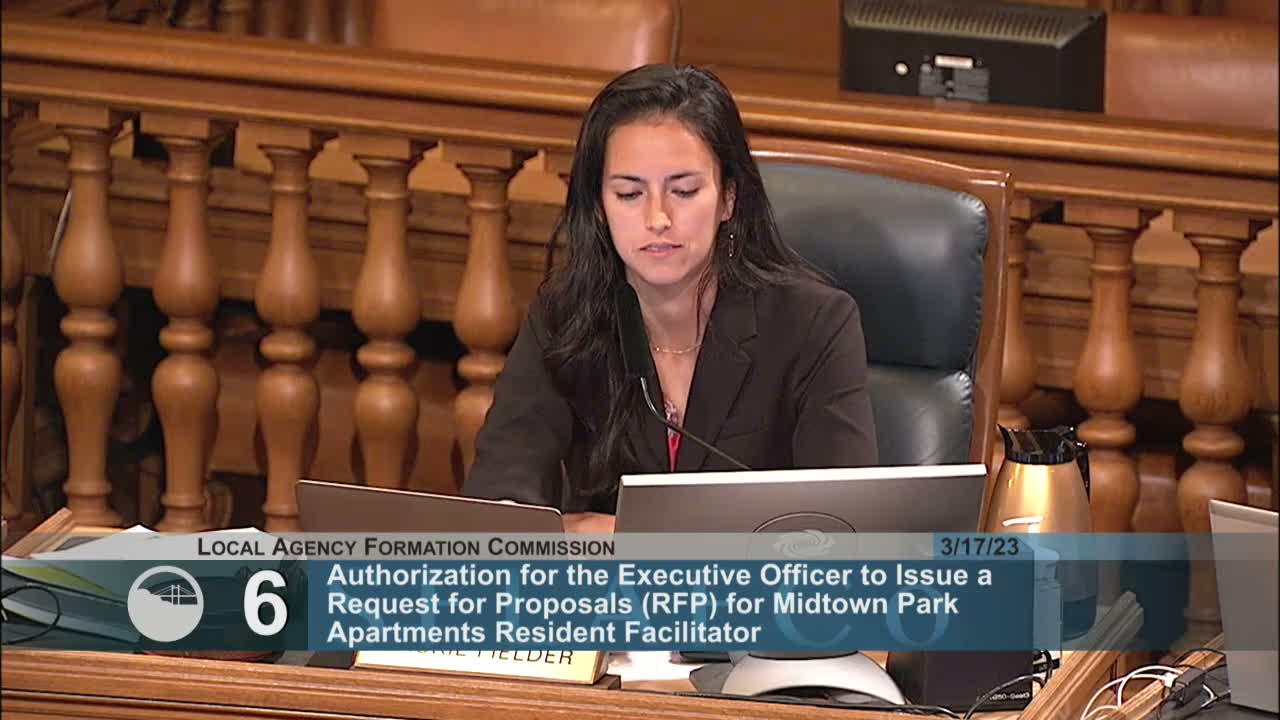
Executive Officer Jeremy Pollock presented a preview of LAFCO’s proposed budget and work plan for the coming fiscal year and summarized four near‑term priorities: municipal housing services (including Midtown and a municipal housing feasibility study), Clean Power SF oversight (scope contingent on the MOU), public banking/municipal finance services, and several smaller studies including a Golden State Energy outline.
Pollock noted LAFCO must adopt a proposed budget by May 1 and a final budget by June 15, and said the draft package shows a material difference in general fund support depending on whether the SFPUC MOU includes reimbursable funding for LAFCO work (commission discussion estimated about $250,000 difference for FY23–24 between scenarios). Pollock also highlighted a proposal to move a policy analyst position from temporary to permanent civil service and referenced a carryforward estimate of roughly $129,000 unspent at the end of the current fiscal year.
On program updates, Pollock said the Department of the Environment’s e‑bike for delivery workers pilot was launching: two cohorts of 15 participants (15 receiving e‑bikes, 15 as a car‑based control), recruitment through March 31, April training/testing and May–August data collection; participants who complete the pilot receive ownership of the bikes. Policy analyst Khalid Samrai (Samrai) updated the commission on the Reinvestment Working Group: an extended consultant timeline with a second MFC draft due March 20, comments due March 31, final MFC governance and business plans due April 14, and a planned April/May vote to submit MFC/public‑bank plans to LAFCO and the Board of Supervisors. Pollock and commissioners discussed capitalization estimates (a $20 million starting figure for a baby bank/MFC appeared in discussion) and regulatory sequencing (starting as a non‑depository MFC before any FDIC‑insured bank application).
Commissioners praised staff for progress, asked detailed line‑item questions about the budget, and recommended partnerships with research institutions for consultant‑level work. Public comment urged consideration of revenue‑bond authority and climate bonds as financing tools for Green Bank functions.
Pollock noted LAFCO must adopt a proposed budget by May 1 and a final budget by June 15, and said the draft package shows a material difference in general fund support depending on whether the SFPUC MOU includes reimbursable funding for LAFCO work (commission discussion estimated about $250,000 difference for FY23–24 between scenarios). Pollock also highlighted a proposal to move a policy analyst position from temporary to permanent civil service and referenced a carryforward estimate of roughly $129,000 unspent at the end of the current fiscal year.
On program updates, Pollock said the Department of the Environment’s e‑bike for delivery workers pilot was launching: two cohorts of 15 participants (15 receiving e‑bikes, 15 as a car‑based control), recruitment through March 31, April training/testing and May–August data collection; participants who complete the pilot receive ownership of the bikes. Policy analyst Khalid Samrai (Samrai) updated the commission on the Reinvestment Working Group: an extended consultant timeline with a second MFC draft due March 20, comments due March 31, final MFC governance and business plans due April 14, and a planned April/May vote to submit MFC/public‑bank plans to LAFCO and the Board of Supervisors. Pollock and commissioners discussed capitalization estimates (a $20 million starting figure for a baby bank/MFC appeared in discussion) and regulatory sequencing (starting as a non‑depository MFC before any FDIC‑insured bank application).
Commissioners praised staff for progress, asked detailed line‑item questions about the budget, and recommended partnerships with research institutions for consultant‑level work. Public comment urged consideration of revenue‑bond authority and climate bonds as financing tools for Green Bank functions.
View the Full Meeting & All Its Details
This article offers just a summary. Unlock complete video, transcripts, and insights as a Founder Member.
✓
Watch full, unedited meeting videos
✓
Search every word spoken in unlimited transcripts
✓
AI summaries & real-time alerts (all government levels)
✓
Permanent access to expanding government content
30-day money-back guarantee
