LAFCO fellow presents options to scale e‑bike use among gig workers
July 21, 2023 | San Francisco City, San Francisco County, California
This article was created by AI summarizing key points discussed. AI makes mistakes, so for full details and context, please refer to the video of the full meeting. Please report any errors so we can fix them. Report an error »
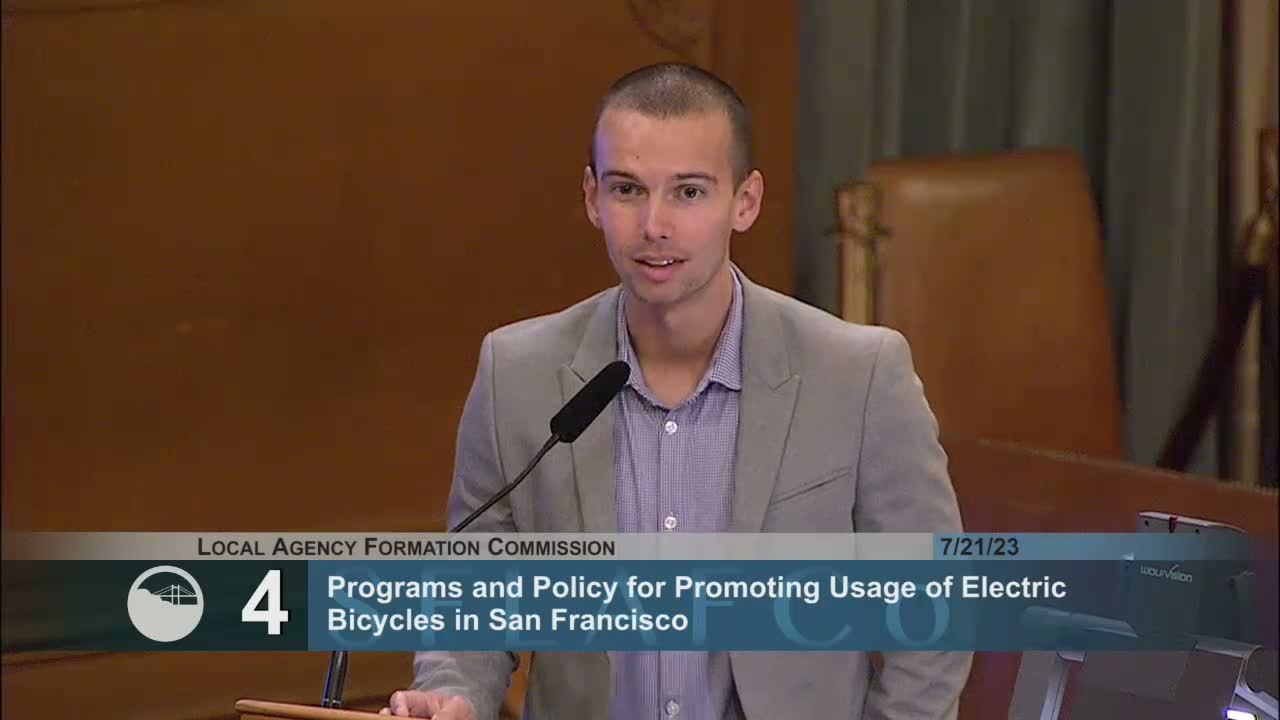
Walker Woodard, a CORO fellow placed with LAFCO, presented findings and policy recommendations intended to accelerate electric bicycle (e‑bike) adoption among gig economy workers in San Francisco.
Woodard summarized three common program models from his review—flat or income‑tiered rebates for new and used e‑bikes and conversion kits, loan‑to‑own financing structures, and community e‑bike lending libraries. He said municipalities often combine approaches and that conversion kits and used e‑bike eligibility broaden access.
On funding, Woodard pointed to federal opportunities created by the Inflation Reduction Act and the U.S. EPA’s greenhouse gas reduction fund, climate pollution reduction grants and environmental and climate justice block grants. He also noted the Federal Highway Administration’s Neighborhood Access and Equity (NALE) grants for bike lane infrastructure as a possible complement.
Woodard suggested partnerships with the Bay Area Air Quality Management District to leverage regional rebates and proposed that the city consider requiring a share of gig delivery to be zero‑emission (he used 50% by 2027 as an illustrative target). He recommended exploring alternatives to the current Bay Wheels contract when it expires in 2027 and piloting e‑bike use within selected city fleet duties.
Commissioners asked Woodard about program scale and safety; Woodard said he could quantify how many vehicles a 50% conversion would imply and reiterated his survey finding that “over 70% of current gig workers were interested or open to transitioning to electric bicycle mobility if they were provided an incentive.” Commissioners also emphasized affordability and infrastructure safety—points Woodard’s recommendations aim to address through targeted rebates and infrastructure grants.
No action was taken; commissioners thanked Woodard and asked staff to consider next steps and further analysis on scale and funding.
Woodard summarized three common program models from his review—flat or income‑tiered rebates for new and used e‑bikes and conversion kits, loan‑to‑own financing structures, and community e‑bike lending libraries. He said municipalities often combine approaches and that conversion kits and used e‑bike eligibility broaden access.
On funding, Woodard pointed to federal opportunities created by the Inflation Reduction Act and the U.S. EPA’s greenhouse gas reduction fund, climate pollution reduction grants and environmental and climate justice block grants. He also noted the Federal Highway Administration’s Neighborhood Access and Equity (NALE) grants for bike lane infrastructure as a possible complement.
Woodard suggested partnerships with the Bay Area Air Quality Management District to leverage regional rebates and proposed that the city consider requiring a share of gig delivery to be zero‑emission (he used 50% by 2027 as an illustrative target). He recommended exploring alternatives to the current Bay Wheels contract when it expires in 2027 and piloting e‑bike use within selected city fleet duties.
Commissioners asked Woodard about program scale and safety; Woodard said he could quantify how many vehicles a 50% conversion would imply and reiterated his survey finding that “over 70% of current gig workers were interested or open to transitioning to electric bicycle mobility if they were provided an incentive.” Commissioners also emphasized affordability and infrastructure safety—points Woodard’s recommendations aim to address through targeted rebates and infrastructure grants.
No action was taken; commissioners thanked Woodard and asked staff to consider next steps and further analysis on scale and funding.
View the Full Meeting & All Its Details
This article offers just a summary. Unlock complete video, transcripts, and insights as a Founder Member.
✓
Watch full, unedited meeting videos
✓
Search every word spoken in unlimited transcripts
✓
AI summaries & real-time alerts (all government levels)
✓
Permanent access to expanding government content
30-day money-back guarantee
