HSH director presents new dashboard and reports housing gains while flagging data and staffing gaps
August 03, 2023 | San Francisco City, San Francisco County, California
This article was created by AI summarizing key points discussed. AI makes mistakes, so for full details and context, please refer to the video of the full meeting. Please report any errors so we can fix them. Report an error »
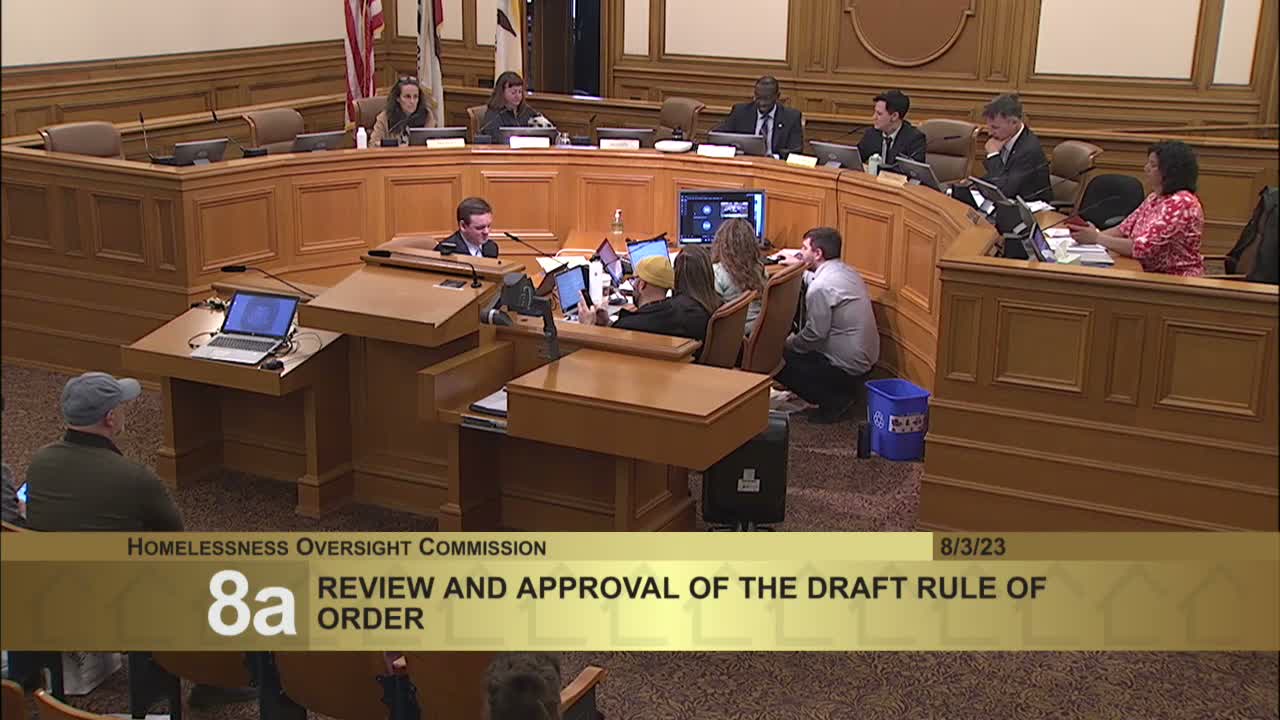
Executive Director Shereen McSpadden of the San Francisco Department of Homelessness and Supportive Housing told the Homeless Oversight Commission that a new unit‑level inventory and public dashboards are now live and are already reshaping how the city tracks placements, vacancies and program outcomes.
"In total we now have 13,237 units of supportive housing with 16,702 total beds," McSpadden said, presenting slides the department will post on its website so the public can explore the unit‑level information.
McSpadden and staff walked commissioners through monthly and annual metrics: outreach encounters in June dropped to 1,980 (staffing challenges were cited) but the year finished at 42,590 total encounters, exceeding a contracted goal of 35,000. Coordinated entry assessments remained roughly steady (962 in June). Problem‑solving interventions helped about 920 households resolve homelessness in the fiscal year, up from roughly 500 the prior year. McSpadden said the department dispersed about $22,800,000 in financial assistance in fiscal 2022–23, including about $2,200,000 for move‑in assistance and smaller amounts for furniture and relocation support.
The department reported housing placements rose in June to 191 placements and that placements for the fiscal year totaled about 2,600 — a roughly 12% increase over the prior year. McSpadden attributed the placement gains to new housing that came online under the homelessness recovery plan and to targeted placement pilots. She described a direct‑placement pilot with the Healthy Streets Operations Center that has moved 12 people directly from the street into permanent supportive housing and is under evaluation.
McSpadden flagged remaining operational challenges. System vacancies have declined but remain above the stated near‑term target; the presentation showed a vacancy rate of about 8.7% (roughly 759 vacancies) with a goal nearer to 7% or lower. The department said it can provide more granular breakdowns — for example the proportion of PSH units located in single‑room‑occupancy hotels — and offered to put maps and charts into future reports. On emergency housing vouchers, McSpadden reported the department had issued about 938 vouchers as of late July and that 675 households had moved into units.
McSpadden also addressed the civil grand jury report and recommended improvements. She agreed with the jury's finding that inconsistent metrics in agreements weaken contractor evaluation and described ongoing work to standardize data and program monitoring across contracts. "We have all the client level data in the one system, and we can now start to focus on standardizing the metrics," she said.
Commissioners pressed for specific follow‑ups: a breakdown of PSH by building type (including single‑occupancy hotels), the department's current refusal rate and how many refusals trigger a lower priority, provider staffing vacancies and an inventory of contracted providers. McSpadden and Deputy Director DeRosato Chan pledged to return with slides and specific counts and said the department will include pilot tracking and staffing information in future director reports. McSpadden said a formal annual action plan tied to the five‑year strategic goals will be presented to the commission in September.
The department repeated that many implementation questions — for example changes to provider leases or eviction processes that would require contract or legal changes — will require more discussion with providers and, as appropriate, with the Board of Supervisors or other city offices.
What happens next: HSH will post the unit‑level dashboard and bring additional slides with vacancy maps, refusal‑protocol detail and staffing counts to upcoming commission meetings; the department will return with a formal annual action plan in September.
"In total we now have 13,237 units of supportive housing with 16,702 total beds," McSpadden said, presenting slides the department will post on its website so the public can explore the unit‑level information.
McSpadden and staff walked commissioners through monthly and annual metrics: outreach encounters in June dropped to 1,980 (staffing challenges were cited) but the year finished at 42,590 total encounters, exceeding a contracted goal of 35,000. Coordinated entry assessments remained roughly steady (962 in June). Problem‑solving interventions helped about 920 households resolve homelessness in the fiscal year, up from roughly 500 the prior year. McSpadden said the department dispersed about $22,800,000 in financial assistance in fiscal 2022–23, including about $2,200,000 for move‑in assistance and smaller amounts for furniture and relocation support.
The department reported housing placements rose in June to 191 placements and that placements for the fiscal year totaled about 2,600 — a roughly 12% increase over the prior year. McSpadden attributed the placement gains to new housing that came online under the homelessness recovery plan and to targeted placement pilots. She described a direct‑placement pilot with the Healthy Streets Operations Center that has moved 12 people directly from the street into permanent supportive housing and is under evaluation.
McSpadden flagged remaining operational challenges. System vacancies have declined but remain above the stated near‑term target; the presentation showed a vacancy rate of about 8.7% (roughly 759 vacancies) with a goal nearer to 7% or lower. The department said it can provide more granular breakdowns — for example the proportion of PSH units located in single‑room‑occupancy hotels — and offered to put maps and charts into future reports. On emergency housing vouchers, McSpadden reported the department had issued about 938 vouchers as of late July and that 675 households had moved into units.
McSpadden also addressed the civil grand jury report and recommended improvements. She agreed with the jury's finding that inconsistent metrics in agreements weaken contractor evaluation and described ongoing work to standardize data and program monitoring across contracts. "We have all the client level data in the one system, and we can now start to focus on standardizing the metrics," she said.
Commissioners pressed for specific follow‑ups: a breakdown of PSH by building type (including single‑occupancy hotels), the department's current refusal rate and how many refusals trigger a lower priority, provider staffing vacancies and an inventory of contracted providers. McSpadden and Deputy Director DeRosato Chan pledged to return with slides and specific counts and said the department will include pilot tracking and staffing information in future director reports. McSpadden said a formal annual action plan tied to the five‑year strategic goals will be presented to the commission in September.
The department repeated that many implementation questions — for example changes to provider leases or eviction processes that would require contract or legal changes — will require more discussion with providers and, as appropriate, with the Board of Supervisors or other city offices.
What happens next: HSH will post the unit‑level dashboard and bring additional slides with vacancy maps, refusal‑protocol detail and staffing counts to upcoming commission meetings; the department will return with a formal annual action plan in September.
Don't Miss a Word: See the Full Meeting!
Go beyond summaries. Unlock every video, transcript, and key insight with a Founder Membership.
✓
Get instant access to full meeting videos
✓
Search and clip any phrase from complete transcripts
✓
Receive AI-powered summaries & custom alerts
✓
Enjoy lifetime, unrestricted access to government data
30-day money-back guarantee
