Tenants and advocates urge stronger eviction protections for permanent supportive housing
August 03, 2023 | San Francisco City, San Francisco County, California
This article was created by AI summarizing key points discussed. AI makes mistakes, so for full details and context, please refer to the video of the full meeting. Please report any errors so we can fix them. Report an error »
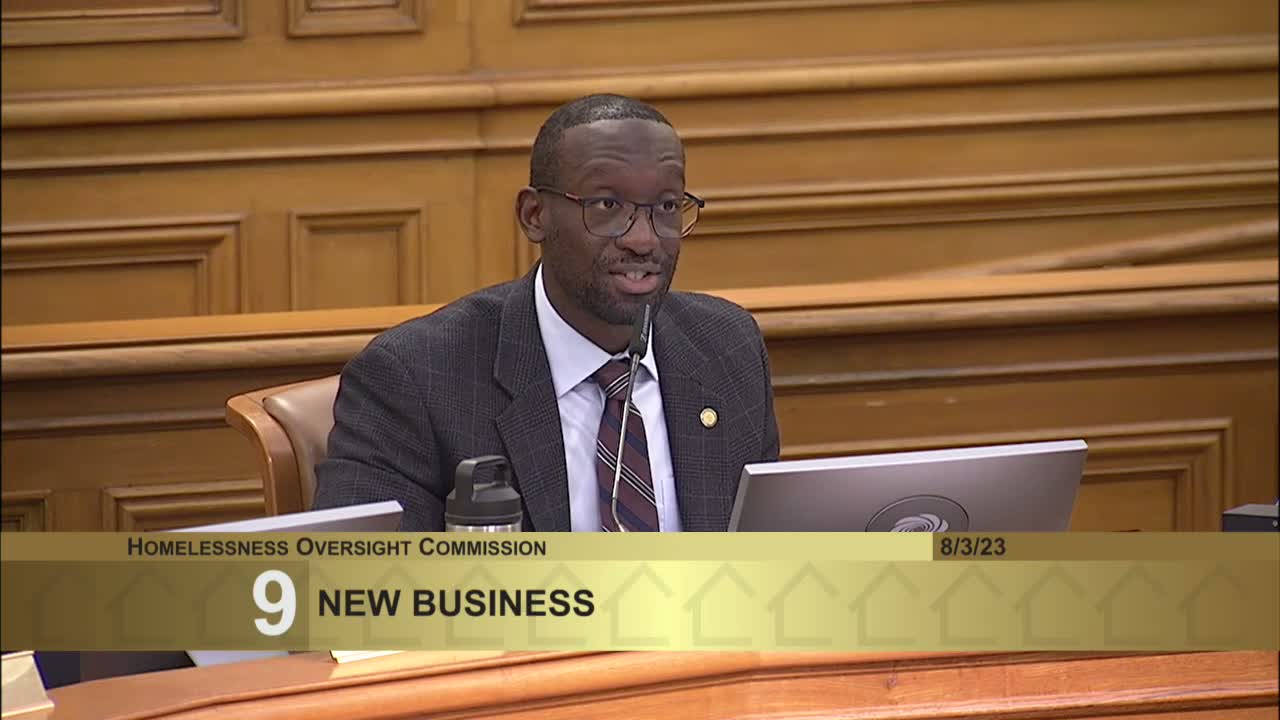
Tenants living in permanent supportive housing and advocates told the Homeless Oversight Commission that existing eviction practices and habitability inspections are producing avoidable displacement and trauma for vulnerable residents.
"I want to elevate 2 concerns. 1 is the issue of rent payment methods... And also late fee should be banned and I want to also talk about eviction should only be for substantial nuisance affecting other tenants," said Jordan Davis, a PSH tenant who helped draft a redlined version of the department's eviction policy together with Supervisor Dean Preston's office and the Eviction Defense Collaborative.
Commissioner Christine Evans introduced the packet, which notes that since 2018 the city has paid for the eviction of at least 774 people and that many evictions could have been avoided. Tenants described habitability inspections and nuisance claims they contend were applied inconsistently or used as pretexts for eviction. Speakers documented unsafe conditions, lack of timely case‑management support and the emotional harms of going through eviction proceedings.
Advocates from the Eviction Defense Collaborative urged system changes that would keep cases out of court when possible and ensure tenants are notified of counsel. "That money can be much better spent," an EDC representative said, referring to funds spent both on eviction prosecutions and on eviction defense work. The EDC requested that the right‑to‑counsel program be notified whenever an eviction filing occurs so attorneys can intervene before defaults and judgments are entered.
Speakers proposed a range of interventions, including:
- clearer notice to tenants about rights and the availability of counsel;
- pre‑filing arbitration or mediation to resolve disputes before unlawful‑detainer filings;
- improved transfer and mobility options within PSH (including scattered‑site options) to reduce concentration and allow tenants to move to settings where they can thrive;
- stricter requirements and monitoring of contractors, including standardized case‑management ratios and stronger reporting requirements; and
- bans on punitive or administrative fees that drive nonpayment cases.
Tenant presenters urged that policy language be changed from "may" to "shall" in contracts and program rules where consistency is necessary to protect tenants and ensure service quality. Several tenants also urged the commission to review problematic provider management practices and consider program reviews or contract restrictions when providers repeatedly fail to meet obligations.
HSH Executive Director McSpadden and staff acknowledged many of the issues and said the department will work with providers and the commission to examine which recommendations can be implemented through contract language, internal policy changes and referral protocols. McSpadden said some proposed changes would require engagement with contract partners or, in some cases, other city bodies, but she pledged follow‑up and said the department will include relevant items in its September annual action plan.
What happens next: Commissioners asked HSH for specific follow‑ups (detailed policy language, how notices will be provided, the feasibility and scope of pre‑filing arbitration, and provider monitoring metrics). HSH committed to return with implementation options and data on staffing and contract coverage.
"I want to elevate 2 concerns. 1 is the issue of rent payment methods... And also late fee should be banned and I want to also talk about eviction should only be for substantial nuisance affecting other tenants," said Jordan Davis, a PSH tenant who helped draft a redlined version of the department's eviction policy together with Supervisor Dean Preston's office and the Eviction Defense Collaborative.
Commissioner Christine Evans introduced the packet, which notes that since 2018 the city has paid for the eviction of at least 774 people and that many evictions could have been avoided. Tenants described habitability inspections and nuisance claims they contend were applied inconsistently or used as pretexts for eviction. Speakers documented unsafe conditions, lack of timely case‑management support and the emotional harms of going through eviction proceedings.
Advocates from the Eviction Defense Collaborative urged system changes that would keep cases out of court when possible and ensure tenants are notified of counsel. "That money can be much better spent," an EDC representative said, referring to funds spent both on eviction prosecutions and on eviction defense work. The EDC requested that the right‑to‑counsel program be notified whenever an eviction filing occurs so attorneys can intervene before defaults and judgments are entered.
Speakers proposed a range of interventions, including:
- clearer notice to tenants about rights and the availability of counsel;
- pre‑filing arbitration or mediation to resolve disputes before unlawful‑detainer filings;
- improved transfer and mobility options within PSH (including scattered‑site options) to reduce concentration and allow tenants to move to settings where they can thrive;
- stricter requirements and monitoring of contractors, including standardized case‑management ratios and stronger reporting requirements; and
- bans on punitive or administrative fees that drive nonpayment cases.
Tenant presenters urged that policy language be changed from "may" to "shall" in contracts and program rules where consistency is necessary to protect tenants and ensure service quality. Several tenants also urged the commission to review problematic provider management practices and consider program reviews or contract restrictions when providers repeatedly fail to meet obligations.
HSH Executive Director McSpadden and staff acknowledged many of the issues and said the department will work with providers and the commission to examine which recommendations can be implemented through contract language, internal policy changes and referral protocols. McSpadden said some proposed changes would require engagement with contract partners or, in some cases, other city bodies, but she pledged follow‑up and said the department will include relevant items in its September annual action plan.
What happens next: Commissioners asked HSH for specific follow‑ups (detailed policy language, how notices will be provided, the feasibility and scope of pre‑filing arbitration, and provider monitoring metrics). HSH committed to return with implementation options and data on staffing and contract coverage.
Don't Miss a Word: See the Full Meeting!
Go beyond summaries. Unlock every video, transcript, and key insight with a Founder Membership.
✓
Get instant access to full meeting videos
✓
Search and clip any phrase from complete transcripts
✓
Receive AI-powered summaries & custom alerts
✓
Enjoy lifetime, unrestricted access to government data
30-day money-back guarantee
