HSH announces same‑day family shelter referrals, pauses new rapid‑rehousing placements amid falling vacancies
January 04, 2024 | San Francisco City, San Francisco County, California
This article was created by AI summarizing key points discussed. AI makes mistakes, so for full details and context, please refer to the video of the full meeting. Please report any errors so we can fix them. Report an error »
San Francisco’s Department of Homelessness and Supportive Housing told the Homelessness Oversight Commission that it has reworked family shelter intake to reduce delays and make better use of scarce beds.
Executive Director Shereen McSpadden said the department began same‑day shelter referrals on Dec. 26 and ‘‘we will no longer be holding shelter beds or units for up to 72 hours.’’ The change also removes a separate verification step for unsheltered status that staff said had delayed placements.
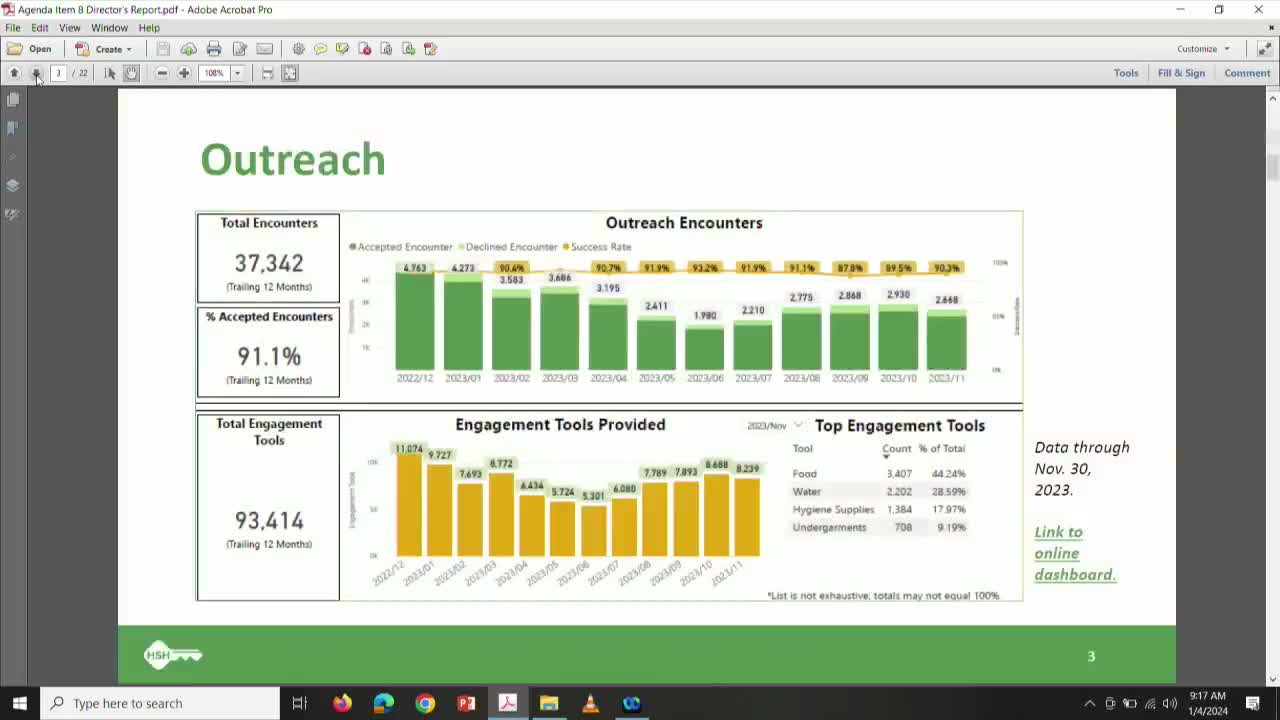
Why it matters: HSH said the reforms are intended to reduce offline beds reserved while families consider offers and to prioritize placements for families with the most urgent needs. McSpadden reported outreach remained steady (2,668 engagements in November), coordinated entry assessments numbered 961 that month, and overall housing inventory is roughly 13,200 units.
On rapid rehousing, HSH announced a temporary pause on adding new families to the rapid‑rehousing queue because there are more than 200 families already awaiting placement. Marion (Marian) Sanders, chief deputy, clarified that paused households continue to receive problem‑solving services and other coordinated‑entry supports rather than being left without assistance. ‘‘They’re not getting nothing; they go into problem‑solving status,’’ Sanders said, adding that assessments determine acuity and placement priority.
Commissioners pressed staff for details about the pause, asking whether triage is used (staff said acuity is assessed at intake) and how households paused for rapid rehousing will be supported. Commissioners also requested more site‑level data on shelter denials and provider‑level outcomes so the commission can track variability in successes and challenges across the system.
HSH also reported progress on a Lake Merced outreach effort to households living in vehicles along Lake Merced Boulevard and Winston Drive: as of the department’s latest count it had recorded 26 move‑ins and 31 people enrolled and waiting for move‑ins. Staff said they are coordinating with MTA on new parking regulations and will provide notice and outreach to affected households. HSH added it is exploring two West Side sites for a potential safe‑parking program and expects temporary battery power for guests at the Bayview safe‑parking site to be available in January.
Next steps: HSH will continue monthly reporting to the commission and said it will follow up with site‑level denial‑of‑service and maintenance data at a future meeting. The department asked commissioners to sign up for the Jan. 30 point‑in‑time count and to share questions in advance so staff can prepare additional metrics.
Executive Director Shereen McSpadden said the department began same‑day shelter referrals on Dec. 26 and ‘‘we will no longer be holding shelter beds or units for up to 72 hours.’’ The change also removes a separate verification step for unsheltered status that staff said had delayed placements.
Why it matters: HSH said the reforms are intended to reduce offline beds reserved while families consider offers and to prioritize placements for families with the most urgent needs. McSpadden reported outreach remained steady (2,668 engagements in November), coordinated entry assessments numbered 961 that month, and overall housing inventory is roughly 13,200 units.
On rapid rehousing, HSH announced a temporary pause on adding new families to the rapid‑rehousing queue because there are more than 200 families already awaiting placement. Marion (Marian) Sanders, chief deputy, clarified that paused households continue to receive problem‑solving services and other coordinated‑entry supports rather than being left without assistance. ‘‘They’re not getting nothing; they go into problem‑solving status,’’ Sanders said, adding that assessments determine acuity and placement priority.
Commissioners pressed staff for details about the pause, asking whether triage is used (staff said acuity is assessed at intake) and how households paused for rapid rehousing will be supported. Commissioners also requested more site‑level data on shelter denials and provider‑level outcomes so the commission can track variability in successes and challenges across the system.
HSH also reported progress on a Lake Merced outreach effort to households living in vehicles along Lake Merced Boulevard and Winston Drive: as of the department’s latest count it had recorded 26 move‑ins and 31 people enrolled and waiting for move‑ins. Staff said they are coordinating with MTA on new parking regulations and will provide notice and outreach to affected households. HSH added it is exploring two West Side sites for a potential safe‑parking program and expects temporary battery power for guests at the Bayview safe‑parking site to be available in January.
Next steps: HSH will continue monthly reporting to the commission and said it will follow up with site‑level denial‑of‑service and maintenance data at a future meeting. The department asked commissioners to sign up for the Jan. 30 point‑in‑time count and to share questions in advance so staff can prepare additional metrics.
Don't Miss a Word: See the Full Meeting!
Go beyond summaries. Unlock every video, transcript, and key insight with a Founder Membership.
✓
Get instant access to full meeting videos
✓
Search and clip any phrase from complete transcripts
✓
Receive AI-powered summaries & custom alerts
✓
Enjoy lifetime, unrestricted access to government data
30-day money-back guarantee
