HSH director reports steady outreach, racial disparities in housing placements and new housing opens
February 12, 2024 | San Francisco City, San Francisco County, California
This article was created by AI summarizing key points discussed. AI makes mistakes, so for full details and context, please refer to the video of the full meeting. Please report any errors so we can fix them. Report an error »
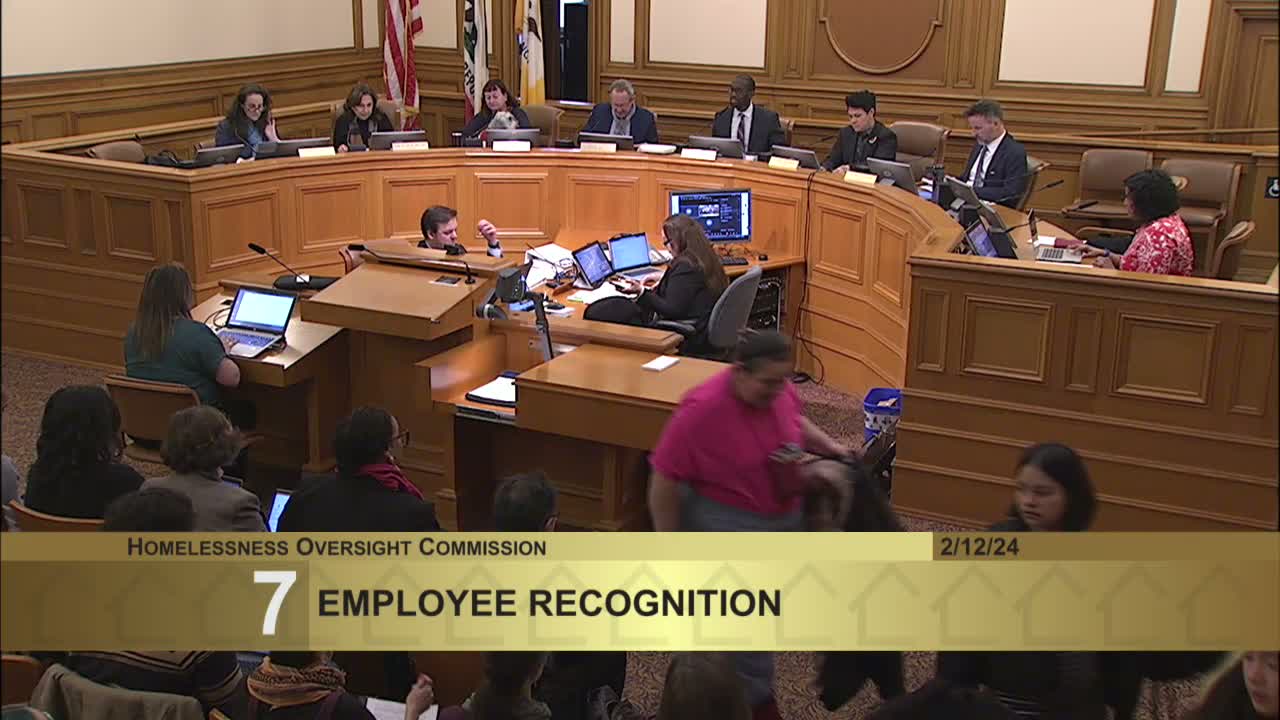
Shereen McSpadden, executive director of the Department of Homelessness and Supportive Housing (HSH), told the commission on Feb. 12 that the department's outreach work remained active through December, recording 2,356 engagements, and that staff mobilized during recent storms to distribute blankets, ponchos and conduct wellness checks.
McSpadden said coordinated entry assessments declined to 902 in December but highlighted an equity trend in recent housing moves: 45% of households housed in the last quarter were Black, while Black households made up roughly 36% of enrollments in coordinated entry. She said the department views an above-representation of housed Black households as a sign the system is advancing racial equity in placements, while cautioning that demographic shifts require continued monitoring.
On prevention and relocation, McSpadden reported that 2,248 households received rental or relocation assistance between March 2023 and January 2024, with an average assistance amount of about $6,382 and roughly $14.3 million distributed since the program reopened. She described three relocation programs that have helped more than 11,000 households move out of San Francisco since 2005, including an integrated problem-solving pathway, a Homeward Bound program run by the Human Services Agency and a low-barrier Journey Home option.
McSpadden also reviewed housing inventory and deployment: HSH is tracking roughly 13,200 housing units in city programs, with placements increasing to 190 in December and move-ins starting this month at 180 Jones (35 studios for chronically homeless adults). She said the city has issued 1,261 emergency housing vouchers through a partnership with the housing authority, resulting in 903 households housed to date.
On shelter stats, McSpadden said shelter capacity was about 3,476 beds on Jan. 31 with occupancy near 91%. She noted family shelter occupancy rose after implementing same-day placement policies and removing certain verification barriers. The director described the denial-of-service (DOS) policy used by shelters, distinguishing immediate DOS for violent acts from non-immediate DOS for habitual rule violations, and said clients receive grievance information upon intake.
McSpadden closed by flagging several upcoming procurement and program updates: awards for shallow-subsidy providers in February; RFQ deadlines for services at 1174 Folsom; and notice that HSH received about $53.8 million in the most recent Continuum of Care award to support renewal projects and one new supportive-housing project.
The commission asked staff to return with more granular metrics on shelter DOS (reasons and contract targets) and to reconcile reporting differences in Lake Merced outreach numbers, both items McSpadden said staff would pursue and report back on in coming months.
McSpadden said coordinated entry assessments declined to 902 in December but highlighted an equity trend in recent housing moves: 45% of households housed in the last quarter were Black, while Black households made up roughly 36% of enrollments in coordinated entry. She said the department views an above-representation of housed Black households as a sign the system is advancing racial equity in placements, while cautioning that demographic shifts require continued monitoring.
On prevention and relocation, McSpadden reported that 2,248 households received rental or relocation assistance between March 2023 and January 2024, with an average assistance amount of about $6,382 and roughly $14.3 million distributed since the program reopened. She described three relocation programs that have helped more than 11,000 households move out of San Francisco since 2005, including an integrated problem-solving pathway, a Homeward Bound program run by the Human Services Agency and a low-barrier Journey Home option.
McSpadden also reviewed housing inventory and deployment: HSH is tracking roughly 13,200 housing units in city programs, with placements increasing to 190 in December and move-ins starting this month at 180 Jones (35 studios for chronically homeless adults). She said the city has issued 1,261 emergency housing vouchers through a partnership with the housing authority, resulting in 903 households housed to date.
On shelter stats, McSpadden said shelter capacity was about 3,476 beds on Jan. 31 with occupancy near 91%. She noted family shelter occupancy rose after implementing same-day placement policies and removing certain verification barriers. The director described the denial-of-service (DOS) policy used by shelters, distinguishing immediate DOS for violent acts from non-immediate DOS for habitual rule violations, and said clients receive grievance information upon intake.
McSpadden closed by flagging several upcoming procurement and program updates: awards for shallow-subsidy providers in February; RFQ deadlines for services at 1174 Folsom; and notice that HSH received about $53.8 million in the most recent Continuum of Care award to support renewal projects and one new supportive-housing project.
The commission asked staff to return with more granular metrics on shelter DOS (reasons and contract targets) and to reconcile reporting differences in Lake Merced outreach numbers, both items McSpadden said staff would pursue and report back on in coming months.
View the Full Meeting & All Its Details
This article offers just a summary. Unlock complete video, transcripts, and insights as a Founder Member.
✓
Watch full, unedited meeting videos
✓
Search every word spoken in unlimited transcripts
✓
AI summaries & real-time alerts (all government levels)
✓
Permanent access to expanding government content
30-day money-back guarantee
