HSH warns of Prop C shortfall and mayoral cut targets as department seeks efficiencies
January 04, 2024 | San Francisco City, San Francisco County, California
This article was created by AI summarizing key points discussed. AI makes mistakes, so for full details and context, please refer to the video of the full meeting. Please report any errors so we can fix them. Report an error »
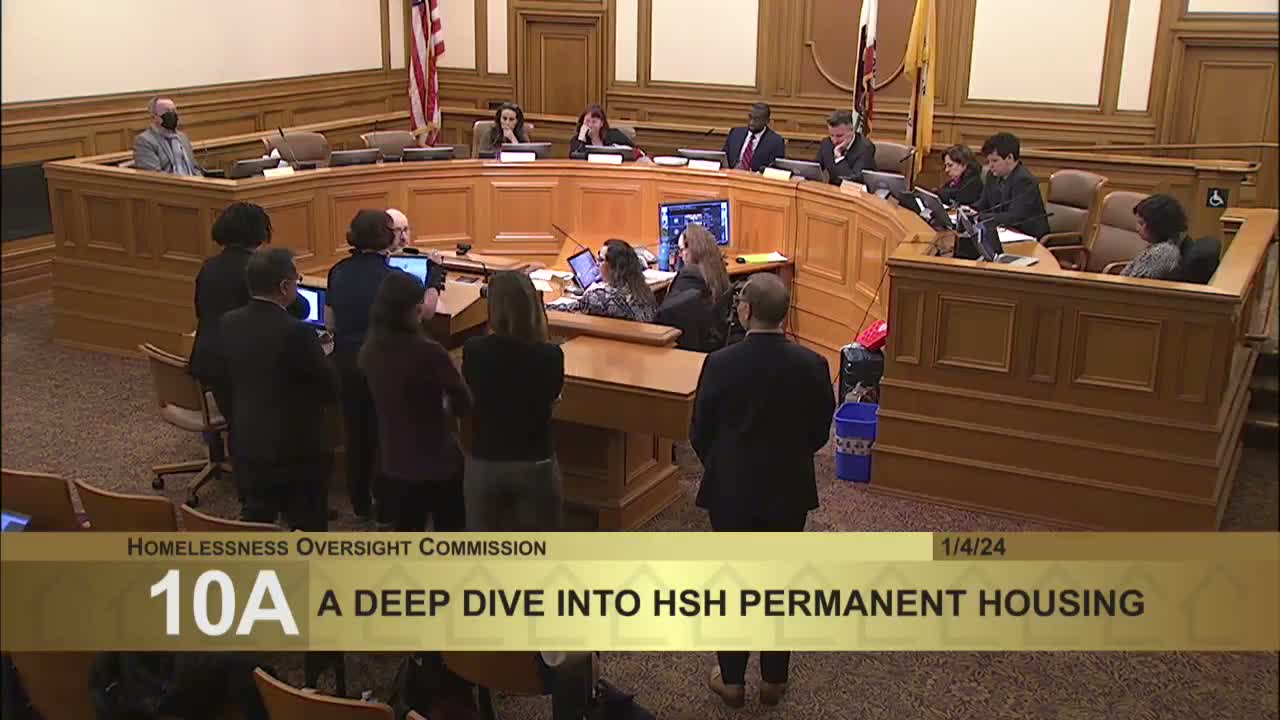
HSH’s chief of administration and finance, Gigi Whitley, told the commission that the city projects a roughly $800 million general‑fund deficit over two fiscal years and that HSH faces belt‑tightening pressures from both Prop C revenue volatility and mayoral reduction targets.
Whitley said HSH’s roughly $717 million budget is about 40% general fund and that the Our City Our Home (Prop C) fund is projected to have a structural shortfall that creates approximately a $33 million annual gap for HSH. The mayor’s budget guidance asked departments to propose a 10% reduction in ongoing general‑fund expenditures and an additional 5% in contingency reductions. For HSH, those targets translate to about $27 million in ongoing reductions and $13 million in contingency proposals, Whitley said.
Commissioners, providers and public commenters urged caution. Providers and advocates said small add‑back cuts—particularly to food security, workforce and youth housing subsidies—would have outsized effects on tenants and on providers’ ability to operate safely. Marnie Regan of Larkin Street and other HESPA representatives asked the department and commission to resist reappropriating prescriptive Prop C funds and to prioritize preserving front‑line supports.
Whitley and commissioners discussed options including maximizing federal and state drawdowns, pausing new non‑essential programs, delaying one‑time capital deployments, and seeking city‑level policy conversations about longer‑term revenue strategies. Whitley said some federal and state grant opportunities may help and that HSH will provide detailed Prop C add‑back and reserve figures for the commission’s February follow‑up briefing.
Next steps: HSH will return with a February budget presentation that includes add‑backs, Prop C allocation details, the status of unallocated funds, and options to meet mayoral targets while protecting critical services.
Whitley said HSH’s roughly $717 million budget is about 40% general fund and that the Our City Our Home (Prop C) fund is projected to have a structural shortfall that creates approximately a $33 million annual gap for HSH. The mayor’s budget guidance asked departments to propose a 10% reduction in ongoing general‑fund expenditures and an additional 5% in contingency reductions. For HSH, those targets translate to about $27 million in ongoing reductions and $13 million in contingency proposals, Whitley said.
Commissioners, providers and public commenters urged caution. Providers and advocates said small add‑back cuts—particularly to food security, workforce and youth housing subsidies—would have outsized effects on tenants and on providers’ ability to operate safely. Marnie Regan of Larkin Street and other HESPA representatives asked the department and commission to resist reappropriating prescriptive Prop C funds and to prioritize preserving front‑line supports.
Whitley and commissioners discussed options including maximizing federal and state drawdowns, pausing new non‑essential programs, delaying one‑time capital deployments, and seeking city‑level policy conversations about longer‑term revenue strategies. Whitley said some federal and state grant opportunities may help and that HSH will provide detailed Prop C add‑back and reserve figures for the commission’s February follow‑up briefing.
Next steps: HSH will return with a February budget presentation that includes add‑backs, Prop C allocation details, the status of unallocated funds, and options to meet mayoral targets while protecting critical services.
Don't Miss a Word: See the Full Meeting!
Go beyond summaries. Unlock every video, transcript, and key insight with a Founder Membership.
✓
Get instant access to full meeting videos
✓
Search and clip any phrase from complete transcripts
✓
Receive AI-powered summaries & custom alerts
✓
Enjoy lifetime, unrestricted access to government data
30-day money-back guarantee
