HSH presents family-homelessness data; commissioners press for prevention and interagency responses
May 02, 2024 | San Francisco City, San Francisco County, California
This article was created by AI summarizing key points discussed. AI makes mistakes, so for full details and context, please refer to the video of the full meeting. Please report any errors so we can fix them. Report an error »
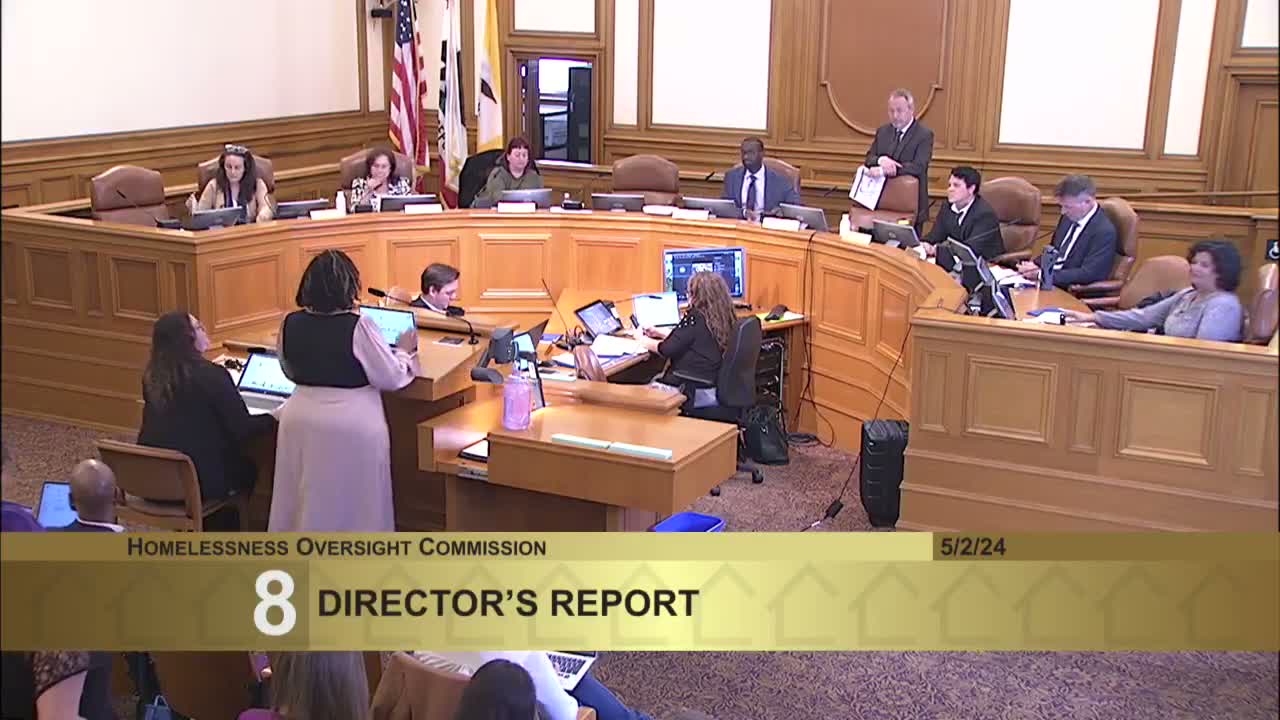
Chief Deputy Marian Sanders presented the commission with a multi-slide analysis of family homelessness on May 2, describing who is being served and where the system is strained.
Sanders summarized the family-coordinated-entry redesign and said family demographics show households are disproportionately Black, female-led and largely extremely low income. She cited the 2022 point-in-time count and coordinated-entry assessment volumes, and said that according to the PIT data the most frequently reported cause for family homelessness was job loss (about 23%), followed by an argument with family/friends (about 15%) and domestic violence (about 8%).
The presentation outlined family-focused resources: three family access points, eight family shelters (two non-congregate), 290 rapid-rehousing slots, 170 flex-pool slots and 907 PSH units. Sanders also reviewed household income data for families active in the coordinated-entry system (average monthly income from all sources roughly $1,500; families receiving CalWORKs averaged about $918/month).
Commissioners used the presentation to press for clearer prevention strategies and for improved multiagency coordination for newcomers. Commissioner Katie Albright and others asked whether family conflict reported in the PIT could mask unreported domestic violence and argued prevention investments targeted at domestic and family violence response could yield long-term returns. Sanders agreed prevention must be cross‑departmental and pointed to Home by the Bay, the city’s five‑year plan, as the road map for aligning resources across departments.
Sanders also described operational reforms already implemented in December 2023 — moving to real-time shelter referrals and removing verification requirements for unsheltered status — and said further family-system policy work and the coordinated-entry redesign are expected to complete by the end of the calendar year.
Commissioners requested future briefings on family-exit outcomes and prevention-oriented metrics and asked the department to coordinate with the Mayor’s Office and the school district on outreach for newcomers.
Sanders summarized the family-coordinated-entry redesign and said family demographics show households are disproportionately Black, female-led and largely extremely low income. She cited the 2022 point-in-time count and coordinated-entry assessment volumes, and said that according to the PIT data the most frequently reported cause for family homelessness was job loss (about 23%), followed by an argument with family/friends (about 15%) and domestic violence (about 8%).
The presentation outlined family-focused resources: three family access points, eight family shelters (two non-congregate), 290 rapid-rehousing slots, 170 flex-pool slots and 907 PSH units. Sanders also reviewed household income data for families active in the coordinated-entry system (average monthly income from all sources roughly $1,500; families receiving CalWORKs averaged about $918/month).
Commissioners used the presentation to press for clearer prevention strategies and for improved multiagency coordination for newcomers. Commissioner Katie Albright and others asked whether family conflict reported in the PIT could mask unreported domestic violence and argued prevention investments targeted at domestic and family violence response could yield long-term returns. Sanders agreed prevention must be cross‑departmental and pointed to Home by the Bay, the city’s five‑year plan, as the road map for aligning resources across departments.
Sanders also described operational reforms already implemented in December 2023 — moving to real-time shelter referrals and removing verification requirements for unsheltered status — and said further family-system policy work and the coordinated-entry redesign are expected to complete by the end of the calendar year.
Commissioners requested future briefings on family-exit outcomes and prevention-oriented metrics and asked the department to coordinate with the Mayor’s Office and the school district on outreach for newcomers.
View the Full Meeting & All Its Details
This article offers just a summary. Unlock complete video, transcripts, and insights as a Founder Member.
✓
Watch full, unedited meeting videos
✓
Search every word spoken in unlimited transcripts
✓
AI summaries & real-time alerts (all government levels)
✓
Permanent access to expanding government content
30-day money-back guarantee
