Planning staff outlines citywide cultural-resources survey; commission adopts 'earthquake shacks' theme document
November 17, 2021 | San Francisco City, San Francisco County, California
This article was created by AI summarizing key points discussed. AI makes mistakes, so for full details and context, please refer to the video of the full meeting. Please report any errors so we can fix them. Report an error »
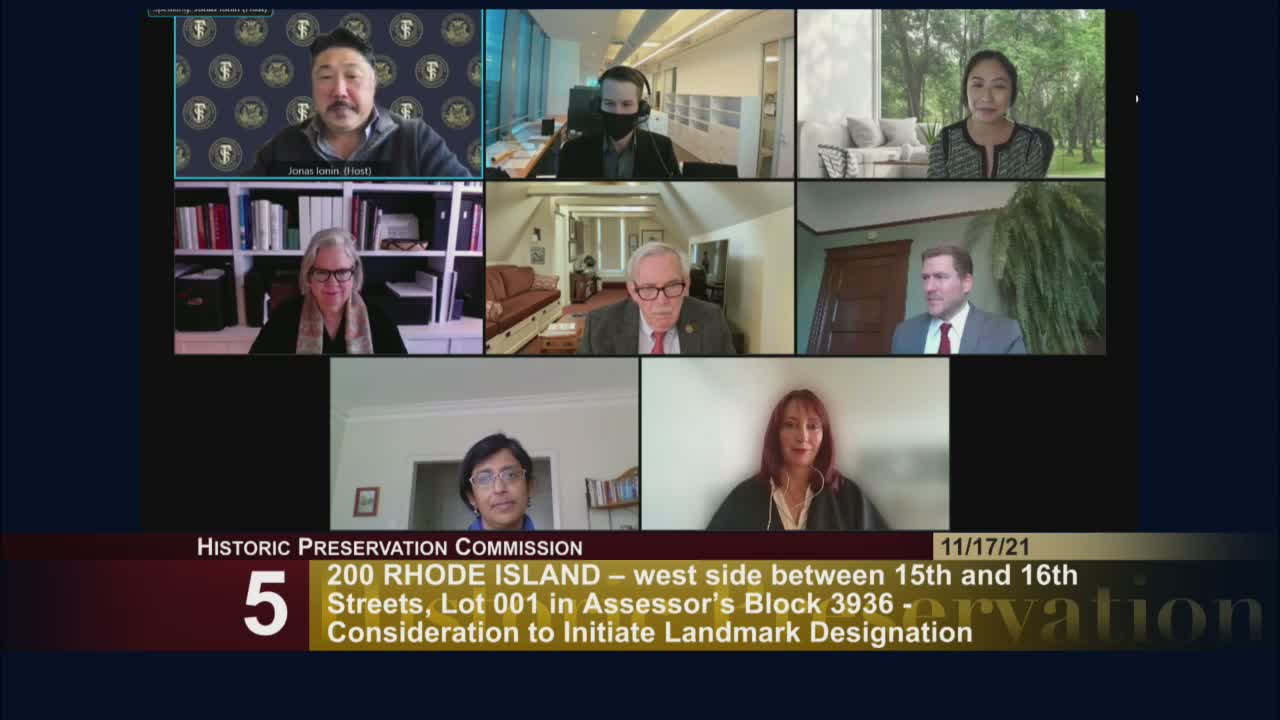
The San Francisco Planning Department gave a detailed update on its citywide cultural-resources survey and the Historic Preservation Commission unanimously adopted an "earthquake shacks" theme document that sets an evaluative framework for identifying and assessing the small refugee cottages built after the 1906 earthquake.
Melanie Bishop and Maggie Smith, survey team staff, said the survey will center race and social equity and make greater use of community outreach and an "intangible cultural heritage" methodology. The survey framework will report findings by neighborhood (revised from 37 to 41 neighborhoods) and rely on the Arches data-management platform developed by the Getty Conservation Institute and the World Monuments Fund. ‘‘We will be working with each supervisor's office to identify community experts and stakeholders,’’ Bishop said; Maggie Smith described outreach tactics including neighborhood chats, community walks, translation services and a collaborative digital platform.
Commissioners pressed for clarification about what staff meant by a "modern survey." Commissioner Johns asked whether "modern" meant a photographic snapshot or a broader contextual approach; staff responded that the term emphasizes front-loading community outreach and including intangible heritage alongside architectural description. When asked whether Arches can store oral histories, Maggie Smith said: "Yes, absolutely. Arches has a file upload ability... especially video recordings and just audio recordings. It can absolutely capture that."
On the citywide survey schedule, staff said system development and data cleanup have delayed an earlier pilot; the pilot is expected to start in January and run into spring, with final findings and adoption hearings continuing into 2026. Staff emphasized reliance on a rotating survey-advisors group and supervisor offices to recruit local knowledge bearers.
The commission also considered and adopted an "earthquake shacks" theme document that defines the property type, provides integrity and eligibility guidance, and offers sample evaluations. Staff noted that approximately 5,610 shacks were built between 1906 and 1908 by the San Francisco Relief Corporation and that the property's period of significance for this typology extends from 1906 to 1915. The theme document recommends evaluating shacks primarily under criterion A (association with the 1906 earthquake and relief efforts) and, where intact, under criterion C for architectural significance.
Woody Labonte of San Francisco Heritage called the document "a very good start" and endorsed the commission's action. Several commissioners urged flexibility in eligibility thresholds and proposed incentives to preserve remaining shacks; Commissioner Black suggested exploring zoning or ADU (accessory dwelling unit) incentives that could encourage owners to retain shacks rather than demolish them for larger development. Planning staff said they will take such suggestions to the legislative team to explore potential code amendments or incentives and will return to the commission as appropriate.
The motion to adopt the earthquake-shacks theme document was made, seconded, and passed unanimously 7–0. Staff will continue outreach, finalize the pilot plan, and carry commissioner feedback on incentives forward for follow-up work.
Melanie Bishop and Maggie Smith, survey team staff, said the survey will center race and social equity and make greater use of community outreach and an "intangible cultural heritage" methodology. The survey framework will report findings by neighborhood (revised from 37 to 41 neighborhoods) and rely on the Arches data-management platform developed by the Getty Conservation Institute and the World Monuments Fund. ‘‘We will be working with each supervisor's office to identify community experts and stakeholders,’’ Bishop said; Maggie Smith described outreach tactics including neighborhood chats, community walks, translation services and a collaborative digital platform.
Commissioners pressed for clarification about what staff meant by a "modern survey." Commissioner Johns asked whether "modern" meant a photographic snapshot or a broader contextual approach; staff responded that the term emphasizes front-loading community outreach and including intangible heritage alongside architectural description. When asked whether Arches can store oral histories, Maggie Smith said: "Yes, absolutely. Arches has a file upload ability... especially video recordings and just audio recordings. It can absolutely capture that."
On the citywide survey schedule, staff said system development and data cleanup have delayed an earlier pilot; the pilot is expected to start in January and run into spring, with final findings and adoption hearings continuing into 2026. Staff emphasized reliance on a rotating survey-advisors group and supervisor offices to recruit local knowledge bearers.
The commission also considered and adopted an "earthquake shacks" theme document that defines the property type, provides integrity and eligibility guidance, and offers sample evaluations. Staff noted that approximately 5,610 shacks were built between 1906 and 1908 by the San Francisco Relief Corporation and that the property's period of significance for this typology extends from 1906 to 1915. The theme document recommends evaluating shacks primarily under criterion A (association with the 1906 earthquake and relief efforts) and, where intact, under criterion C for architectural significance.
Woody Labonte of San Francisco Heritage called the document "a very good start" and endorsed the commission's action. Several commissioners urged flexibility in eligibility thresholds and proposed incentives to preserve remaining shacks; Commissioner Black suggested exploring zoning or ADU (accessory dwelling unit) incentives that could encourage owners to retain shacks rather than demolish them for larger development. Planning staff said they will take such suggestions to the legislative team to explore potential code amendments or incentives and will return to the commission as appropriate.
The motion to adopt the earthquake-shacks theme document was made, seconded, and passed unanimously 7–0. Staff will continue outreach, finalize the pilot plan, and carry commissioner feedback on incentives forward for follow-up work.
View the Full Meeting & All Its Details
This article offers just a summary. Unlock complete video, transcripts, and insights as a Founder Member.
✓
Watch full, unedited meeting videos
✓
Search every word spoken in unlimited transcripts
✓
AI summaries & real-time alerts (all government levels)
✓
Permanent access to expanding government content
30-day money-back guarantee
