Historic‑resources analysis in SF’s Draft Housing Element EIR finds significant, unavoidable impacts
June 01, 2022 | San Francisco City, San Francisco County, California
This article was created by AI summarizing key points discussed. AI makes mistakes, so for full details and context, please refer to the video of the full meeting. Please report any errors so we can fix them. Report an error »
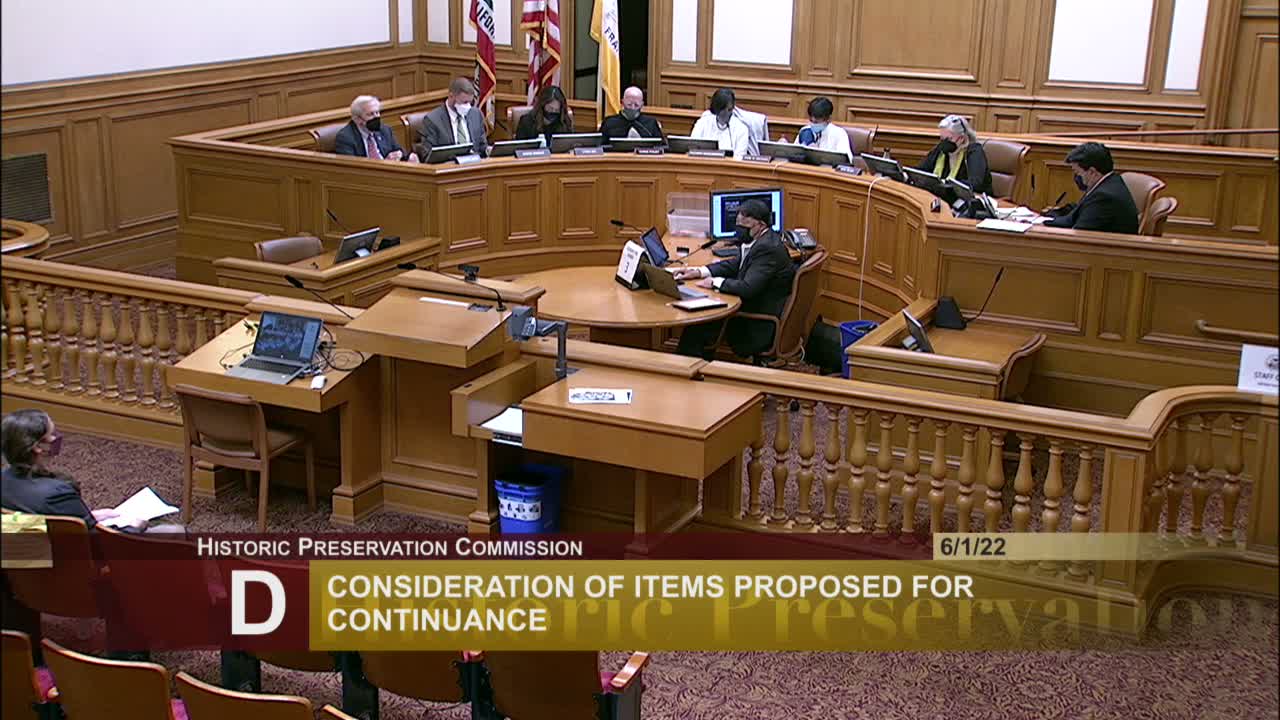
Planning Department staff presented the Draft Environmental Impact Report (Draft EIR) for San Francisco’s Housing Element 2022 update and told the Historic Preservation Commission on June 1 that the EIR identifies significant and unavoidable impacts to built‑environment historic resources. Lisa Gibson, environmental review officer for the City and County of San Francisco, said the programmatic EIR is intended to inform decisionmakers and identify mitigation measures and alternatives rather than to authorize any immediate zoning changes.
Allison Vanderslice, principal planner, summarized the EIR methodology under the California Environmental Quality Act and explained the analysis uses a 2050 environmental baseline. She said the EIR’s modeling projects roughly 150,000 housing units by 2050 under the proposed update compared with about 100,000 under the 2014 baseline. Vanderslice said the EIR concluded that, because the update would shift a portion of growth into areas where demolition or substantial alteration of historic resources is reasonably foreseeable, impacts to built‑environment historic resources would be significant and unavoidable even after mitigation.
The Draft EIR includes a preservation alternative that redistributes projected growth away from parcels with identified historic resources and modifies certain draft policies to better protect those parcels. Vanderslice said the preservation alternative would reduce impacts relative to the proposed action but nevertheless still results in significant and unavoidable effects to built‑environment historic resources under CEQA.
Commissioners asked staff to clarify tables and baseline assumptions used in the analysis, and to explain how the ongoing citywide survey will inform future project‑level reviews. Staff replied that the citywide survey is a multi‑year project and that project review will use the best available historic‑resource information at the time of each project; the preservation alternative would change some policy directions but project‑level historic‑resource identification and mitigation would follow the same CEQA process.
Members of the public praised the depth of the analysis and urged attention to local building types and demolition calculations. Staff reminded the commission that comments recorded at this hearing will be incorporated into a staff letter and forwarded to the Planning Commission in advance of the Draft EIR hearing scheduled for June 9; the public comment period closes at 5 p.m. on June 21.
The commission did not take an action on the EIR at the meeting; staff said the Draft EIR certification hearing is anticipated in early 2023 and that the commission’s comments will be forwarded to the Planning Commission.
Allison Vanderslice, principal planner, summarized the EIR methodology under the California Environmental Quality Act and explained the analysis uses a 2050 environmental baseline. She said the EIR’s modeling projects roughly 150,000 housing units by 2050 under the proposed update compared with about 100,000 under the 2014 baseline. Vanderslice said the EIR concluded that, because the update would shift a portion of growth into areas where demolition or substantial alteration of historic resources is reasonably foreseeable, impacts to built‑environment historic resources would be significant and unavoidable even after mitigation.
The Draft EIR includes a preservation alternative that redistributes projected growth away from parcels with identified historic resources and modifies certain draft policies to better protect those parcels. Vanderslice said the preservation alternative would reduce impacts relative to the proposed action but nevertheless still results in significant and unavoidable effects to built‑environment historic resources under CEQA.
Commissioners asked staff to clarify tables and baseline assumptions used in the analysis, and to explain how the ongoing citywide survey will inform future project‑level reviews. Staff replied that the citywide survey is a multi‑year project and that project review will use the best available historic‑resource information at the time of each project; the preservation alternative would change some policy directions but project‑level historic‑resource identification and mitigation would follow the same CEQA process.
Members of the public praised the depth of the analysis and urged attention to local building types and demolition calculations. Staff reminded the commission that comments recorded at this hearing will be incorporated into a staff letter and forwarded to the Planning Commission in advance of the Draft EIR hearing scheduled for June 9; the public comment period closes at 5 p.m. on June 21.
The commission did not take an action on the EIR at the meeting; staff said the Draft EIR certification hearing is anticipated in early 2023 and that the commission’s comments will be forwarded to the Planning Commission.
View the Full Meeting & All Its Details
This article offers just a summary. Unlock complete video, transcripts, and insights as a Founder Member.
✓
Watch full, unedited meeting videos
✓
Search every word spoken in unlimited transcripts
✓
AI summaries & real-time alerts (all government levels)
✓
Permanent access to expanding government content
30-day money-back guarantee
