City planning interns present HRER audit, monuments context and landmark plaque plan to preservation commission
September 07, 2022 | San Francisco City, San Francisco County, California
This article was created by AI summarizing key points discussed. AI makes mistakes, so for full details and context, please refer to the video of the full meeting. Please report any errors so we can fix them. Report an error »
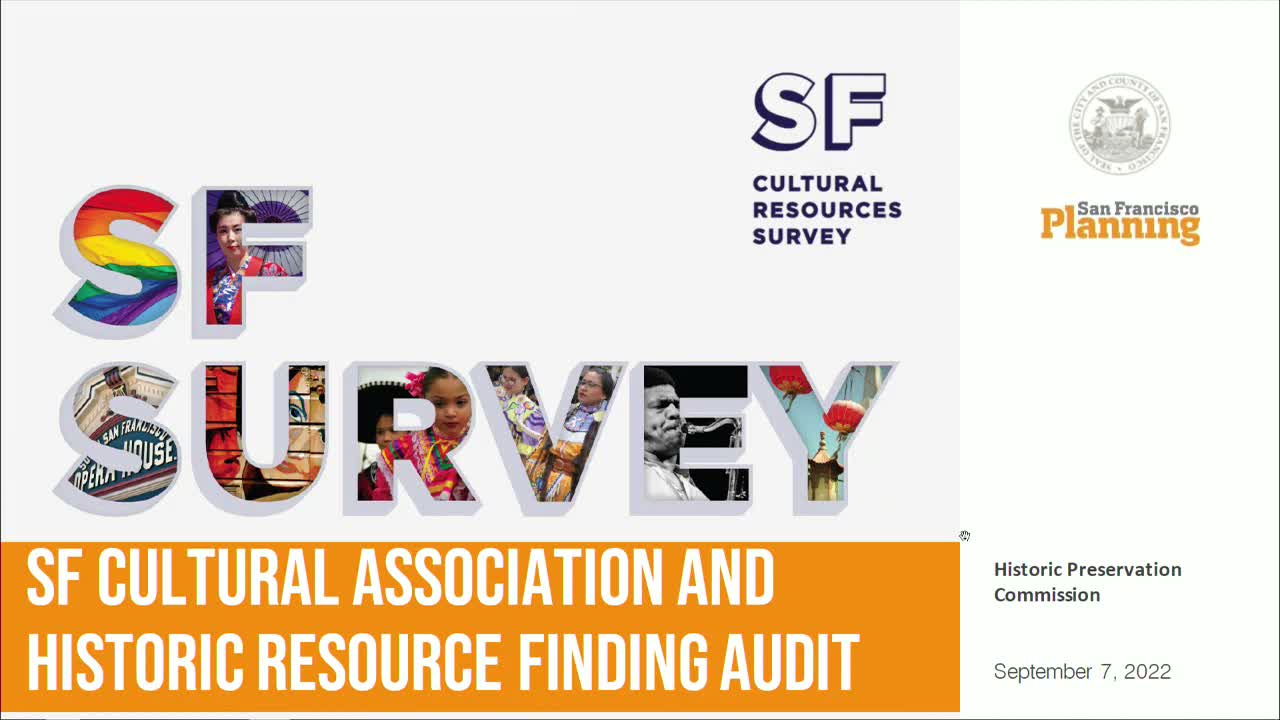
Three interns for the Planning Department’s preservation team presented informational updates on the department’s survey and landmark work, and commissioners responded with praise and suggestions for public engagement.
Alex Resnick, an intern on the survey team, described an audit of Historic Resource Evaluation Responses (HRERs) that staff has compiled for decades. Resnick said the audit will standardize and digitize data points from HRERs, make those data queryable on the department’s mapping tools, and help identify historic resources and cultural associations that are currently under-documented.
Emma Mooney presented a citywide historic context statement for public art and monuments covering resources between 1848 and 1989. Mooney said the project will develop evaluative frameworks for diverse media and community-valued works, and will incorporate findings from collaborative efforts such as the Monuments and Memorials Advisory Committee and the Monuments Task Force. She highlighted challenges in balancing integrity standards with community significance for contested monuments.
Surbhi Agrawal presented a proposal for a landmark-plaque program and an updated interactive web map. The recommended plaque design combines a permanent bronze plaque with a temporary metal-coated sticker that carries a QR code linking to a mobile-friendly web map and an expanded online landmark page. Agrawal reviewed two production approaches: working directly with a foundry (lower cost, higher staff project management) or contracting a sign company for a turnkey service (higher cost, more project management included). The presentation included preliminary budget estimates and proposed next steps of outreach to landmark property owners and piloting production.
Commissioners complimented the interns’ work and encouraged the department to expand public access, include more nontraditional cultural resources (for example, community-made works and neighborhood artifacts), and consider plaque longevity and funding options. Michael Vitrelis used the public-comment period after the presentations to reiterate concerns about oversight of the Castro LGBTQ Cultural District and said he had filed a compliance complaint with the department’s monitor; planning staff did not announce enforcement actions in response during the hearing.
The presentations were informational; commissioners asked follow-up questions and thanked staff. The department said it will continue to refine the survey tools and proposed plaque pilot and will return with updates as work progresses.
Alex Resnick, an intern on the survey team, described an audit of Historic Resource Evaluation Responses (HRERs) that staff has compiled for decades. Resnick said the audit will standardize and digitize data points from HRERs, make those data queryable on the department’s mapping tools, and help identify historic resources and cultural associations that are currently under-documented.
Emma Mooney presented a citywide historic context statement for public art and monuments covering resources between 1848 and 1989. Mooney said the project will develop evaluative frameworks for diverse media and community-valued works, and will incorporate findings from collaborative efforts such as the Monuments and Memorials Advisory Committee and the Monuments Task Force. She highlighted challenges in balancing integrity standards with community significance for contested monuments.
Surbhi Agrawal presented a proposal for a landmark-plaque program and an updated interactive web map. The recommended plaque design combines a permanent bronze plaque with a temporary metal-coated sticker that carries a QR code linking to a mobile-friendly web map and an expanded online landmark page. Agrawal reviewed two production approaches: working directly with a foundry (lower cost, higher staff project management) or contracting a sign company for a turnkey service (higher cost, more project management included). The presentation included preliminary budget estimates and proposed next steps of outreach to landmark property owners and piloting production.
Commissioners complimented the interns’ work and encouraged the department to expand public access, include more nontraditional cultural resources (for example, community-made works and neighborhood artifacts), and consider plaque longevity and funding options. Michael Vitrelis used the public-comment period after the presentations to reiterate concerns about oversight of the Castro LGBTQ Cultural District and said he had filed a compliance complaint with the department’s monitor; planning staff did not announce enforcement actions in response during the hearing.
The presentations were informational; commissioners asked follow-up questions and thanked staff. The department said it will continue to refine the survey tools and proposed plaque pilot and will return with updates as work progresses.
View the Full Meeting & All Its Details
This article offers just a summary. Unlock complete video, transcripts, and insights as a Founder Member.
✓
Watch full, unedited meeting videos
✓
Search every word spoken in unlimited transcripts
✓
AI summaries & real-time alerts (all government levels)
✓
Permanent access to expanding government content
30-day money-back guarantee
