San Francisco Health Commission advances resolution to address American Indian and Alaska Native health disparities
December 07, 2021 | San Francisco City, San Francisco County, California
This article was created by AI summarizing key points discussed. AI makes mistakes, so for full details and context, please refer to the video of the full meeting. Please report any errors so we can fix them. Report an error »
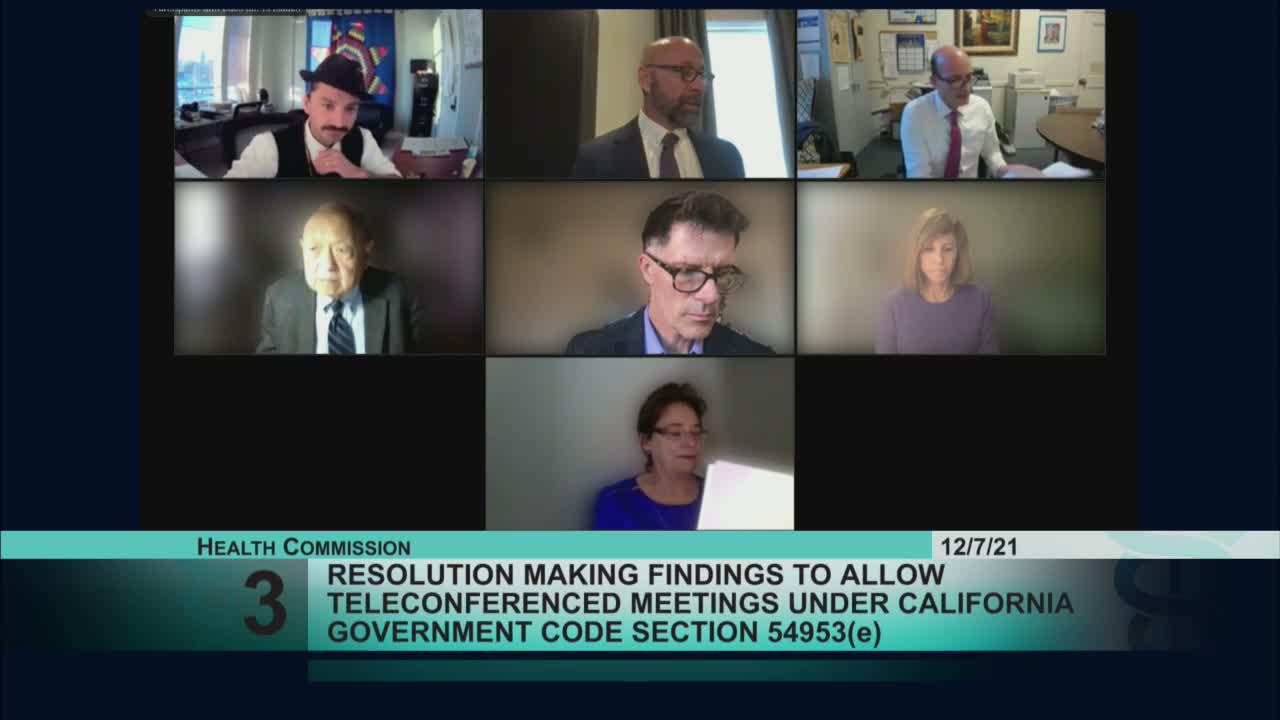
The San Francisco Health Commission on Dec. 15 heard community testimony and approved sending a draft resolution to the commission for a formal vote on Jan. 4 that directs the Department of Public Health to work with local American Indian and Alaska Native organizations to identify health priorities and remedy gaps in race/ethnicity data.
The draft resolution, read into the record by staff, asks DPH to establish sustained partnerships with tribal and urban Indian organizations, include accurate and disaggregated American Indian and Alaska Native data in public reporting where possible, add footnotes explaining missing race/ethnicity data in presentations, and present a recommended process to the Health Commission within six months with a summary report in one year.
Sharaya Souza, executive director of the American Indian Cultural District, told commissioners the city’s engagement and budget allocations undercount and underfund American Indian residents. “When we look at the vulnerable populations engagement assessment, American Indians came up four to six times; Latinx and Black communities were mentioned dozens of times,” she said, urging funding proportionate to documented impacts and culturally responsive services.
Dawila Harrison of Friendship House highlighted data fragmentation across Indian Health Service, city, and private health records and called for integrated data-sharing so programs such as her planned Village SF — a combined social services and cultural hub — can be planned with accurate needs assessments. “There needs to be a process of conversation to create more integrated data analysis and information that reflects our community,” she said.
Virginia (Yurok), executive director of the California Consortium for Urban Indian Health, cited prior state research showing racial misclassification rates of 30–60% in hospitalization and death records and said misclassification can hide public-health problems. “If you don’t know you have a problem, there’s not much you can do to address it,” she said.
DPH Director Grant Colfax thanked speakers and pledged departmental follow-through if the commission approves the resolution. “I take this extremely seriously and will work with Dr. Bennett and multiple others across DPH to ensure there’s a true partnership,” Colfax said.
The commission did not vote on the resolution at the Dec. 15 meeting; commissioners said the item will return for a formal vote on Jan. 4 and emphasized the six‑month and one‑year reporting deadlines spelled out in the draft resolution.
Next steps: The Health Commission will take the draft to a vote at its Jan. 4 meeting. If passed, DPH is directed to report back on community partnership processes within six months and to file a summary report within one year.
The draft resolution, read into the record by staff, asks DPH to establish sustained partnerships with tribal and urban Indian organizations, include accurate and disaggregated American Indian and Alaska Native data in public reporting where possible, add footnotes explaining missing race/ethnicity data in presentations, and present a recommended process to the Health Commission within six months with a summary report in one year.
Sharaya Souza, executive director of the American Indian Cultural District, told commissioners the city’s engagement and budget allocations undercount and underfund American Indian residents. “When we look at the vulnerable populations engagement assessment, American Indians came up four to six times; Latinx and Black communities were mentioned dozens of times,” she said, urging funding proportionate to documented impacts and culturally responsive services.
Dawila Harrison of Friendship House highlighted data fragmentation across Indian Health Service, city, and private health records and called for integrated data-sharing so programs such as her planned Village SF — a combined social services and cultural hub — can be planned with accurate needs assessments. “There needs to be a process of conversation to create more integrated data analysis and information that reflects our community,” she said.
Virginia (Yurok), executive director of the California Consortium for Urban Indian Health, cited prior state research showing racial misclassification rates of 30–60% in hospitalization and death records and said misclassification can hide public-health problems. “If you don’t know you have a problem, there’s not much you can do to address it,” she said.
DPH Director Grant Colfax thanked speakers and pledged departmental follow-through if the commission approves the resolution. “I take this extremely seriously and will work with Dr. Bennett and multiple others across DPH to ensure there’s a true partnership,” Colfax said.
The commission did not vote on the resolution at the Dec. 15 meeting; commissioners said the item will return for a formal vote on Jan. 4 and emphasized the six‑month and one‑year reporting deadlines spelled out in the draft resolution.
Next steps: The Health Commission will take the draft to a vote at its Jan. 4 meeting. If passed, DPH is directed to report back on community partnership processes within six months and to file a summary report within one year.
Don't Miss a Word: See the Full Meeting!
Go beyond summaries. Unlock every video, transcript, and key insight with a Founder Membership.
✓
Get instant access to full meeting videos
✓
Search and clip any phrase from complete transcripts
✓
Receive AI-powered summaries & custom alerts
✓
Enjoy lifetime, unrestricted access to government data
30-day money-back guarantee
