Laguna Honda outlines path to CMS recertification, warns of transfer challenges
June 07, 2022 | San Francisco City, San Francisco County, California
This article was created by AI summarizing key points discussed. AI makes mistakes, so for full details and context, please refer to the video of the full meeting. Please report any errors so we can fix them. Report an error »
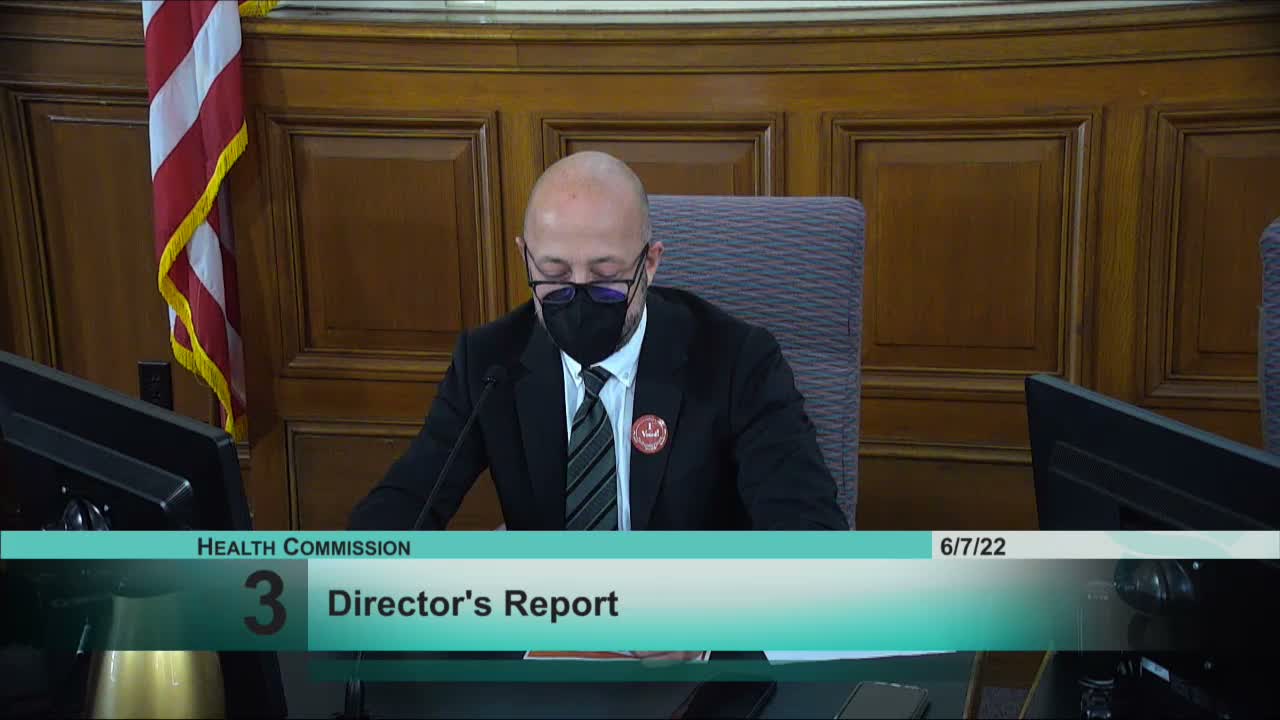
Roland Pickens, director of the San Francisco Health Network and interim CEO at Laguna Honda Hospital, told the San Francisco Health Commission on June 7 that recertification for participation in the Centers for Medicare & Medicaid Services (CMS) program is the hospital's top priority. "Recertification in the CMS program is our highest priority," Pickens said, outlining a timeline that includes an initial mock survey in June, a second mock survey in August and an application submission in August with an anticipated CMS survey in September.
Pickens said DPH contracted two consulting firms, Health Services Advisory Group (HSAG) and Health Management Associates (HMA), to perform a top-to-bottom assessment, help map findings to specific federal CMS regulations and to run mock surveys that simulate CMS inspections. He described the federal process as two-part: an initial survey followed by a 90-to-120-day "reasonable assurance" period during which CMS will verify that corrective actions are sustained before an unannounced second survey.
The commission heard that losing CMS certification triggered a CMS-required closure, patient transfer and relocation plan that CMS approved on May 13. With that approval came conditional extended payments: an initial four-month extension with a possible two-month extension contingent on progress implementing the transfer plan. Pickens said the department must demonstrate measurable patient transfers to maintain that funding.
Pickens described the transfer work as labor-intensive and highly individualized. Multidisciplinary teams have done placement assessments for residents'care needs; through May they had completed 205 placement assessments, held about 100 family/patient meetings and made 83 referrals for transfer or discharge. "This is a herculean task," Pickens said, noting the need to match patients'complex medical needs and payer status with facilities that can accept them.
A principal barrier is payer mix. Pickens said about 80% of Laguna Honda patients are covered by Medi-Cal, and SNFs apportion beds by payer type. In the May assessment weeks, Pickens'team found open beds in some facilities but few or no Medi-Cal-eligible beds available, which limits placement options. He said DPH is working daily with the 15 San Francisco SNFs, hundreds across the Bay Area and thousands statewide, and is coordinating with the California Department of Public Health and Department of Healthcare Services to press for support from other facilities and state partners.
Commissioners pressed staff about whether the recertification survey would hold Laguna Honda to new building standards or the standards in place when the hospital opened; Pickens said CMS and CDPH are being asked for clarification and DPH is conducting its own facilities work while awaiting a CMS response.
Pickens said staff also are identifying patients who no longer require SNF-level care and who might safely return to the community with wraparound services, and coordinating ambulance transport and other logistics when transfers are arranged. He acknowledged that if sufficient beds are not available locally, the city may need to seek placements outside California and that patient discharge appeals (run by the state) remain available and must be factored into planning.
The commission did not take a formal vote on policy; members thanked staff and asked for continued regular updates as the recertification and transfer work continues.
Ending: The commission requested further reports; Pickens said the teams will return with updated placement and transfer numbers at future meetings.
Pickens said DPH contracted two consulting firms, Health Services Advisory Group (HSAG) and Health Management Associates (HMA), to perform a top-to-bottom assessment, help map findings to specific federal CMS regulations and to run mock surveys that simulate CMS inspections. He described the federal process as two-part: an initial survey followed by a 90-to-120-day "reasonable assurance" period during which CMS will verify that corrective actions are sustained before an unannounced second survey.
The commission heard that losing CMS certification triggered a CMS-required closure, patient transfer and relocation plan that CMS approved on May 13. With that approval came conditional extended payments: an initial four-month extension with a possible two-month extension contingent on progress implementing the transfer plan. Pickens said the department must demonstrate measurable patient transfers to maintain that funding.
Pickens described the transfer work as labor-intensive and highly individualized. Multidisciplinary teams have done placement assessments for residents'care needs; through May they had completed 205 placement assessments, held about 100 family/patient meetings and made 83 referrals for transfer or discharge. "This is a herculean task," Pickens said, noting the need to match patients'complex medical needs and payer status with facilities that can accept them.
A principal barrier is payer mix. Pickens said about 80% of Laguna Honda patients are covered by Medi-Cal, and SNFs apportion beds by payer type. In the May assessment weeks, Pickens'team found open beds in some facilities but few or no Medi-Cal-eligible beds available, which limits placement options. He said DPH is working daily with the 15 San Francisco SNFs, hundreds across the Bay Area and thousands statewide, and is coordinating with the California Department of Public Health and Department of Healthcare Services to press for support from other facilities and state partners.
Commissioners pressed staff about whether the recertification survey would hold Laguna Honda to new building standards or the standards in place when the hospital opened; Pickens said CMS and CDPH are being asked for clarification and DPH is conducting its own facilities work while awaiting a CMS response.
Pickens said staff also are identifying patients who no longer require SNF-level care and who might safely return to the community with wraparound services, and coordinating ambulance transport and other logistics when transfers are arranged. He acknowledged that if sufficient beds are not available locally, the city may need to seek placements outside California and that patient discharge appeals (run by the state) remain available and must be factored into planning.
The commission did not take a formal vote on policy; members thanked staff and asked for continued regular updates as the recertification and transfer work continues.
Ending: The commission requested further reports; Pickens said the teams will return with updated placement and transfer numbers at future meetings.
Don't Miss a Word: See the Full Meeting!
Go beyond summaries. Unlock every video, transcript, and key insight with a Founder Membership.
✓
Get instant access to full meeting videos
✓
Search and clip any phrase from complete transcripts
✓
Receive AI-powered summaries & custom alerts
✓
Enjoy lifetime, unrestricted access to government data
30-day money-back guarantee
