Gender Health SF marks 10 years, cites surgery access, coverage and capacity limits
June 21, 2022 | San Francisco City, San Francisco County, California
This article was created by AI summarizing key points discussed. AI makes mistakes, so for full details and context, please refer to the video of the full meeting. Please report any errors so we can fix them. Report an error »
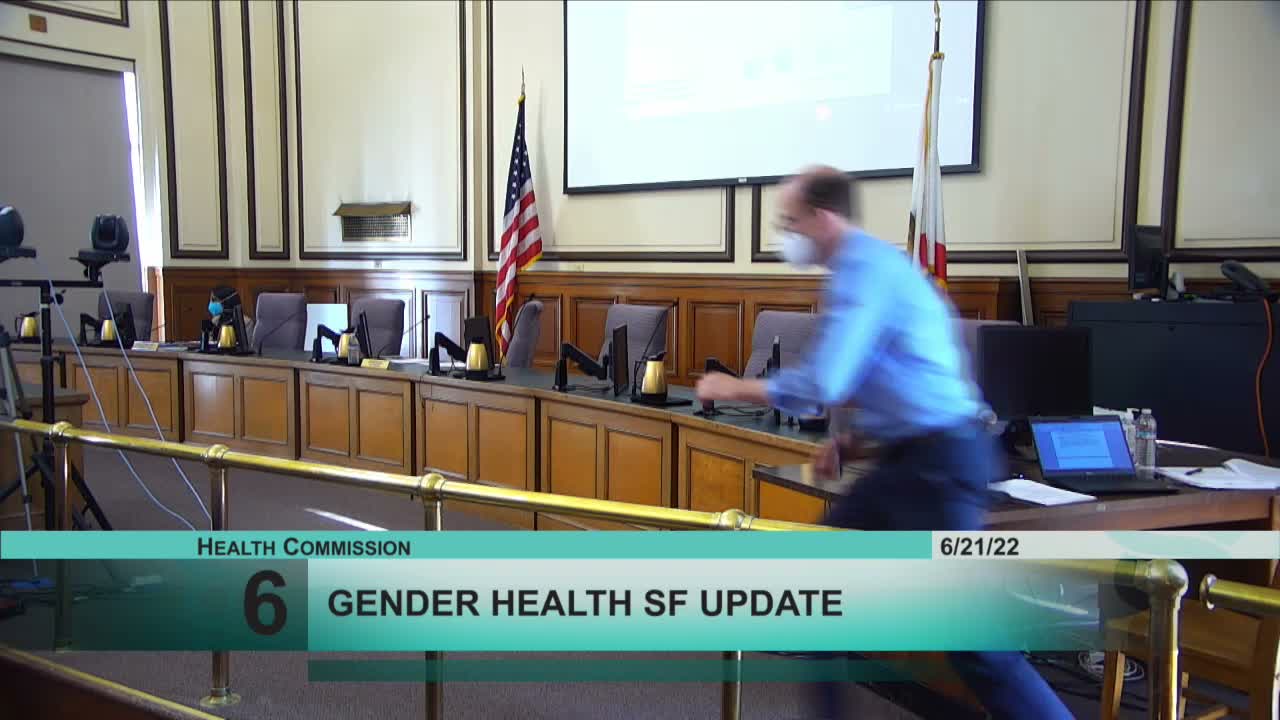
Gender Health SF celebrated its 10th anniversary and urged continued investment as program leaders outlined robust navigation services alongside persistent access and funding challenges.
Program director Jenna Rap West told the Health Commission the Department of Public Health program provides primary care, behavioral health, hormone therapy and a peer‑led navigation service that helps trans and non‑binary San Franciscans access gender‑affirming surgeries and supports. “My name is Jenna Rap West. I use she/her pronouns. I’m the program director of Gender Health SF,” she said during the June 21 presentation.
The program evaluation presented by research director Seth Pardo shows the program has followed 855 unduplicated patients since 2013, producing about 1,400 referrals and roughly 800 completed surgeries. “The average referrals received annually total about 188,” Pardo said, and about 83 percent of referrals are for feminizing procedures. Qualitative interviews summarized by Pardo found many patients reported improvements in body discomfort, gender dysphoria and overall quality of life, while others noted emotional and financial distress when surgery dates were delayed.
Commissioners focused questions on which procedures are performed inside the City’s hospital system and which require out‑of‑network surgeons. Medical director Barry Zevin said San Francisco General performs breast/chest surgeries, orchiectomy and hysterectomy, while vaginoplasty, phalloplasty and many facial/body procedures are typically referred to private, out‑of‑network specialists. Zevin cited operating‑room scheduling and staffing constraints as barriers to expanding the in‑system surgical portfolio.
Program staff also flagged coverage gaps for fertility preservation when procedures include sterilization. Presenters noted a 2019 state law (referred to in the presentation as SB 600) extended fertility‑preservation coverage for commercially insured people but that publicly insured patients do not yet have the same benefit. Jenna Rap West said the program is working with the San Francisco Health Plan and advocates to expand access for publicly insured residents.
The presentation described funding limits: Gender Health SF receives a Healthy San Francisco carve‑out of $350,000 annually to cover uninsured patients, a pool that staff say is small relative to surgical costs—presenters cited examples such as vaginoplasty, with facility and revision costs that can approach six figures. Commissioners asked staff to provide an analysis of per‑patient and per‑surgery costs to better understand fiscal needs and tradeoffs.
Looking ahead, Gender Health SF plans to co‑locate services at the Castro Mission Health Center to improve access, expand workforce development for peer navigators, and continue partnerships with UCSF and other clinical sites for youth and specialized care. The commission thanked presenters for maintaining services during the pandemic and for the program’s community‑centered approach.
The Health Commission requested follow‑up information including a breakdown of staffing and an estimated per‑patient cost analysis for surgical pathways; staff agreed to provide those details to commissioners.
Program director Jenna Rap West told the Health Commission the Department of Public Health program provides primary care, behavioral health, hormone therapy and a peer‑led navigation service that helps trans and non‑binary San Franciscans access gender‑affirming surgeries and supports. “My name is Jenna Rap West. I use she/her pronouns. I’m the program director of Gender Health SF,” she said during the June 21 presentation.
The program evaluation presented by research director Seth Pardo shows the program has followed 855 unduplicated patients since 2013, producing about 1,400 referrals and roughly 800 completed surgeries. “The average referrals received annually total about 188,” Pardo said, and about 83 percent of referrals are for feminizing procedures. Qualitative interviews summarized by Pardo found many patients reported improvements in body discomfort, gender dysphoria and overall quality of life, while others noted emotional and financial distress when surgery dates were delayed.
Commissioners focused questions on which procedures are performed inside the City’s hospital system and which require out‑of‑network surgeons. Medical director Barry Zevin said San Francisco General performs breast/chest surgeries, orchiectomy and hysterectomy, while vaginoplasty, phalloplasty and many facial/body procedures are typically referred to private, out‑of‑network specialists. Zevin cited operating‑room scheduling and staffing constraints as barriers to expanding the in‑system surgical portfolio.
Program staff also flagged coverage gaps for fertility preservation when procedures include sterilization. Presenters noted a 2019 state law (referred to in the presentation as SB 600) extended fertility‑preservation coverage for commercially insured people but that publicly insured patients do not yet have the same benefit. Jenna Rap West said the program is working with the San Francisco Health Plan and advocates to expand access for publicly insured residents.
The presentation described funding limits: Gender Health SF receives a Healthy San Francisco carve‑out of $350,000 annually to cover uninsured patients, a pool that staff say is small relative to surgical costs—presenters cited examples such as vaginoplasty, with facility and revision costs that can approach six figures. Commissioners asked staff to provide an analysis of per‑patient and per‑surgery costs to better understand fiscal needs and tradeoffs.
Looking ahead, Gender Health SF plans to co‑locate services at the Castro Mission Health Center to improve access, expand workforce development for peer navigators, and continue partnerships with UCSF and other clinical sites for youth and specialized care. The commission thanked presenters for maintaining services during the pandemic and for the program’s community‑centered approach.
The Health Commission requested follow‑up information including a breakdown of staffing and an estimated per‑patient cost analysis for surgical pathways; staff agreed to provide those details to commissioners.
View the Full Meeting & All Its Details
This article offers just a summary. Unlock complete video, transcripts, and insights as a Founder Member.
✓
Watch full, unedited meeting videos
✓
Search every word spoken in unlimited transcripts
✓
AI summaries & real-time alerts (all government levels)
✓
Permanent access to expanding government content
30-day money-back guarantee
