Health Department outlines $8M Health Access Point awards to target HIV, hepatitis C and STIs
June 21, 2022 | San Francisco City, San Francisco County, California
This article was created by AI summarizing key points discussed. AI makes mistakes, so for full details and context, please refer to the video of the full meeting. Please report any errors so we can fix them. Report an error »
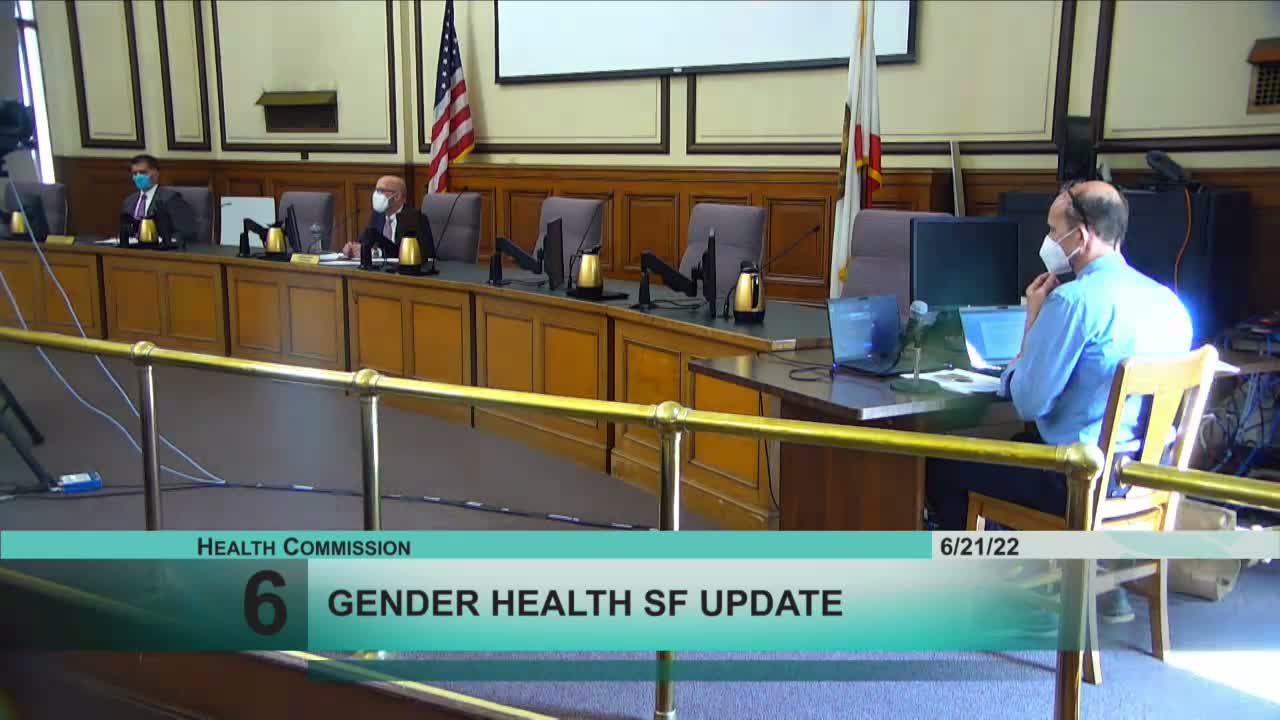
Department of Public Health staff described planned funding changes intended to concentrate prevention and care for HIV, hepatitis C and sexually transmitted infections into a set of community Health Access Points (HAPs) focused on equity.
Bill (presenter) outlined the overall care funding landscape: federal Ryan White Part A funds of roughly $17,000,000, state funding of about $3,500,000 and San Francisco general fund support exceeding $22,000,000, bringing total HIV care services in the city to about $42,000,000. He described a decades‑long federal funding decline that local budgets have backfilled and noted recent one‑year increases tied to ending‑the‑epidemic grants.
Tracy Packer summarized prevention funding: changes to CDC formulas reduced some federal prevention dollars in past years; however, Comp C (an opt‑in CDC demonstration) funding was reported as increased from $450,000 to $800,000 annually and the Mayor’s Office added $3,000,000 for HIV prevention beginning July 1 to support equity‑focused programs. Packer said the funding mix now relies heavily on general funds to preserve and extend community services.
Nisha Underwood described the HAP RFP design and timeline: stakeholder engagement began in 2018, the model integrates Hep C and STI work with HIV prevention and emphasizes low‑barrier, stigma‑free services, harm reduction and warm handoffs to primary care and mental health. The RFP prioritized seven service categories/populations (Latinx, trans women, people who use drugs including people who inject drugs, gay/MSM, Asian and Pacific Islander, young adults 18–24, and Black/African American). The department allocated about half of the initial $8,000,000 to Latinx and Black/African American access points in recognition of where disparities persist.
DPH said it is meeting with selected vendors, negotiating contracts and will provide technical assistance after contracting; staff will return to the Health Commission with implementation reports. Commissioners thanked staff for centering equity while raising questions about long‑term funding sustainability and the operational supports required to implement the model.
Bill (presenter) outlined the overall care funding landscape: federal Ryan White Part A funds of roughly $17,000,000, state funding of about $3,500,000 and San Francisco general fund support exceeding $22,000,000, bringing total HIV care services in the city to about $42,000,000. He described a decades‑long federal funding decline that local budgets have backfilled and noted recent one‑year increases tied to ending‑the‑epidemic grants.
Tracy Packer summarized prevention funding: changes to CDC formulas reduced some federal prevention dollars in past years; however, Comp C (an opt‑in CDC demonstration) funding was reported as increased from $450,000 to $800,000 annually and the Mayor’s Office added $3,000,000 for HIV prevention beginning July 1 to support equity‑focused programs. Packer said the funding mix now relies heavily on general funds to preserve and extend community services.
Nisha Underwood described the HAP RFP design and timeline: stakeholder engagement began in 2018, the model integrates Hep C and STI work with HIV prevention and emphasizes low‑barrier, stigma‑free services, harm reduction and warm handoffs to primary care and mental health. The RFP prioritized seven service categories/populations (Latinx, trans women, people who use drugs including people who inject drugs, gay/MSM, Asian and Pacific Islander, young adults 18–24, and Black/African American). The department allocated about half of the initial $8,000,000 to Latinx and Black/African American access points in recognition of where disparities persist.
DPH said it is meeting with selected vendors, negotiating contracts and will provide technical assistance after contracting; staff will return to the Health Commission with implementation reports. Commissioners thanked staff for centering equity while raising questions about long‑term funding sustainability and the operational supports required to implement the model.
View the Full Meeting & All Its Details
This article offers just a summary. Unlock complete video, transcripts, and insights as a Founder Member.
✓
Watch full, unedited meeting videos
✓
Search every word spoken in unlimited transcripts
✓
AI summaries & real-time alerts (all government levels)
✓
Permanent access to expanding government content
30-day money-back guarantee
