Health Commission hears HIV epidemiology update as DPH outlines Health Access Points and Getting to 0 priorities
October 04, 2022 | San Francisco City, San Francisco County, California
This article was created by AI summarizing key points discussed. AI makes mistakes, so for full details and context, please refer to the video of the full meeting. Please report any errors so we can fix them. Report an error »
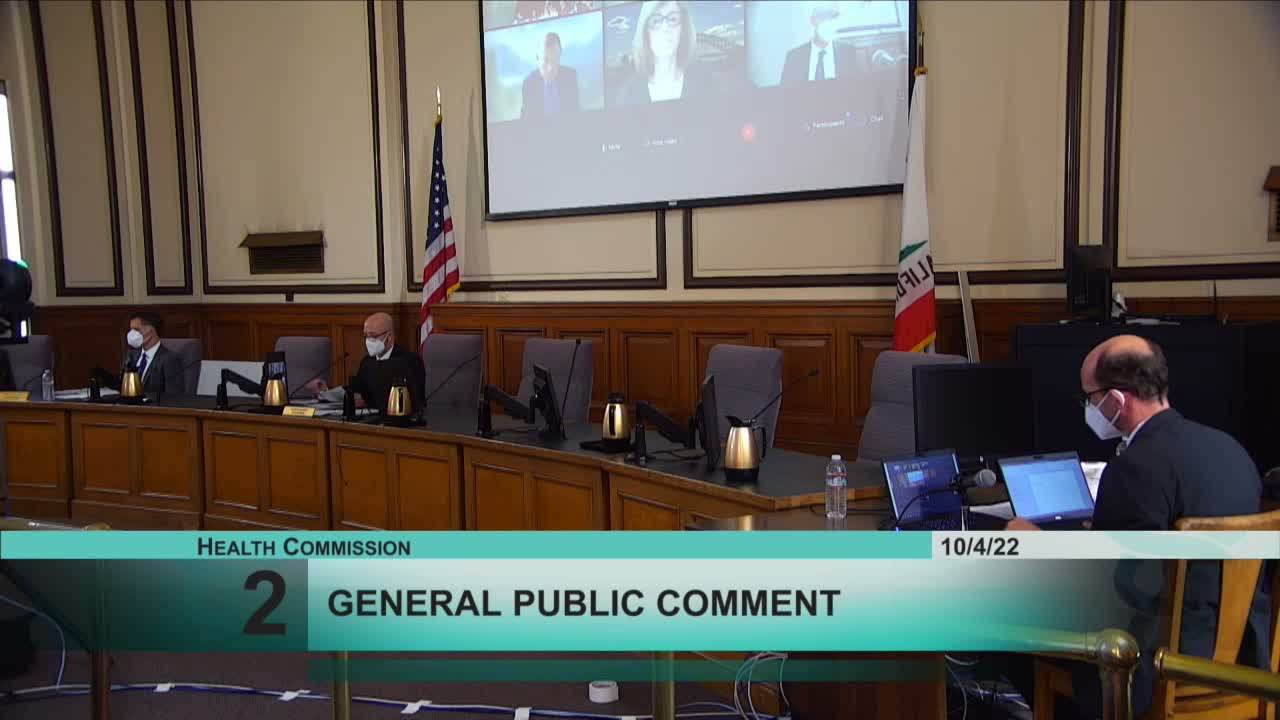
The San Francisco Department of Public Health on Oct. 4 presented its 2021 HIV epidemiology report to the Health Commission and described a slate of program changes aimed at narrowing persistent disparities.
Dr. Scott, a physician in the DPH epidemiology and Getting to 0 steering committee, told commissioners that new HIV diagnoses in the city remain below 2019 levels but rose slightly from 138 to 160 in 2021. "Overall in San Francisco, we have about 15,600 people living with HIV," Dr. Scott said, and he noted that more than 70 percent of those individuals are 50 or older. He flagged widening gaps in care for people experiencing homelessness and increases in overdose deaths among people living with HIV.
DPH outlined a set of Getting to 0 priorities centered on racial equity, including expanded PrEP and STI prevention, rapid initiation and re‑engagement on antiretroviral therapy, tailored services for aging people with HIV and overdose‑prevention measures. The department highlighted planned work on DoxyPEP and long‑acting antiretroviral options as emerging tools in prevention and treatment.
Nyesha Underwood, acting manager for the Ending the Epidemic initiative in the Community Health Equity and Promotion branch, described Health Access Points (HAPs) as RFP‑funded, integrated "one‑stop" sites providing HIV, Hep C and STI testing, harm‑reduction and basic needs services. Underwood said about one‑half of HAP funding is targeted to Black/African American and Latinx communities and that HAP contracts are slated to begin Jan. 1, 2023. She said community‑based organizations will collect program data under new performance measures and that DPH is building a data management system to aggregate those reports.
Dr. Stephanie Cohen, medical director of San Francisco City Clinic and director of HIV/STI prevention, reviewed clinical interventions and workforce supports. She cited LINCS navigation outcomes — "62 percent achieved viral suppression 12 months after they began working with LINCS" for a small cohort of homeless clients — and described RADAR, a training program for Disease Intervention Specialists to strengthen outbreak and surge response capacity.
Commissioners pressed staff for concrete implementation figures and reporting timelines. Commissioner Jurado asked whether DPH could provide numbers served and the operational timetable for HAP rollouts; Underwood responded that CBOs must collect the data and DPH will provide performance measures and a data system. Commissioners also sought comparisons to other jurisdictions and asked staff to present more disaggregated results for populations experiencing the greatest disparities.
DPH said it will return with additional data and that presenters are available for follow‑up questions as the HAP contracts begin in January.
The commission took no formal action related to the HAP contracts at this meeting; contract items appeared on the consent calendar and were approved later in the agenda.
Dr. Scott, a physician in the DPH epidemiology and Getting to 0 steering committee, told commissioners that new HIV diagnoses in the city remain below 2019 levels but rose slightly from 138 to 160 in 2021. "Overall in San Francisco, we have about 15,600 people living with HIV," Dr. Scott said, and he noted that more than 70 percent of those individuals are 50 or older. He flagged widening gaps in care for people experiencing homelessness and increases in overdose deaths among people living with HIV.
DPH outlined a set of Getting to 0 priorities centered on racial equity, including expanded PrEP and STI prevention, rapid initiation and re‑engagement on antiretroviral therapy, tailored services for aging people with HIV and overdose‑prevention measures. The department highlighted planned work on DoxyPEP and long‑acting antiretroviral options as emerging tools in prevention and treatment.
Nyesha Underwood, acting manager for the Ending the Epidemic initiative in the Community Health Equity and Promotion branch, described Health Access Points (HAPs) as RFP‑funded, integrated "one‑stop" sites providing HIV, Hep C and STI testing, harm‑reduction and basic needs services. Underwood said about one‑half of HAP funding is targeted to Black/African American and Latinx communities and that HAP contracts are slated to begin Jan. 1, 2023. She said community‑based organizations will collect program data under new performance measures and that DPH is building a data management system to aggregate those reports.
Dr. Stephanie Cohen, medical director of San Francisco City Clinic and director of HIV/STI prevention, reviewed clinical interventions and workforce supports. She cited LINCS navigation outcomes — "62 percent achieved viral suppression 12 months after they began working with LINCS" for a small cohort of homeless clients — and described RADAR, a training program for Disease Intervention Specialists to strengthen outbreak and surge response capacity.
Commissioners pressed staff for concrete implementation figures and reporting timelines. Commissioner Jurado asked whether DPH could provide numbers served and the operational timetable for HAP rollouts; Underwood responded that CBOs must collect the data and DPH will provide performance measures and a data system. Commissioners also sought comparisons to other jurisdictions and asked staff to present more disaggregated results for populations experiencing the greatest disparities.
DPH said it will return with additional data and that presenters are available for follow‑up questions as the HAP contracts begin in January.
The commission took no formal action related to the HAP contracts at this meeting; contract items appeared on the consent calendar and were approved later in the agenda.
View the Full Meeting & All Its Details
This article offers just a summary. Unlock complete video, transcripts, and insights as a Founder Member.
✓
Watch full, unedited meeting videos
✓
Search every word spoken in unlimited transcripts
✓
AI summaries & real-time alerts (all government levels)
✓
Permanent access to expanding government content
30-day money-back guarantee
