San Francisco outlines plan to reclaim unclaimed 'City Option' funds; $144M moved to active accounts
May 02, 2023 | San Francisco City, San Francisco County, California
This article was created by AI summarizing key points discussed. AI makes mistakes, so for full details and context, please refer to the video of the full meeting. Please report any errors so we can fix them. Report an error »
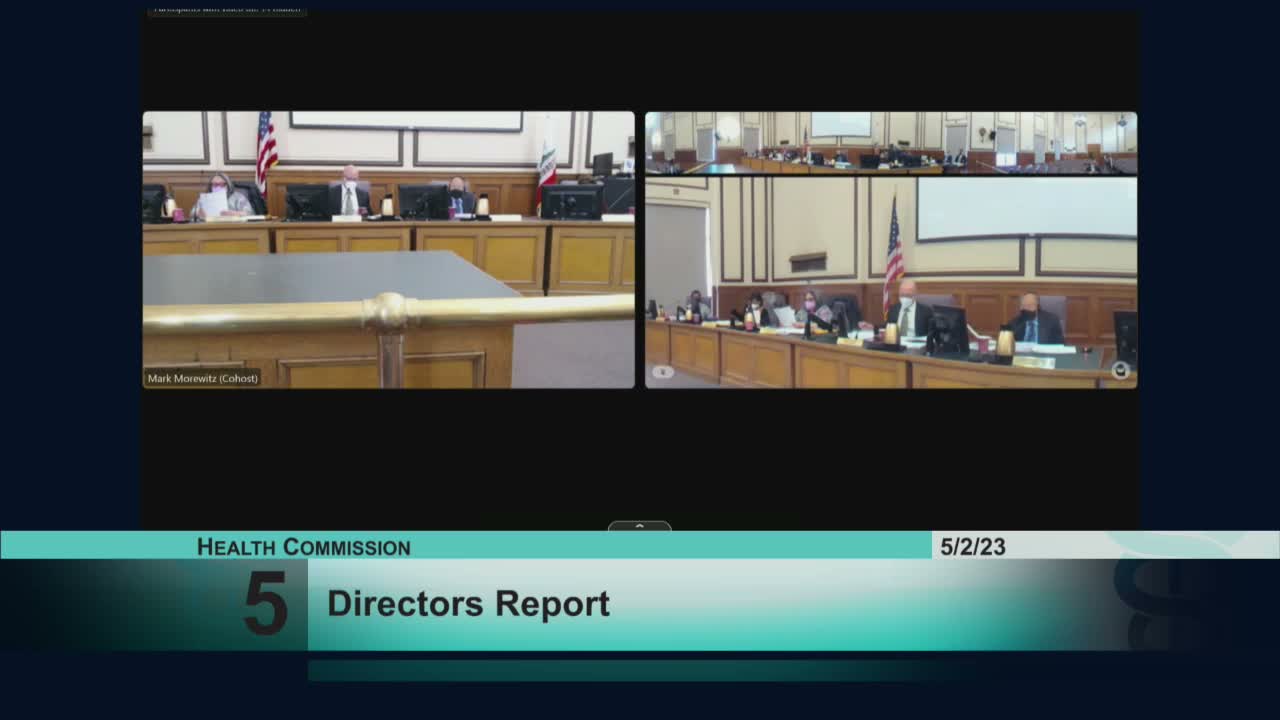
Stella Chao, director of managed care at the San Francisco Department of Public Health, briefed the Health Commission on May 2 on the San Francisco City Option program and the in-shipment policy the commission approved in January 2022.
How the program works: Under the health-care security ordinance, employers contribute on employees' behalf into a City Option fund. When employees activate a San Francisco Medical Reimbursement Account (SFMRA), future contributions go directly into that account and employees can file claims for eligible medical expenses. Chao said the city has worked with the Treasurer and Tax Collector (TTX) and controller to place program funds in a city treasury bank account and to notify employers and employees about the in-shipment policy.
Outreach results and fund totals: Chao said a six-week outreach campaign moved $144,000,000 from the unassigned fund pool into active SFMRA accounts and paid $51,000,000 in claims during the campaign. She reported $1.66 billion has been contributed to the program since its 2008 inception; roughly 28% of total contributions remain in the unassigned pool. Department staff said about 428,000 employees are in the City Option program and about 150,000 employees have unclaimed balances but have not enrolled in SFMRA accounts.
Legal timeline and next steps: Because state law requires a three-year notification period before unclaimed funds can be initiated (escheated), the department said the earliest such initiation is mid-April 2026. To prepare, DPH plans additional outreach, an online lookup tool for employees to check balances, procedures for closing accounts, and low-barrier payment options such as debit cards. Chao and Sumi Sousa (the program's third-party administrator) said most funds in the pool are less than three years old and that recent outreach significantly increased activation of accounts.
Commissioner questions focused on whether funds are genuinely unclaimed versus being held by still-active employees who simply have not enrolled; Sumi Sousa said employers are not required to provide employee-level detail beyond limited demographics, so the department uses age-of-money data and outreach response rates to estimate how much will be initiated. Sousa said a large share of the pool is relatively new money and that ongoing outreach and easier payment tools aim to maximize recovery by active employees.
Outcome: The presentation was informational; commissioners thanked staff for the outreach results and encouraged continued preparation ahead of the three-year escheat window.
Provenance: Presentation and Q&A (SEG 1495'SEG 1756).
How the program works: Under the health-care security ordinance, employers contribute on employees' behalf into a City Option fund. When employees activate a San Francisco Medical Reimbursement Account (SFMRA), future contributions go directly into that account and employees can file claims for eligible medical expenses. Chao said the city has worked with the Treasurer and Tax Collector (TTX) and controller to place program funds in a city treasury bank account and to notify employers and employees about the in-shipment policy.
Outreach results and fund totals: Chao said a six-week outreach campaign moved $144,000,000 from the unassigned fund pool into active SFMRA accounts and paid $51,000,000 in claims during the campaign. She reported $1.66 billion has been contributed to the program since its 2008 inception; roughly 28% of total contributions remain in the unassigned pool. Department staff said about 428,000 employees are in the City Option program and about 150,000 employees have unclaimed balances but have not enrolled in SFMRA accounts.
Legal timeline and next steps: Because state law requires a three-year notification period before unclaimed funds can be initiated (escheated), the department said the earliest such initiation is mid-April 2026. To prepare, DPH plans additional outreach, an online lookup tool for employees to check balances, procedures for closing accounts, and low-barrier payment options such as debit cards. Chao and Sumi Sousa (the program's third-party administrator) said most funds in the pool are less than three years old and that recent outreach significantly increased activation of accounts.
Commissioner questions focused on whether funds are genuinely unclaimed versus being held by still-active employees who simply have not enrolled; Sumi Sousa said employers are not required to provide employee-level detail beyond limited demographics, so the department uses age-of-money data and outreach response rates to estimate how much will be initiated. Sousa said a large share of the pool is relatively new money and that ongoing outreach and easier payment tools aim to maximize recovery by active employees.
Outcome: The presentation was informational; commissioners thanked staff for the outreach results and encouraged continued preparation ahead of the three-year escheat window.
Provenance: Presentation and Q&A (SEG 1495'SEG 1756).
Don't Miss a Word: See the Full Meeting!
Go beyond summaries. Unlock every video, transcript, and key insight with a Founder Membership.
✓
Get instant access to full meeting videos
✓
Search and clip any phrase from complete transcripts
✓
Receive AI-powered summaries & custom alerts
✓
Enjoy lifetime, unrestricted access to government data
30-day money-back guarantee
