Residents, physicians press San Francisco Health Commission to act on Hunters Point contamination; DPH vows coordinated outreach
September 05, 2023 | San Francisco City, San Francisco County, California
This article was created by AI summarizing key points discussed. AI makes mistakes, so for full details and context, please refer to the video of the full meeting. Please report any errors so we can fix them. Report an error »
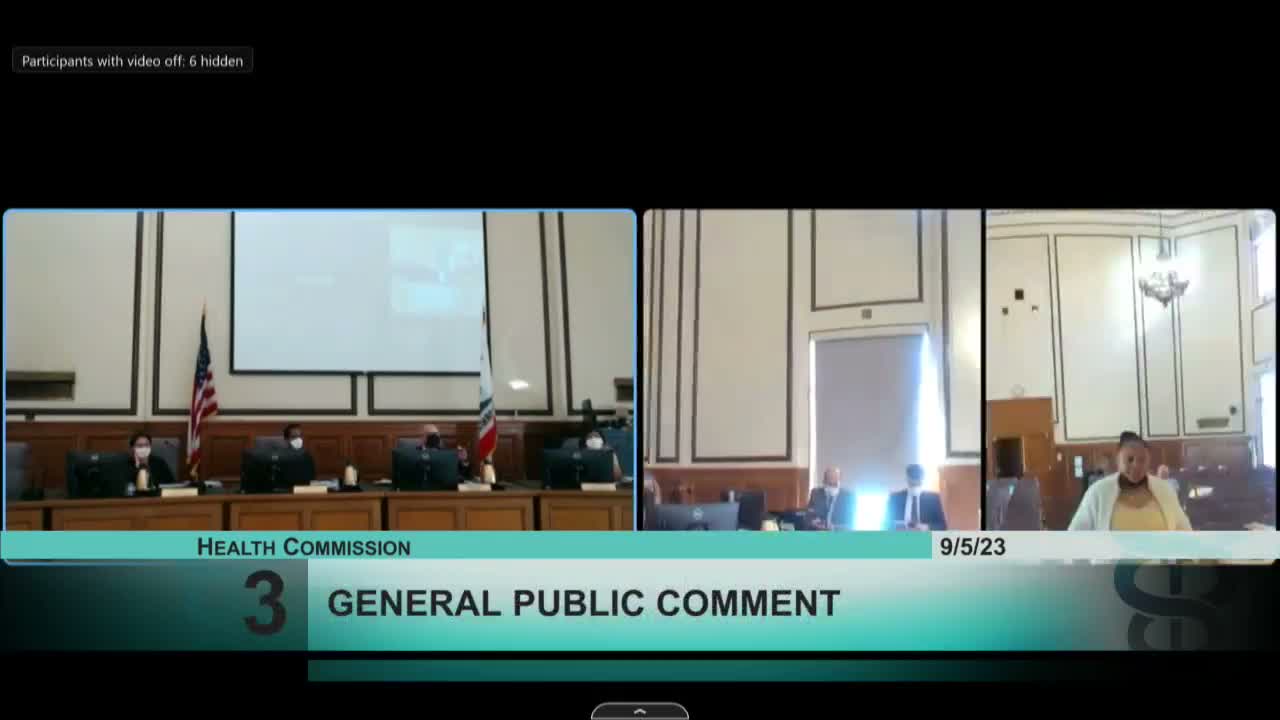
At the Sept. 5 meeting of the San Francisco Health Commission, several speakers called for immediate action to protect residents near the Hunters Point Naval Shipyard, citing dust and toxic exposures.
Dr. Ahimsa Portasync Chai, a former San Francisco Department of Public Health physician specialist, told commissioners that children’s playgrounds and informal encampments sit within 500 feet of excavation activity along the shipyard’s western fence line and described a lack of basic dust barriers. “People who live on city streets like Griffith, Crisp Avenue, Revere and Fitch are being exposed to toxins from deep soil excavations,” Chai said, urging the commission to direct Article 31 revenue toward reinforcing the fence line and enforcing Proposition 65 violations.
After the public comments, Director of Health Grant Colfax and the department’s public health lead for this effort, Dr. Philip, said the department is assembling a multidisciplinary team to press for clearer communication from the Navy and regulatory agencies. Dr. Philip said DPH will join regulator communications workgroups and conduct biweekly internal planning while reaching out directly to community members. The department committed to returning to the commission with a formal update in January.
Commissioners pressed DPH to do more than relay information: they sought earlier engagement with the Navy and regulators and emphasized monitoring and testing for people living closest to contaminated sites. Commissioner Christian said DPH lacks regulatory authority over Navy cleanup decisions but nevertheless can advocate on residents’ behalf and coordinate with state and federal regulators. Commissioner Green asked DPH to report back on what responses and information DPH is receiving from partner agencies.
DPH described planned next steps as a two-track approach: parallel engagement with regulators to press for clearer communication and targeted community outreach to improve public access to technical information. Commissioners also urged DPH to explore expanded environmental and biomonitoring in the neighborhoods most likely to be affected.
The commission did not take a formal vote on the matter; DPH will report again in January with the results of its outreach and any recommended department-led actions.
Dr. Ahimsa Portasync Chai, a former San Francisco Department of Public Health physician specialist, told commissioners that children’s playgrounds and informal encampments sit within 500 feet of excavation activity along the shipyard’s western fence line and described a lack of basic dust barriers. “People who live on city streets like Griffith, Crisp Avenue, Revere and Fitch are being exposed to toxins from deep soil excavations,” Chai said, urging the commission to direct Article 31 revenue toward reinforcing the fence line and enforcing Proposition 65 violations.
After the public comments, Director of Health Grant Colfax and the department’s public health lead for this effort, Dr. Philip, said the department is assembling a multidisciplinary team to press for clearer communication from the Navy and regulatory agencies. Dr. Philip said DPH will join regulator communications workgroups and conduct biweekly internal planning while reaching out directly to community members. The department committed to returning to the commission with a formal update in January.
Commissioners pressed DPH to do more than relay information: they sought earlier engagement with the Navy and regulators and emphasized monitoring and testing for people living closest to contaminated sites. Commissioner Christian said DPH lacks regulatory authority over Navy cleanup decisions but nevertheless can advocate on residents’ behalf and coordinate with state and federal regulators. Commissioner Green asked DPH to report back on what responses and information DPH is receiving from partner agencies.
DPH described planned next steps as a two-track approach: parallel engagement with regulators to press for clearer communication and targeted community outreach to improve public access to technical information. Commissioners also urged DPH to explore expanded environmental and biomonitoring in the neighborhoods most likely to be affected.
The commission did not take a formal vote on the matter; DPH will report again in January with the results of its outreach and any recommended department-led actions.
View the Full Meeting & All Its Details
This article offers just a summary. Unlock complete video, transcripts, and insights as a Founder Member.
✓
Watch full, unedited meeting videos
✓
Search every word spoken in unlimited transcripts
✓
AI summaries & real-time alerts (all government levels)
✓
Permanent access to expanding government content
30-day money-back guarantee
