St. Joseph council approves ARPA transfer for 27 police vehicles after amendment fails
May 30, 2023 | St. Joseph, Buchanan County, Missouri
This article was created by AI summarizing key points discussed. AI makes mistakes, so for full details and context, please refer to the video of the full meeting. Please report any errors so we can fix them. Report an error »
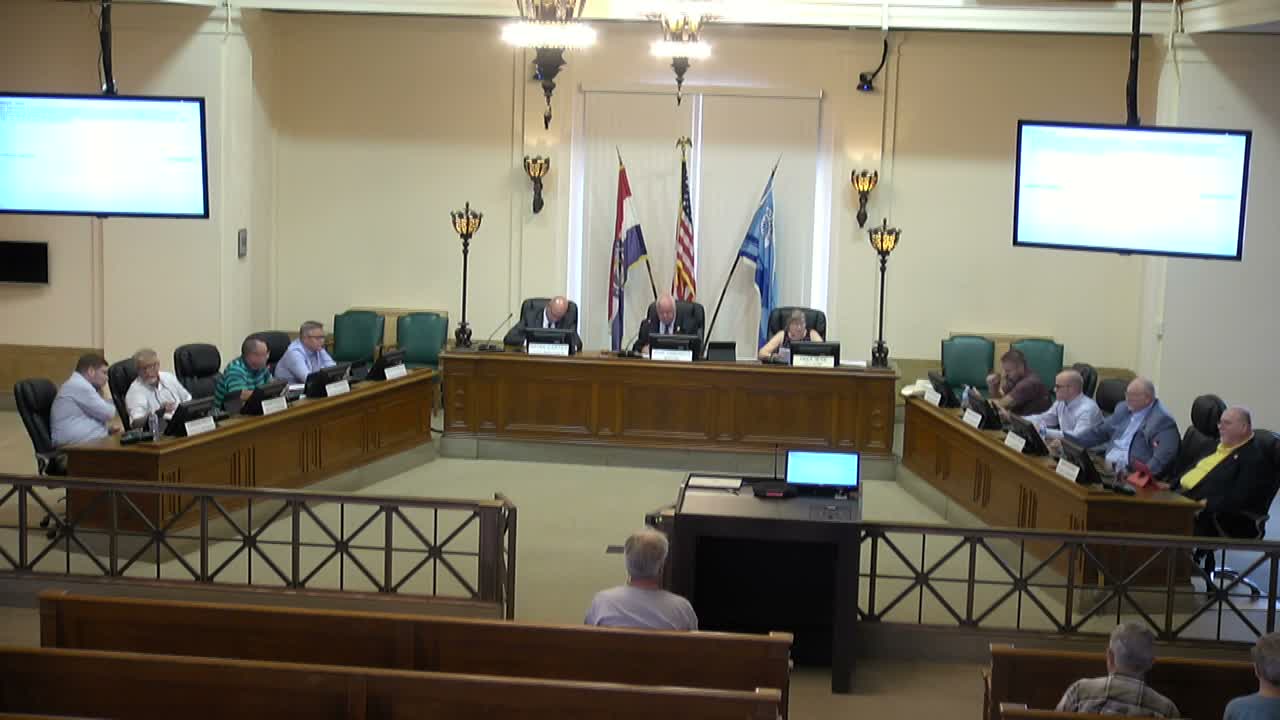
At a City Council meeting, the St. Joseph City Council approved an ordinance authorizing the transfer of $2,484,000 from the American Rescue Plan Act (ARPA) fund to the general fund police department program to purchase 27 Chevrolet Tahoes, passing the measure 8–1.
Council members and staff spent an extended portion of the meeting debating fleet strategy and procurement timing. One council member with an automotive background urged adding 10 vehicles now—citing maintenance savings and recruiting benefits from a take-home vehicle program—while other council members and staff recommended approving the 27-vehicle purchase now and handling any additional vehicles through a separate resolution or future ordinance to ensure clarity and proper appropriation.
City Manager Brian explained the technical options on the record: the council could amend the ordinance tonight to increase the vehicle count and appropriation, make a nonbinding motion of intent for a future ARPA purchase, or prepare a written ordinance/resolution for a subsequent meeting. He cautioned that, technically, funds should be appropriated before placing orders and that an emergency ordinance might be needed to meet vehicle order windows.
An amendment moved to change the ordinance to authorize 37 vehicles (with staff discussing an estimated total in the $3.3–$3.4 million range and noting a typographical confusion on the record) was seconded and put to a vote; the amendment failed 4–5. The council then voted on the original ordinance (27 vehicles at $47,500 unit cost plus $44,500 setup per vehicle) and approved it 8–1.
The city manager later said he would prepare a resolution stating the council’s intent to purchase an additional 10 police vehicles using ARPA funds for consideration at the next council meeting, so that staff can pursue orderly procurement while giving the incoming police chief time to weigh in.
The ordinance authorizes the transfer of $2,484,000 from ARPA to fund the 27 Tahoes and associated setup costs. The council discussed ordering windows, supply-chain constraints, the potential cost advantages of bulk equipment purchases, and staggered replacement strategies to avoid a future large simultaneous replacement expense.
Action on the ordinance was final at the meeting; staff indicated follow-up steps for any further appropriation or emergency ordinance if the council pursues additional vehicles before the next meeting.
Council members and staff spent an extended portion of the meeting debating fleet strategy and procurement timing. One council member with an automotive background urged adding 10 vehicles now—citing maintenance savings and recruiting benefits from a take-home vehicle program—while other council members and staff recommended approving the 27-vehicle purchase now and handling any additional vehicles through a separate resolution or future ordinance to ensure clarity and proper appropriation.
City Manager Brian explained the technical options on the record: the council could amend the ordinance tonight to increase the vehicle count and appropriation, make a nonbinding motion of intent for a future ARPA purchase, or prepare a written ordinance/resolution for a subsequent meeting. He cautioned that, technically, funds should be appropriated before placing orders and that an emergency ordinance might be needed to meet vehicle order windows.
An amendment moved to change the ordinance to authorize 37 vehicles (with staff discussing an estimated total in the $3.3–$3.4 million range and noting a typographical confusion on the record) was seconded and put to a vote; the amendment failed 4–5. The council then voted on the original ordinance (27 vehicles at $47,500 unit cost plus $44,500 setup per vehicle) and approved it 8–1.
The city manager later said he would prepare a resolution stating the council’s intent to purchase an additional 10 police vehicles using ARPA funds for consideration at the next council meeting, so that staff can pursue orderly procurement while giving the incoming police chief time to weigh in.
The ordinance authorizes the transfer of $2,484,000 from ARPA to fund the 27 Tahoes and associated setup costs. The council discussed ordering windows, supply-chain constraints, the potential cost advantages of bulk equipment purchases, and staggered replacement strategies to avoid a future large simultaneous replacement expense.
Action on the ordinance was final at the meeting; staff indicated follow-up steps for any further appropriation or emergency ordinance if the council pursues additional vehicles before the next meeting.
Don't Miss a Word: See the Full Meeting!
Go beyond summaries. Unlock every video, transcript, and key insight with a Founder Membership.
✓
Get instant access to full meeting videos
✓
Search and clip any phrase from complete transcripts
✓
Receive AI-powered summaries & custom alerts
✓
Enjoy lifetime, unrestricted access to government data
30-day money-back guarantee
