Planning Commission recommends trail standards for new St. Joseph subdivisions
May 25, 2023 | St. Joseph, Buchanan County, Missouri
This article was created by AI summarizing key points discussed. AI makes mistakes, so for full details and context, please refer to the video of the full meeting. Please report any errors so we can fix them. Report an error »
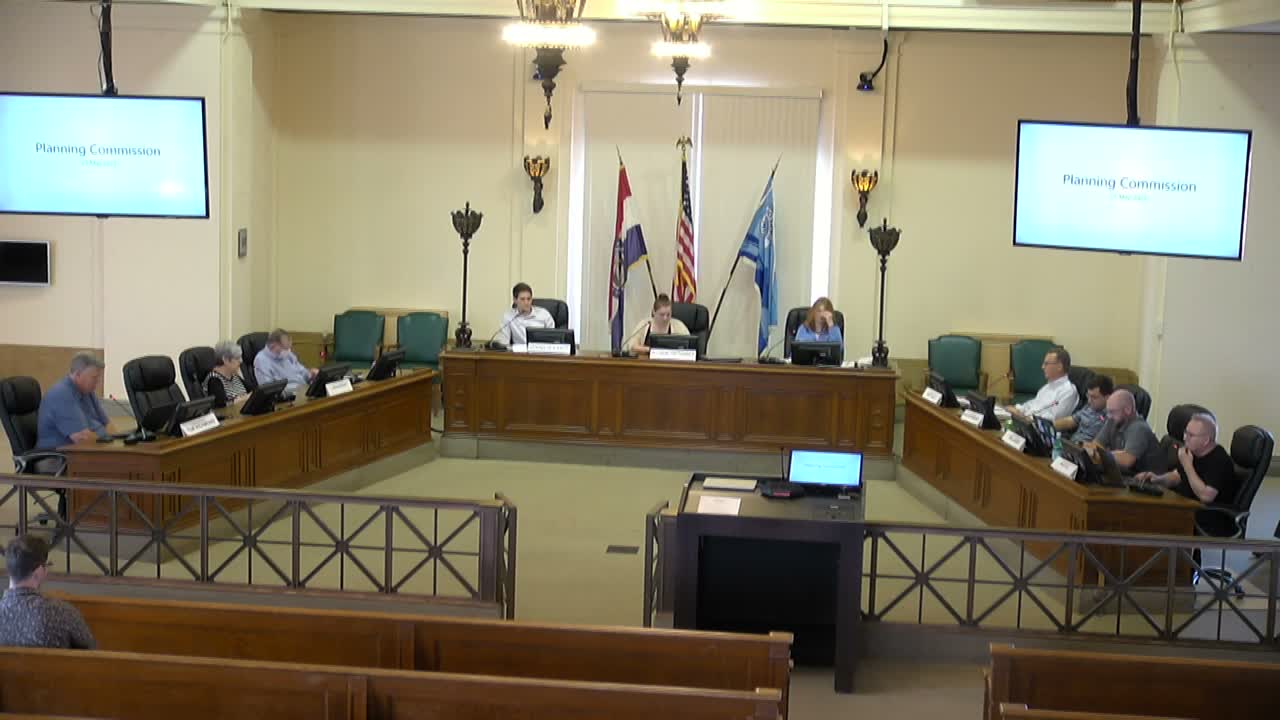
The Planning Commission on an unstated meeting date voted unanimously to recommend approval of amendments to the city Code of Ordinances requiring trail infrastructure in new residential and commercial subdivisions, staff said.
Brandon, a city staff member presenting the changes, told commissioners the draft updates language across multiple code sections to require trails as well as roads and sidewalks for all new development, to grandfather projects already under construction and to set technical standards meant to bring trail infrastructure up to the level of roadway infrastructure. "We are recommending approval," Brandon said.
Why it matters: staff and commissioners framed the amendments as a long-term way to improve connectivity for pedestrians and cyclists, help attract families and support economic vitality by linking new subdivisions to the existing trail network. Brandon said the city has discussed increasing the public works budget for trail maintenance as the network is built out and that the Metropolitan Planning Organization will help pursue grants to close remaining connections.
Key details: the proposed standards would allow trails in commercial and residential developments to substitute for sidewalks in some situations and would require trails to be 10 feet wide, while new sidewalks would generally remain at a 5-foot standard. Initial construction costs would be borne by developers; the city would take ownership of dedicated right-of-way and handle trail surface repairs (patching and fixing cracks). Landscaping along trails would be the responsibility of adjacent property owners or homeowners associations, and staff said the draft emphasizes low-maintenance native plantings.
Commissioners pressed staff on technical points including apparent conflicting setback language in the packet, how right-of-way widths would be measured and whether the trail standards might be overly burdensome to developers. A commissioner noted a discrepancy cited from the packet (a trail setback of 30 feet and a street setback of 32 feet) and asked whether that would push trail edges into the street; Brandon clarified that the setback standards apply to structures and not other infrastructure, that trail right-of-way is typically about 30 feet (with 15 feet of that measured from center) and that right-of-way areas can overlap with landscaping and roadway areas under the code.
Public comment: Trevor Tut, who identified himself as a transportation planner and resident, told the commission he supports the amendments. "I support this," Tut said, adding that connecting smaller development-built trail segments into a citywide network will benefit population growth, economic vitality and community health.
Vote and next steps: a commissioner moved to approve the staff's work; another seconded. The commission voted to forward the amendments to the City Council with a recommendation of approval. Staff said the item will appear on the council agenda for final action.
Meeting close: staff noted the expected submittal of a small-home project for the next meeting; the commission adjourned.
Brandon, a city staff member presenting the changes, told commissioners the draft updates language across multiple code sections to require trails as well as roads and sidewalks for all new development, to grandfather projects already under construction and to set technical standards meant to bring trail infrastructure up to the level of roadway infrastructure. "We are recommending approval," Brandon said.
Why it matters: staff and commissioners framed the amendments as a long-term way to improve connectivity for pedestrians and cyclists, help attract families and support economic vitality by linking new subdivisions to the existing trail network. Brandon said the city has discussed increasing the public works budget for trail maintenance as the network is built out and that the Metropolitan Planning Organization will help pursue grants to close remaining connections.
Key details: the proposed standards would allow trails in commercial and residential developments to substitute for sidewalks in some situations and would require trails to be 10 feet wide, while new sidewalks would generally remain at a 5-foot standard. Initial construction costs would be borne by developers; the city would take ownership of dedicated right-of-way and handle trail surface repairs (patching and fixing cracks). Landscaping along trails would be the responsibility of adjacent property owners or homeowners associations, and staff said the draft emphasizes low-maintenance native plantings.
Commissioners pressed staff on technical points including apparent conflicting setback language in the packet, how right-of-way widths would be measured and whether the trail standards might be overly burdensome to developers. A commissioner noted a discrepancy cited from the packet (a trail setback of 30 feet and a street setback of 32 feet) and asked whether that would push trail edges into the street; Brandon clarified that the setback standards apply to structures and not other infrastructure, that trail right-of-way is typically about 30 feet (with 15 feet of that measured from center) and that right-of-way areas can overlap with landscaping and roadway areas under the code.
Public comment: Trevor Tut, who identified himself as a transportation planner and resident, told the commission he supports the amendments. "I support this," Tut said, adding that connecting smaller development-built trail segments into a citywide network will benefit population growth, economic vitality and community health.
Vote and next steps: a commissioner moved to approve the staff's work; another seconded. The commission voted to forward the amendments to the City Council with a recommendation of approval. Staff said the item will appear on the council agenda for final action.
Meeting close: staff noted the expected submittal of a small-home project for the next meeting; the commission adjourned.
View the Full Meeting & All Its Details
This article offers just a summary. Unlock complete video, transcripts, and insights as a Founder Member.
✓
Watch full, unedited meeting videos
✓
Search every word spoken in unlimited transcripts
✓
AI summaries & real-time alerts (all government levels)
✓
Permanent access to expanding government content
30-day money-back guarantee
