Carmel policy committee reviews complaints policy, presses for clearer FOIL/FERPA routing and appeals
May 30, 2024 | CARMEL CENTRAL SCHOOL DISTRICT, School Districts, New York
This article was created by AI summarizing key points discussed. AI makes mistakes, so for full details and context, please refer to the video of the full meeting. Please report any errors so we can fix them. Report an error »
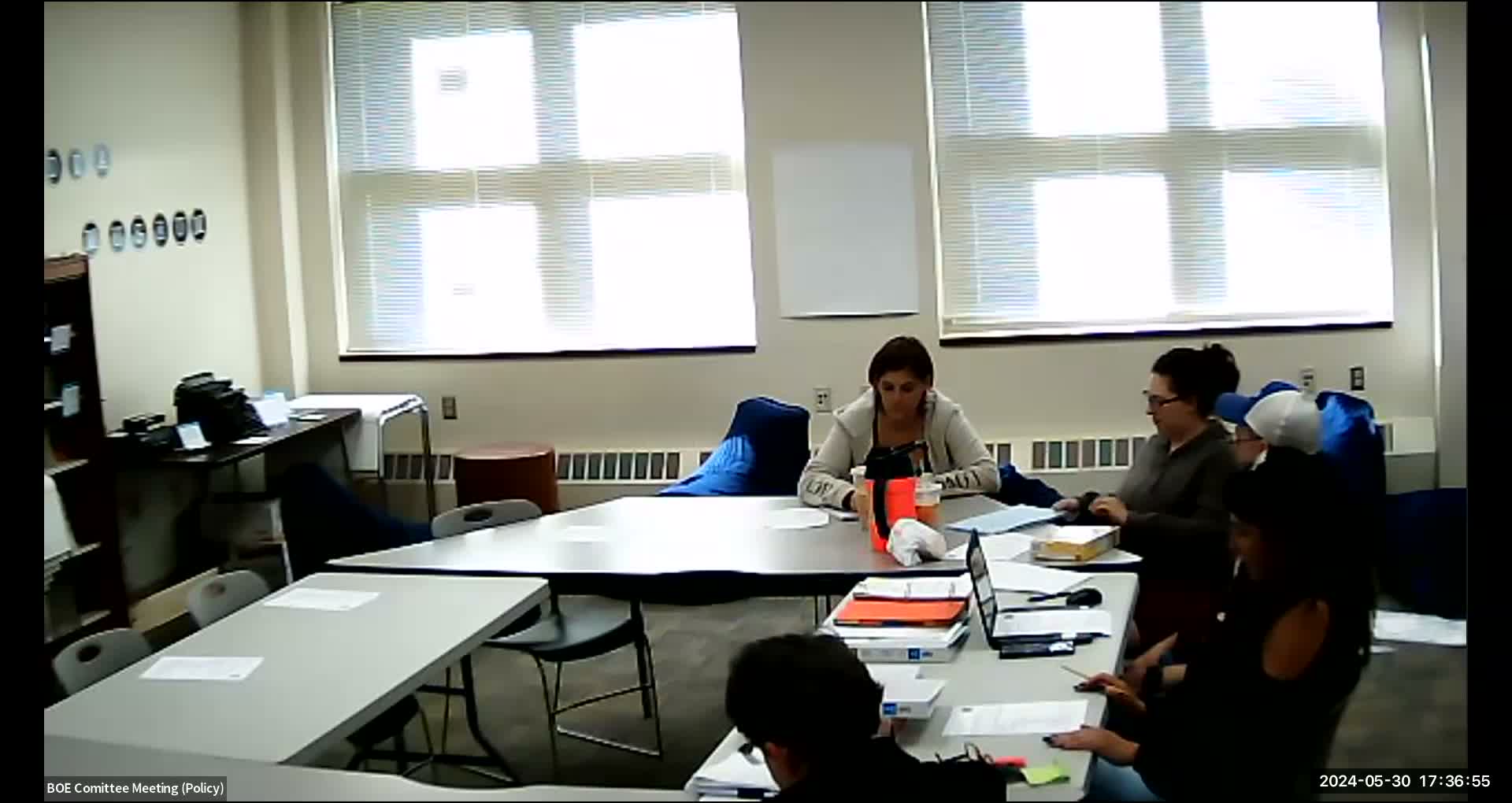
The Carmel Central School District Policy Committee on an evening meeting reviewed draft revisions to Policy 1400, the district’s public compliments and complaints procedure, and discussed operational changes to how complaints and records requests are routed and tracked.
Community member Jessica Olson, speaking on behalf of Samantha Foley, told the committee she is “concerned” that existing rules focus on student discipline while failing to hold adults to the same standard. “I would like to see policies added or amended that hold adults to a higher standard than the children that they are employed and care for,” Olson said, urging the board to add or amend language to enable removal or stronger discipline for staff who do not meet expectations.
Board members spent the meeting reviewing a redline of Policy 1400 and an associated exhibit intended to provide a public-facing complaints register and follow-up mechanism. Board Member 2 explained the color-coding system on the draft (black = existing text, red = deletions, green = additions) and said the draft would create a transparency mechanism so the district can report how many complaints the board has received, where they originated, and whether they were resolved.
The committee also addressed confusion between FOIL (Freedom of Information Law) requests and FERPA (the federal Family Educational Rights and Privacy Act), a distinction raised by Olson when she recounted recent experience with the district’s records office. Olson said a staff responder named Debbie characterized an item she submitted as FERPA when Olson had filed it as a FOIL request. Board members agreed the district must clarify routing and processing: intake should begin at the district’s FOIL/records officer, with FERPA-specific determinations and appeals handled by instructional leadership when records pertain to education records.
Board Member 2 noted procedural timeframes and mechanics while explaining the appeal process for various policies. For example, the committee discussed the typical FERPA handling and noted that some responses or transfers can take up to 45 days to process. The group recommended that where state or federal law requires a particular path (for example, long-term suspensions), the policy retain that path; for others, like Title IX procedures, the committee discussed narrowing the board’s role as a mandatory appeal to better align with civil-rights handling.
The draft also proposes an automated complaints register — an intake mechanism with columns for complaint topic, receipt date, assigned staff, and resolution date — and a monthly summary that would allow the superintendent and the designated 1400 designee to report aggregate counts to the board and public without identifying students. Board members said the summary could appear on the district website and be included in the superintendent’s reports.
Procedurally, Board Member 1 moved and Board Member 2 seconded a motion to go into executive session to obtain legal advice on a policy matter; the chair estimated the session would last about 15 minutes. The committee concluded by scheduling multiple summer meetings — including dedicating at least one full meeting to the code of conduct and additional sessions in June and July — so the policies and the code of conduct can be finalized before the start of the school year.
The Policy Committee closed at 7:17 p.m.; members asked staff to circulate the revised redline, the exhibit with the complaints chart, and proposed meeting dates ahead of the next session on the 17th.
Community member Jessica Olson, speaking on behalf of Samantha Foley, told the committee she is “concerned” that existing rules focus on student discipline while failing to hold adults to the same standard. “I would like to see policies added or amended that hold adults to a higher standard than the children that they are employed and care for,” Olson said, urging the board to add or amend language to enable removal or stronger discipline for staff who do not meet expectations.
Board members spent the meeting reviewing a redline of Policy 1400 and an associated exhibit intended to provide a public-facing complaints register and follow-up mechanism. Board Member 2 explained the color-coding system on the draft (black = existing text, red = deletions, green = additions) and said the draft would create a transparency mechanism so the district can report how many complaints the board has received, where they originated, and whether they were resolved.
The committee also addressed confusion between FOIL (Freedom of Information Law) requests and FERPA (the federal Family Educational Rights and Privacy Act), a distinction raised by Olson when she recounted recent experience with the district’s records office. Olson said a staff responder named Debbie characterized an item she submitted as FERPA when Olson had filed it as a FOIL request. Board members agreed the district must clarify routing and processing: intake should begin at the district’s FOIL/records officer, with FERPA-specific determinations and appeals handled by instructional leadership when records pertain to education records.
Board Member 2 noted procedural timeframes and mechanics while explaining the appeal process for various policies. For example, the committee discussed the typical FERPA handling and noted that some responses or transfers can take up to 45 days to process. The group recommended that where state or federal law requires a particular path (for example, long-term suspensions), the policy retain that path; for others, like Title IX procedures, the committee discussed narrowing the board’s role as a mandatory appeal to better align with civil-rights handling.
The draft also proposes an automated complaints register — an intake mechanism with columns for complaint topic, receipt date, assigned staff, and resolution date — and a monthly summary that would allow the superintendent and the designated 1400 designee to report aggregate counts to the board and public without identifying students. Board members said the summary could appear on the district website and be included in the superintendent’s reports.
Procedurally, Board Member 1 moved and Board Member 2 seconded a motion to go into executive session to obtain legal advice on a policy matter; the chair estimated the session would last about 15 minutes. The committee concluded by scheduling multiple summer meetings — including dedicating at least one full meeting to the code of conduct and additional sessions in June and July — so the policies and the code of conduct can be finalized before the start of the school year.
The Policy Committee closed at 7:17 p.m.; members asked staff to circulate the revised redline, the exhibit with the complaints chart, and proposed meeting dates ahead of the next session on the 17th.
Don't Miss a Word: See the Full Meeting!
Go beyond summaries. Unlock every video, transcript, and key insight with a Founder Membership.
✓
Get instant access to full meeting videos
✓
Search and clip any phrase from complete transcripts
✓
Receive AI-powered summaries & custom alerts
✓
Enjoy lifetime, unrestricted access to government data
30-day money-back guarantee
