Carmel BOE hears budget requests: athletics equipment, George Fisher staffing and elementary literacy supports
February 06, 2024 | CARMEL CENTRAL SCHOOL DISTRICT, School Districts, New York
This article was created by AI summarizing key points discussed. AI makes mistakes, so for full details and context, please refer to the video of the full meeting. Please report any errors so we can fix them. Report an error »
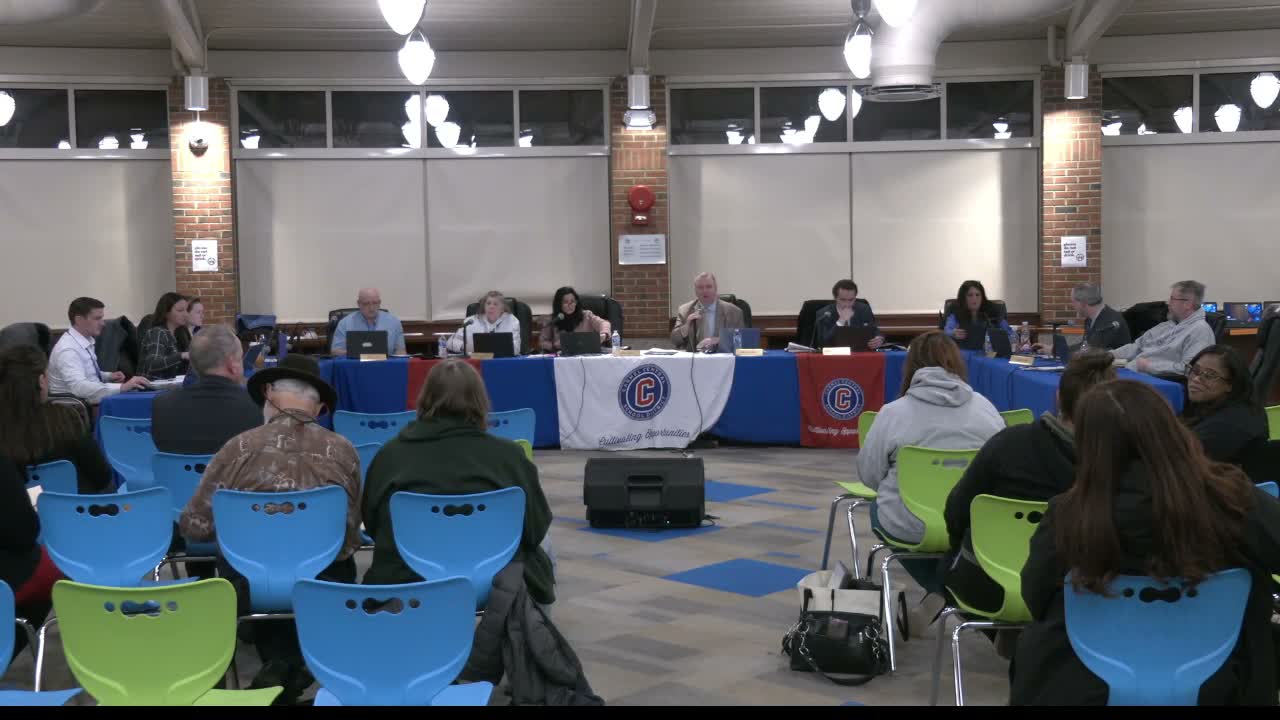
The Carmel Central School District’s budget season continued Feb. 6 as athletics, middle‑ and elementary‑school leaders presented equipment, staffing and program requests the board will consider as it finalizes a proposed budget.
Athletic Director Mr. Solomon outlined department priorities including replacement wrestling mats, scoreboards for baseball and softball, an indoor batting cage, upgraded storage and uniform replacement for modified teams. He described the department as currently overseeing 69 teams, with several new programs added this year, and proposed adding administrative support for athletics—an assistant athletic director (estimated at roughly $120,000 for a full‑time administrator) or seasonal stipends as a lower‑cost alternative.
George Fisher Middle School Principal Dr. Newville presented student‑support requests grounded in building data: the school serves roughly 1,200 students with about 30% requiring additional supports (IEPs, 504s or English learners), and the district has seen a rapid increase in English‑learner enrollment. Her prioritized asks included one additional special education teacher (annual salary+benefits estimated at about $140,000), a dedicated grade‑level administrator (estimated ~$175,000 including benefits) to “hover” over cohorts and provide continuity from fifth through eighth grade, a 0.5 bilingual counselor (roughly $70,000 pro‑rated), and part‑time safety coverage (an SPO or retired officer for ~5 hours/day) to increase after‑school supervision.
Three elementary principals presented a joint "One Carmel" budget emphasizing CKLA literacy rollout, MTSS and PBIS work. They requested a 0.5 FTE E&L teacher and an additional RTI FTE at Kent Primary to meet growing E&L needs; the principals noted textbook savings from recent CKLA purchases but stressed ongoing consumable and art/music supplies needs.
Business Officer Mister Fink reviewed the district’s budget calendar, a recent community budget survey (666 responses) and preliminary state aid projections. Using the governor’s run as a baseline the district’s preliminary calculations showed possible increases in state aid but stressed uncertainty; if state aid is lighter than prior years, Mister Fink said the district may need to rely on a higher local tax levy to close the gap. He previewed a potential May 21 bond referendum (approx. $15 million) to fund safety and building‑condition projects aligned with debt expirations and said administration will bring a proposed budget for board review on Feb. 27.
Trustees and administrators asked detailed follow‑up questions about equipment lifecycles, alternate funding sources (donations, partner organizations), timeline and staffing costs. Mister Fink committed to provide cost breakdowns and historical aid figures requested by trustees. Board members emphasized balancing immediate safety and intervention needs with long‑term budget constraints and noted that some of the staffing asks represent minimum compliance rather than expansive new programming.
Athletic Director Mr. Solomon outlined department priorities including replacement wrestling mats, scoreboards for baseball and softball, an indoor batting cage, upgraded storage and uniform replacement for modified teams. He described the department as currently overseeing 69 teams, with several new programs added this year, and proposed adding administrative support for athletics—an assistant athletic director (estimated at roughly $120,000 for a full‑time administrator) or seasonal stipends as a lower‑cost alternative.
George Fisher Middle School Principal Dr. Newville presented student‑support requests grounded in building data: the school serves roughly 1,200 students with about 30% requiring additional supports (IEPs, 504s or English learners), and the district has seen a rapid increase in English‑learner enrollment. Her prioritized asks included one additional special education teacher (annual salary+benefits estimated at about $140,000), a dedicated grade‑level administrator (estimated ~$175,000 including benefits) to “hover” over cohorts and provide continuity from fifth through eighth grade, a 0.5 bilingual counselor (roughly $70,000 pro‑rated), and part‑time safety coverage (an SPO or retired officer for ~5 hours/day) to increase after‑school supervision.
Three elementary principals presented a joint "One Carmel" budget emphasizing CKLA literacy rollout, MTSS and PBIS work. They requested a 0.5 FTE E&L teacher and an additional RTI FTE at Kent Primary to meet growing E&L needs; the principals noted textbook savings from recent CKLA purchases but stressed ongoing consumable and art/music supplies needs.
Business Officer Mister Fink reviewed the district’s budget calendar, a recent community budget survey (666 responses) and preliminary state aid projections. Using the governor’s run as a baseline the district’s preliminary calculations showed possible increases in state aid but stressed uncertainty; if state aid is lighter than prior years, Mister Fink said the district may need to rely on a higher local tax levy to close the gap. He previewed a potential May 21 bond referendum (approx. $15 million) to fund safety and building‑condition projects aligned with debt expirations and said administration will bring a proposed budget for board review on Feb. 27.
Trustees and administrators asked detailed follow‑up questions about equipment lifecycles, alternate funding sources (donations, partner organizations), timeline and staffing costs. Mister Fink committed to provide cost breakdowns and historical aid figures requested by trustees. Board members emphasized balancing immediate safety and intervention needs with long‑term budget constraints and noted that some of the staffing asks represent minimum compliance rather than expansive new programming.
View the Full Meeting & All Its Details
This article offers just a summary. Unlock complete video, transcripts, and insights as a Founder Member.
✓
Watch full, unedited meeting videos
✓
Search every word spoken in unlimited transcripts
✓
AI summaries & real-time alerts (all government levels)
✓
Permanent access to expanding government content
30-day money-back guarantee
