Board debates changes to student attendance policy, emphasizes principal authority and equitable reporting
January 22, 2024 | CARMEL CENTRAL SCHOOL DISTRICT, School Districts, New York
This article was created by AI summarizing key points discussed. AI makes mistakes, so for full details and context, please refer to the video of the full meeting. Please report any errors so we can fix them. Report an error »
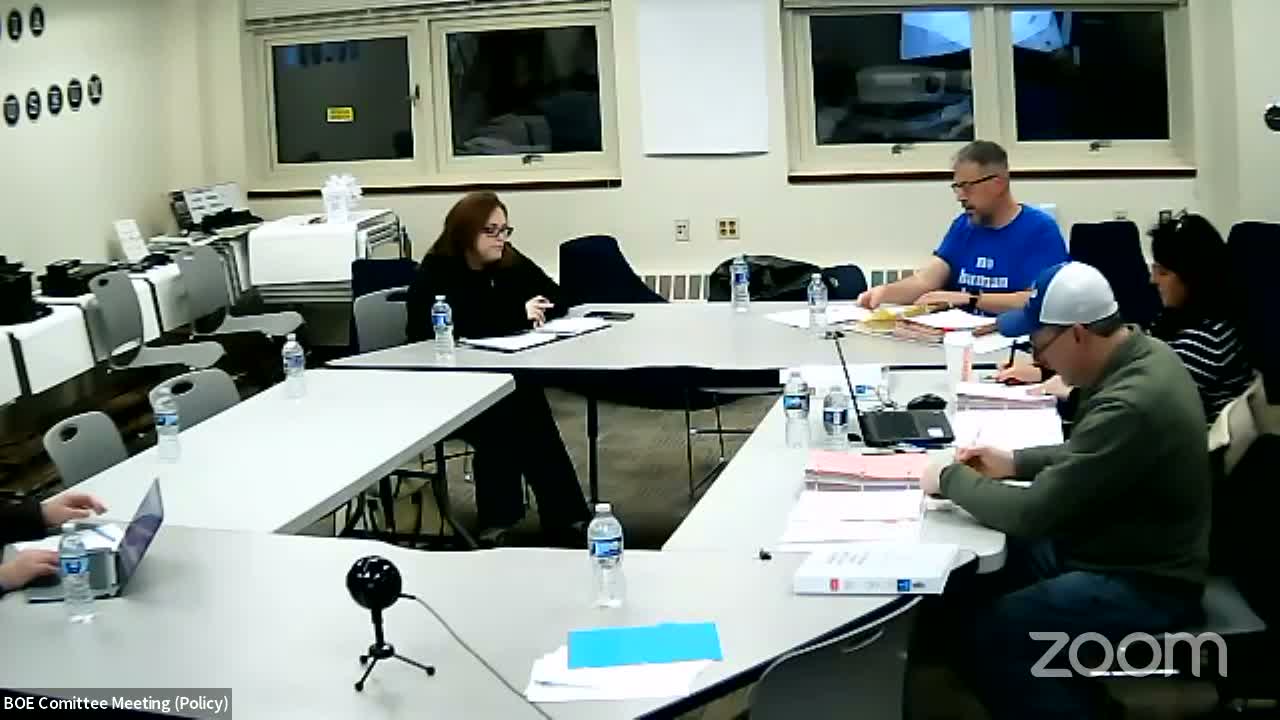
The Carmel Central School District policy committee spent the bulk of the meeting on a comprehensive rewrite of Policy 7006, the district’s student attendance policy. The board conducted a line-by-line review and flagged points that need clearer language and administrative procedures.
Unidentified Speaker 5 summarized the policy’s purpose: “The Board of Education establishes this comprehensive attendance policy in accordance with section 104.1(c) of the regulations of the commissioner of education,” and members discussed how to adapt the model language to local practice. The draft mirrors state guidance on excused absences and references the commissioner’s regulation (section 175.6) for excused-absence categories.
Key clarifications agreed during the discussion included: the district will accept written excuses submitted through a district-approved student system (ParentSquare or its successor) rather than free-form email; the building principal, not an unspecified 'procedure,' should make final determinations about retention or grade impacts for excessive absences; and parents should be allowed to appeal principal determinations to the superintendent.
Board members noted the policy’s defined thresholds for excessive absences — 24 days for elementary/middle and 20 (class periods) for high school — and urged explicit language that accommodates students with documented medical or IEP-based accommodations. The draft requires schools to maintain accurate attendance registers and retain records as specified by regulation.
The committee also debated state-recommended incentive programs to improve attendance. Some members cautioned that awards tied to perfect attendance can be inequitable because they may reflect parental capacity to get students to school. Others said incentives can motivate older students and suggested designing age-appropriate recognition rather than a one-size-fits-all reward.
Members asked staff to tighten the language about acceptable communication channels, clarify timelines for written excuses (the draft references a one-week window), define when administrators are expected to intervene, and include explicit steps for intervention teams (nurse, counselor, social worker, community agency referrals) before punitive measures.
No formal vote was taken; the committee expects to continue work and present an attorney-reviewed second-read version at the next board meeting.
Unidentified Speaker 5 summarized the policy’s purpose: “The Board of Education establishes this comprehensive attendance policy in accordance with section 104.1(c) of the regulations of the commissioner of education,” and members discussed how to adapt the model language to local practice. The draft mirrors state guidance on excused absences and references the commissioner’s regulation (section 175.6) for excused-absence categories.
Key clarifications agreed during the discussion included: the district will accept written excuses submitted through a district-approved student system (ParentSquare or its successor) rather than free-form email; the building principal, not an unspecified 'procedure,' should make final determinations about retention or grade impacts for excessive absences; and parents should be allowed to appeal principal determinations to the superintendent.
Board members noted the policy’s defined thresholds for excessive absences — 24 days for elementary/middle and 20 (class periods) for high school — and urged explicit language that accommodates students with documented medical or IEP-based accommodations. The draft requires schools to maintain accurate attendance registers and retain records as specified by regulation.
The committee also debated state-recommended incentive programs to improve attendance. Some members cautioned that awards tied to perfect attendance can be inequitable because they may reflect parental capacity to get students to school. Others said incentives can motivate older students and suggested designing age-appropriate recognition rather than a one-size-fits-all reward.
Members asked staff to tighten the language about acceptable communication channels, clarify timelines for written excuses (the draft references a one-week window), define when administrators are expected to intervene, and include explicit steps for intervention teams (nurse, counselor, social worker, community agency referrals) before punitive measures.
No formal vote was taken; the committee expects to continue work and present an attorney-reviewed second-read version at the next board meeting.
Don't Miss a Word: See the Full Meeting!
Go beyond summaries. Unlock every video, transcript, and key insight with a Founder Membership.
✓
Get instant access to full meeting videos
✓
Search and clip any phrase from complete transcripts
✓
Receive AI-powered summaries & custom alerts
✓
Enjoy lifetime, unrestricted access to government data
30-day money-back guarantee
