Carmel Central trustees weigh tax‑levy trade‑offs, probe line‑by‑line budget detail ahead of April vote
April 10, 2024 | CARMEL CENTRAL SCHOOL DISTRICT, School Districts, New York
This article was created by AI summarizing key points discussed. AI makes mistakes, so for full details and context, please refer to the video of the full meeting. Please report any errors so we can fix them. Report an error »
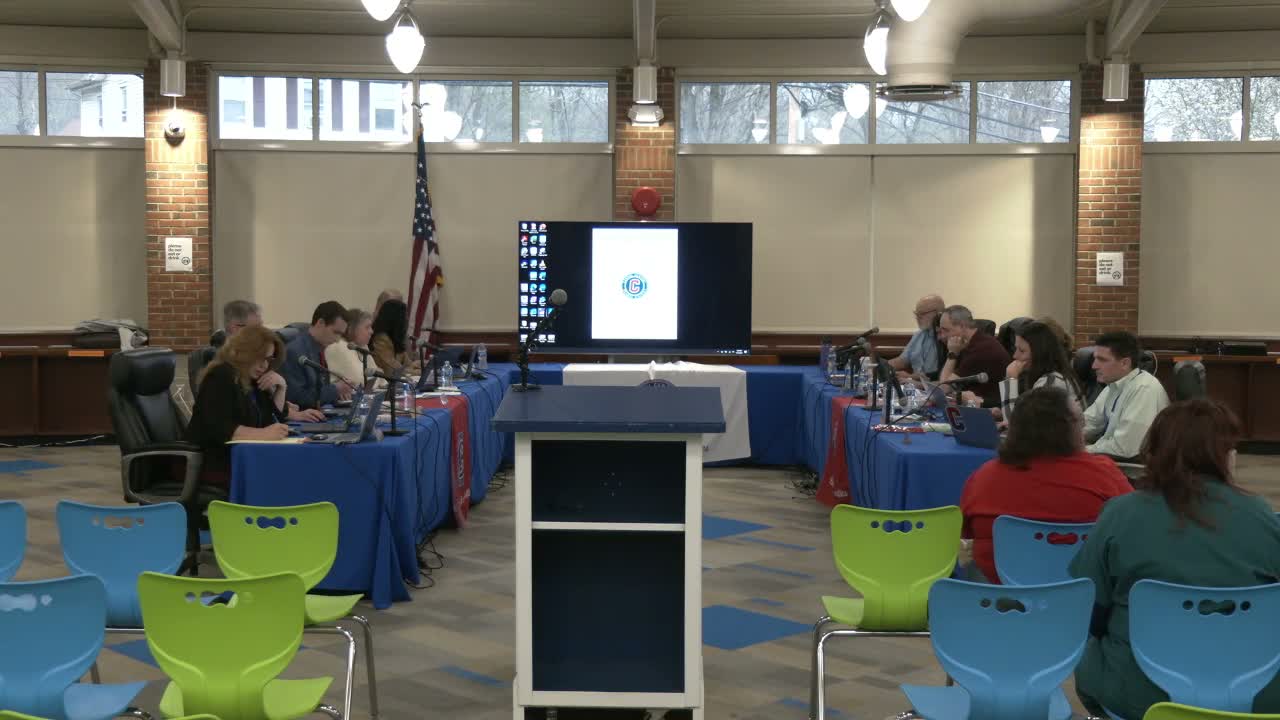
At a packed April 10 work session, the Carmel Central School District Board of Education spent nearly the full meeting testing alternative budget scenarios and pressing administration for detailed, line‑by‑line evidence of the savings behind each proposal. Superintendent and department leaders presented a set of draft scenarios (including a commonly referenced 'scenario 9' and deeper contingent options) intended to show how different combinations of cuts, use of fund balance and projected state aid would change the district's tax levy.
Trustees repeatedly asked for spreadsheets that would allow real‑time 'plug and play' comparisons. Trustee Curzio said the packet arriving the afternoon of the meeting left little time to analyze proposals, urging administration to return to more thorough, line‑by‑line reviews used in past years. Trustees sought clarity about whether headline reductions (for example, an $810,000 reduction tied to a bus purchase/lease program or a $100,000 technology/laptop reduction) were standalone cuts or would shift costs elsewhere in a department.
Trustee Wise framed the political test the board faces: "The only thing that builds trust is transparency. The only thing that builds trust is shared sacrifice," she said, and called for the board to set a tax goal based on what the community will reasonably support rather than designing a budget to fit an arbitrary levy cap. Administration said that scenario 9 as presented would produce roughly a 2.12% levy without using fund balance and that a $700,000 bump in state aid (reported by legislators and media as a possible outcome) could reduce that projection significantly.
Administration provided some numerical context while acknowledging gaps publicized by trustees. Business official Mr. Fink said six employees accepted the district's retirement incentive and estimated incremental savings per accepted incentive of roughly $20,000–$30,000. The superintendent reported total overtime spending for 2023–24 at $651,006.50 and said overtime reductions would be targeted, not equally applied across all departments.
Trustees debated structural options for deeper savings: whether to target district‑level administrative positions, reduce or eliminate department chair/liaison stipends, or preserve chairs and instead condense course sections to produce FTE reductions. Dr. Santa Barbara, who described the district's instructional councils and the role of department chairs and liaisons, warned that removing those positions would remove the infrastructure used to align curriculum, assessments and targeted interventions to students.
The board also discussed fund balance use and contingency trade‑offs. Administration said some near‑zero scenarios rely on using fund balance to avoid the more destructive cuts that would otherwise be required; trustees reiterated an earlier preference to avoid drawing down reserves unless necessary. Officials and trustees agreed that state aid uncertainty is the largest near‑term variable: a modest increase in Foundation Aid could materially change which programs can be preserved and what levy the public will accept.
No final budget vote was taken. Trustees set a calendar path to either consider adoption at the board's April meetings or to defer to the April 23 meeting to preserve statutory timelines and allow staff to return with requested models and spreadsheets. The board also committed to provide more granular material—club enrollment lists, course section projections, and an Excel version of the scenario modeling—before the next discussion.
What happens next: trustees asked administration to return with clearer, itemized breakdowns (including exact department line items supporting each scenario, the detailed impact of the bus lease/purchase change on maintenance and parts, and the net effect on teaching FTEs if chairs or administrators are restored or eliminated). The board left the meeting with an explicit request for those clarifications and a tentative plan to revisit the scenarios at the scheduled April meetings.
Trustees repeatedly asked for spreadsheets that would allow real‑time 'plug and play' comparisons. Trustee Curzio said the packet arriving the afternoon of the meeting left little time to analyze proposals, urging administration to return to more thorough, line‑by‑line reviews used in past years. Trustees sought clarity about whether headline reductions (for example, an $810,000 reduction tied to a bus purchase/lease program or a $100,000 technology/laptop reduction) were standalone cuts or would shift costs elsewhere in a department.
Trustee Wise framed the political test the board faces: "The only thing that builds trust is transparency. The only thing that builds trust is shared sacrifice," she said, and called for the board to set a tax goal based on what the community will reasonably support rather than designing a budget to fit an arbitrary levy cap. Administration said that scenario 9 as presented would produce roughly a 2.12% levy without using fund balance and that a $700,000 bump in state aid (reported by legislators and media as a possible outcome) could reduce that projection significantly.
Administration provided some numerical context while acknowledging gaps publicized by trustees. Business official Mr. Fink said six employees accepted the district's retirement incentive and estimated incremental savings per accepted incentive of roughly $20,000–$30,000. The superintendent reported total overtime spending for 2023–24 at $651,006.50 and said overtime reductions would be targeted, not equally applied across all departments.
Trustees debated structural options for deeper savings: whether to target district‑level administrative positions, reduce or eliminate department chair/liaison stipends, or preserve chairs and instead condense course sections to produce FTE reductions. Dr. Santa Barbara, who described the district's instructional councils and the role of department chairs and liaisons, warned that removing those positions would remove the infrastructure used to align curriculum, assessments and targeted interventions to students.
The board also discussed fund balance use and contingency trade‑offs. Administration said some near‑zero scenarios rely on using fund balance to avoid the more destructive cuts that would otherwise be required; trustees reiterated an earlier preference to avoid drawing down reserves unless necessary. Officials and trustees agreed that state aid uncertainty is the largest near‑term variable: a modest increase in Foundation Aid could materially change which programs can be preserved and what levy the public will accept.
No final budget vote was taken. Trustees set a calendar path to either consider adoption at the board's April meetings or to defer to the April 23 meeting to preserve statutory timelines and allow staff to return with requested models and spreadsheets. The board also committed to provide more granular material—club enrollment lists, course section projections, and an Excel version of the scenario modeling—before the next discussion.
What happens next: trustees asked administration to return with clearer, itemized breakdowns (including exact department line items supporting each scenario, the detailed impact of the bus lease/purchase change on maintenance and parts, and the net effect on teaching FTEs if chairs or administrators are restored or eliminated). The board left the meeting with an explicit request for those clarifications and a tentative plan to revisit the scenarios at the scheduled April meetings.
View the Full Meeting & All Its Details
This article offers just a summary. Unlock complete video, transcripts, and insights as a Founder Member.
✓
Watch full, unedited meeting videos
✓
Search every word spoken in unlimited transcripts
✓
AI summaries & real-time alerts (all government levels)
✓
Permanent access to expanding government content
30-day money-back guarantee
