Carmel Central School District board reviews redraft to tighten home instruction rules, add outreach and reentry steps
February 26, 2024 | CARMEL CENTRAL SCHOOL DISTRICT, School Districts, New York
This article was created by AI summarizing key points discussed. AI makes mistakes, so for full details and context, please refer to the video of the full meeting. Please report any errors so we can fix them. Report an error »
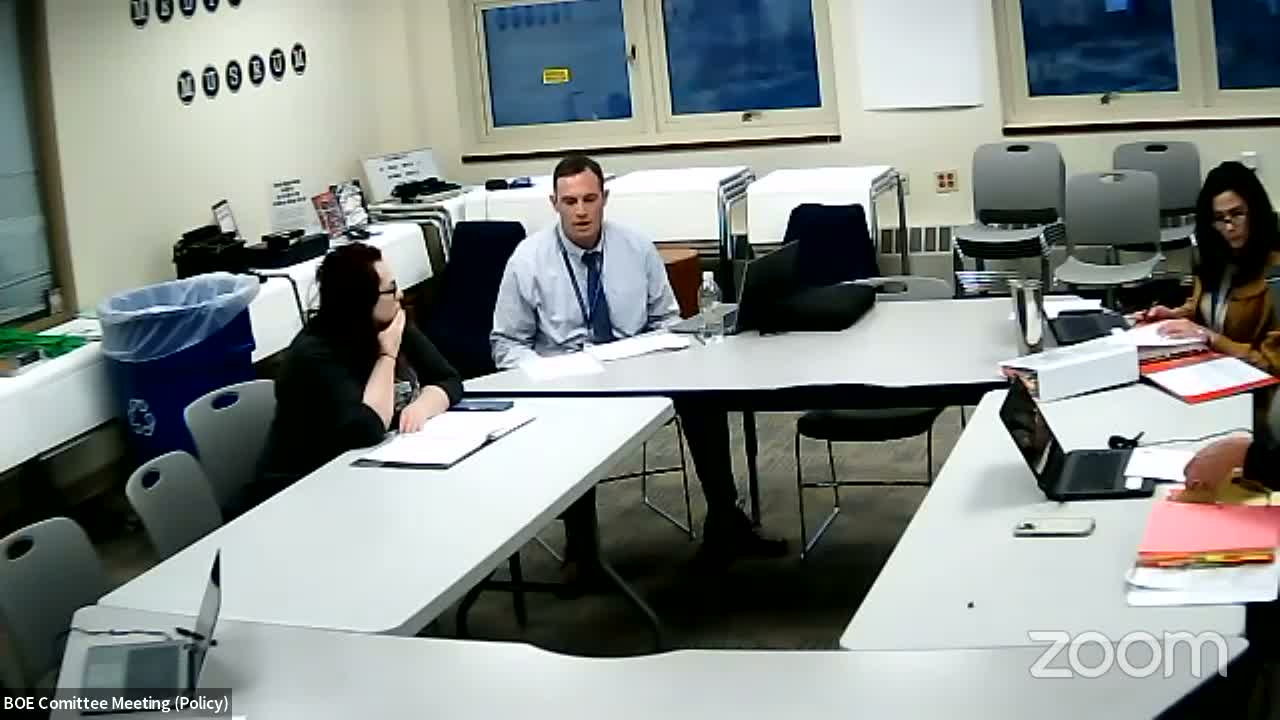
Board members and staff on Thursday reviewed redlined revisions to the Carmel Central School District's home instruction (homebound) policy that would put explicit hourly expectations, require periodic review of long-term placements and formalize outreach and reentry planning for students receiving instruction outside school buildings.
The draft presented by district staff would, for secondary students, specify 15 hours of instruction per week (3 hours per day) and, for elementary students, provide 10 hours per week with a target of at least about 2 hours per day when possible. Staff also proposed a structured review process so that home instruction continuing beyond a short-term period would be periodically reassessed.
"Under no circumstances shall home non instruction continue beyond 30 calendar days at a time without administrative review," Speaker 2 said, summarizing language adapted from another district that the staff recommended as a model for the redline. The proposed administrative review would require at minimum a follow-up report from the professional who initially requested the instruction; that documentation could be written or conveyed by phone, the draft says.
Trustees and staff spent much of the meeting debating how to surface that review requirement without placing an undue burden on families. "As a parent, I would be very offended if I had to...tell the district every 30 days that my child had a medical condition," Speaker 1 said, arguing that frequent recertification could be stressful for families managing long-term medical needs.
To balance those concerns, the redline centers on outreach and team-based oversight rather than automatic, punitive recertification. Staff recommended that the building principal or designee, family members, and at least one related-services staffer (for example, a school psychologist, social worker or counselor) constitute a support team for the student; the referring medical professional should be included in reviews when possible. The district would identify a named outreach contact at the time home instruction is approved so families know who will maintain regular communication.
The draft also clarifies special-education procedures: when the Committee on Special Education (CSE) recommends homebound instruction for a student with disabilities, the CSE's recommendation and related services should govern placement and reentry planning. Trustees also requested the policy say the district may obtain a separate opinion from the school physician for disputed medical determinations.
On documentation and continuity, the redline calls for tutors or home instructors to provide completed work to the teacher of record on an ongoing basis (staff recommended a minimum cadence such as every two weeks) so grades and progress are tracked. The district also must retain records showing dates, amounts and types of instructional services provided, the instructor's name, subjects taught and locations of service.
Trustees agreed the redline is substantively ready but asked staff to send it to legal for review and return it as a first read at the next board meeting. No formal vote or adoption occurred at the session.
The board asked staff to refine wording on who may authorize initial home instruction approvals (the draft lists a "director of health services," which the district does not currently employ) and to replace that title with the appropriate district official or a designee. Staff will incorporate legal feedback and return the redline for the board's first-read consideration.
The draft presented by district staff would, for secondary students, specify 15 hours of instruction per week (3 hours per day) and, for elementary students, provide 10 hours per week with a target of at least about 2 hours per day when possible. Staff also proposed a structured review process so that home instruction continuing beyond a short-term period would be periodically reassessed.
"Under no circumstances shall home non instruction continue beyond 30 calendar days at a time without administrative review," Speaker 2 said, summarizing language adapted from another district that the staff recommended as a model for the redline. The proposed administrative review would require at minimum a follow-up report from the professional who initially requested the instruction; that documentation could be written or conveyed by phone, the draft says.
Trustees and staff spent much of the meeting debating how to surface that review requirement without placing an undue burden on families. "As a parent, I would be very offended if I had to...tell the district every 30 days that my child had a medical condition," Speaker 1 said, arguing that frequent recertification could be stressful for families managing long-term medical needs.
To balance those concerns, the redline centers on outreach and team-based oversight rather than automatic, punitive recertification. Staff recommended that the building principal or designee, family members, and at least one related-services staffer (for example, a school psychologist, social worker or counselor) constitute a support team for the student; the referring medical professional should be included in reviews when possible. The district would identify a named outreach contact at the time home instruction is approved so families know who will maintain regular communication.
The draft also clarifies special-education procedures: when the Committee on Special Education (CSE) recommends homebound instruction for a student with disabilities, the CSE's recommendation and related services should govern placement and reentry planning. Trustees also requested the policy say the district may obtain a separate opinion from the school physician for disputed medical determinations.
On documentation and continuity, the redline calls for tutors or home instructors to provide completed work to the teacher of record on an ongoing basis (staff recommended a minimum cadence such as every two weeks) so grades and progress are tracked. The district also must retain records showing dates, amounts and types of instructional services provided, the instructor's name, subjects taught and locations of service.
Trustees agreed the redline is substantively ready but asked staff to send it to legal for review and return it as a first read at the next board meeting. No formal vote or adoption occurred at the session.
The board asked staff to refine wording on who may authorize initial home instruction approvals (the draft lists a "director of health services," which the district does not currently employ) and to replace that title with the appropriate district official or a designee. Staff will incorporate legal feedback and return the redline for the board's first-read consideration.
Don't Miss a Word: See the Full Meeting!
Go beyond summaries. Unlock every video, transcript, and key insight with a Founder Membership.
✓
Get instant access to full meeting videos
✓
Search and clip any phrase from complete transcripts
✓
Receive AI-powered summaries & custom alerts
✓
Enjoy lifetime, unrestricted access to government data
30-day money-back guarantee
