Building Inspection Commission recommends two‑year extension for accessible business entrance deadlines
October 18, 2023 | San Francisco City, San Francisco County, California
This article was created by AI summarizing key points discussed. AI makes mistakes, so for full details and context, please refer to the video of the full meeting. Please report any errors so we can fix them. Report an error »
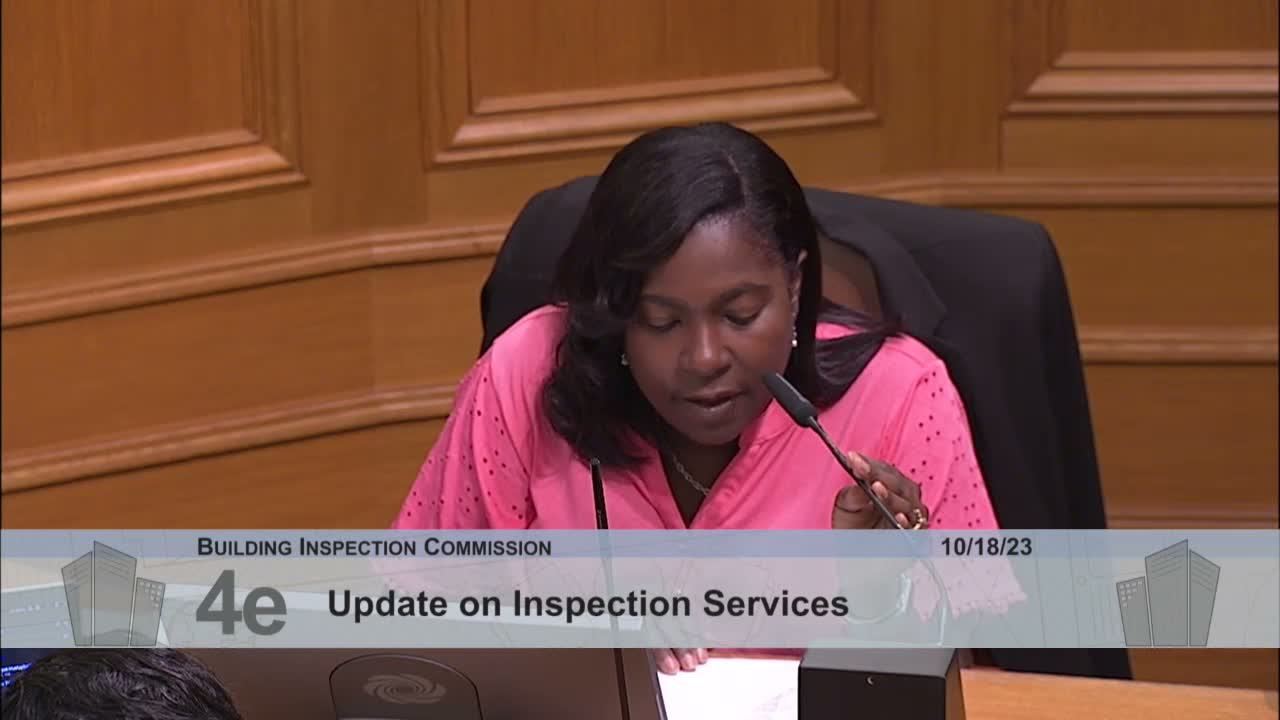
The San Francisco Building Inspection Commission voted 4–1 on Oct. 18 to recommend that the Board of Supervisors extend compliance deadlines in the city’s Accessible Business Entrance (ABE) program by two years.
The ordinance introduced to the commission (File 231005) would push back multiple ABE deadlines that originally required property owners or tenants to submit compliance checklists, apply for permits and obtain permits to make business entrances physically accessible. Zahra Haji, legislative aide to Supervisor Rafael Mandelmann, said the sponsor introduced the extension after extensive outreach to merchants who reported ‘‘harrowing experiences’’ meeting the recent deadlines and frequent technical or financial barriers to compliance.
DBI staff presented program statistics showing roughly 23,000 properties are in the ABE registry; about two‑thirds were listed as partially compliant and roughly one‑third had not submitted forms or otherwise engaged with the process. Acting DBI leaders said some businesses lack access to CASP inspectors or certified professionals needed for technical determinations, and that many small businesses were still recovering from the pandemic.
Public commenters and commissioners urged stronger outreach to small merchants, especially in outer neighborhoods and older building stock where structural constraints make standard remedies difficult. Sonica Mahajan of Dolores Street Community Services said SRO outreach groups provide language and cultural competency that DBI needs to tap; Fred Sherburnsmer of the Housing Rights Committee warned that some community programs face funding uncertainty.
Commissioners debated whether the extension would simply delay needed improvements or provide necessary time to fix procedural obstacles such as Access Appeals Commission availability, lease‑assignment complications between landlords and tenants, and limited CASP capacity. DBI staff said enforcement authority under local code remains focused on property owners but acknowledged lease arrangements often leave tenants responsible for costs; the extension, staff said, is intended to buy time while departments and supervisors convene to consider substantive program changes and improved outreach.
Commissioner Newman moved to recommend approval; Commissioner Shattuck seconded. Interim President Alexander Toot, Commissioner Newman, Commissioner Shattuck and Commissioner Summer voted yes; Commissioner Williams voted no. The motion carried, 4–1. The commission’s recommendation will go to the Board of Supervisors, which has final authority to adopt or modify the ordinance.
What’s next: the Board of Supervisors will consider the ordinance. DBI and the supervisor’s office said they will use the extension period to convene stakeholders, improve outreach to small businesses and examine possible statutory or procedural changes to clarify responsibility and expedite exemption and appeal processes.
The ordinance introduced to the commission (File 231005) would push back multiple ABE deadlines that originally required property owners or tenants to submit compliance checklists, apply for permits and obtain permits to make business entrances physically accessible. Zahra Haji, legislative aide to Supervisor Rafael Mandelmann, said the sponsor introduced the extension after extensive outreach to merchants who reported ‘‘harrowing experiences’’ meeting the recent deadlines and frequent technical or financial barriers to compliance.
DBI staff presented program statistics showing roughly 23,000 properties are in the ABE registry; about two‑thirds were listed as partially compliant and roughly one‑third had not submitted forms or otherwise engaged with the process. Acting DBI leaders said some businesses lack access to CASP inspectors or certified professionals needed for technical determinations, and that many small businesses were still recovering from the pandemic.
Public commenters and commissioners urged stronger outreach to small merchants, especially in outer neighborhoods and older building stock where structural constraints make standard remedies difficult. Sonica Mahajan of Dolores Street Community Services said SRO outreach groups provide language and cultural competency that DBI needs to tap; Fred Sherburnsmer of the Housing Rights Committee warned that some community programs face funding uncertainty.
Commissioners debated whether the extension would simply delay needed improvements or provide necessary time to fix procedural obstacles such as Access Appeals Commission availability, lease‑assignment complications between landlords and tenants, and limited CASP capacity. DBI staff said enforcement authority under local code remains focused on property owners but acknowledged lease arrangements often leave tenants responsible for costs; the extension, staff said, is intended to buy time while departments and supervisors convene to consider substantive program changes and improved outreach.
Commissioner Newman moved to recommend approval; Commissioner Shattuck seconded. Interim President Alexander Toot, Commissioner Newman, Commissioner Shattuck and Commissioner Summer voted yes; Commissioner Williams voted no. The motion carried, 4–1. The commission’s recommendation will go to the Board of Supervisors, which has final authority to adopt or modify the ordinance.
What’s next: the Board of Supervisors will consider the ordinance. DBI and the supervisor’s office said they will use the extension period to convene stakeholders, improve outreach to small businesses and examine possible statutory or procedural changes to clarify responsibility and expedite exemption and appeal processes.
View the Full Meeting & All Its Details
This article offers just a summary. Unlock complete video, transcripts, and insights as a Founder Member.
✓
Watch full, unedited meeting videos
✓
Search every word spoken in unlimited transcripts
✓
AI summaries & real-time alerts (all government levels)
✓
Permanent access to expanding government content
30-day money-back guarantee
