Committee proposes tiered priorities, mid‑level goals and KPIs for 2026 council retreat
November 20, 2025 | Palo Alto, Santa Clara County, California
This article was created by AI summarizing key points discussed. AI makes mistakes, so for full details and context, please refer to the video of the full meeting. Please report any errors so we can fix them. Report an error »
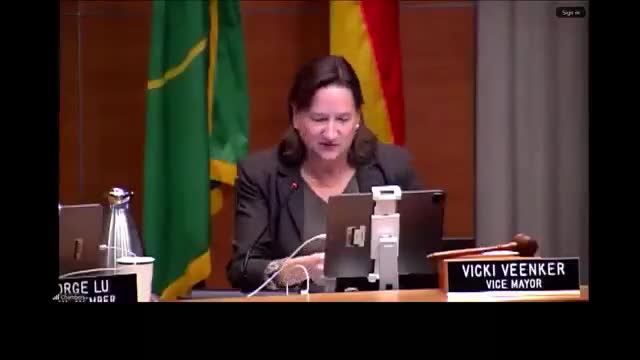
The Policy & Services Committee discussed changes to the City Council priority‑setting process for 2026 and recommended a tiered approach, mid‑level goals, and selective key performance indicators (KPIs) to give staff clearer strategic direction.
Staff reminded the committee that the handbook now encourages a two‑year priority cycle. Chair Venker proposed adding mid‑level goals that sit between the broad priorities (for example, “climate action and adaptation”) and the many operational objectives that typically follow. The idea is to cluster objectives under a few actionable mid‑level targets — for instance, ‘‘bring greenhouse‑gas emissions in line with 80x30 goals’’ — so staff have clearer guidance without micromanaging implementation tasks.
Council members supported using an outside facilitator for the retreat to keep the mayor and council members as participants rather than moderators, and they urged staff to constrain the retreat so it produces a prioritized, tiered list of objectives (tier 1/tier 2) rather than a long undifferentiated list. Council Member Liu emphasized tightening objectives so top‑tier items are measurable and actionable.
On KPIs, staff and council members agreed KPIs are useful but warned the group not to let KPI selection overshadow the priority‑setting process; the committee favored staff returning to the retreat with proposed KPIs only for the highest‑priority objectives.
Next steps
Staff will incorporate committee feedback into the retreat agenda for Jan. 24, 2026: recommend an outside facilitator, propose a tiering/prioritization exercise, draft mid‑level goals to frame objectives, and present KPI options for top‑tier goals for committee review.
Staff reminded the committee that the handbook now encourages a two‑year priority cycle. Chair Venker proposed adding mid‑level goals that sit between the broad priorities (for example, “climate action and adaptation”) and the many operational objectives that typically follow. The idea is to cluster objectives under a few actionable mid‑level targets — for instance, ‘‘bring greenhouse‑gas emissions in line with 80x30 goals’’ — so staff have clearer guidance without micromanaging implementation tasks.
Council members supported using an outside facilitator for the retreat to keep the mayor and council members as participants rather than moderators, and they urged staff to constrain the retreat so it produces a prioritized, tiered list of objectives (tier 1/tier 2) rather than a long undifferentiated list. Council Member Liu emphasized tightening objectives so top‑tier items are measurable and actionable.
On KPIs, staff and council members agreed KPIs are useful but warned the group not to let KPI selection overshadow the priority‑setting process; the committee favored staff returning to the retreat with proposed KPIs only for the highest‑priority objectives.
Next steps
Staff will incorporate committee feedback into the retreat agenda for Jan. 24, 2026: recommend an outside facilitator, propose a tiering/prioritization exercise, draft mid‑level goals to frame objectives, and present KPI options for top‑tier goals for committee review.
View the Full Meeting & All Its Details
This article offers just a summary. Unlock complete video, transcripts, and insights as a Founder Member.
✓
Watch full, unedited meeting videos
✓
Search every word spoken in unlimited transcripts
✓
AI summaries & real-time alerts (all government levels)
✓
Permanent access to expanding government content
30-day money-back guarantee
