Heated public debate in Sunnyvale over Hollenbeck bike-lane options; residents split on parking and safety
November 20, 2025 | Sunnyvale , Santa Clara County, California
This article was created by AI summarizing key points discussed. AI makes mistakes, so for full details and context, please refer to the video of the full meeting. Please report any errors so we can fix them. Report an error »
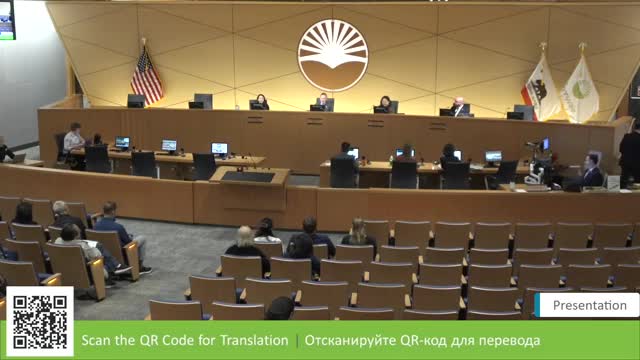
The Hollenbeck Avenue bike-lane study drew one of the largest public comment turnouts at Tuesdays Council meeting, with neighbors, cyclists, school and sports groups laying out starkly different visions for the corridor.
Proponents urged the council to adopt Option 1 (buffered bike lanes) as the only design that would meet an "all ages and abilities" safety standard. "Option 1 is the only option that will provide safe biking for children," said an advocate during oral communications, arguing buffered lanes are needed to allow more families to bike to school and local destinations.
Opponents — including nearby residents, parents of school-aged children and representatives of local community organizations — raised concerns about loss of on-street parking, congestion during school drop-off and events, and accessibility for elderly and mobility-impaired neighbors. One Hollenbeck resident said removing parking could force long-time residents to move: "If they are not able to find parking, their only option is to sell the house and move on." Several speakers urged incremental or hybrid designs (a suggested "2C") that would preserve important left-turns and pork-chop islands while improving crossings at key intersections.
Staff perspective and next steps: Public Works presented the Active Transportation Plan context and a progress-mapping tool (staff said the ATP is a living document). Councilmembers and staff emphasized they support traffic-calming and improved crossings as parts of any final design, and encouraged continued neighborhood engagement, data collection and consideration of Safe Routes to School measures.
What to watch: Staff plan to augment the ATP mapping tool with project-status tabs (planning/design/construction), Safe Routes to School layers and pedestrian improvements. Council did not take a final vote on Hollenbeck during this meeting; comments will be considered as staff refines designs and public outreach continues.
Proponents urged the council to adopt Option 1 (buffered bike lanes) as the only design that would meet an "all ages and abilities" safety standard. "Option 1 is the only option that will provide safe biking for children," said an advocate during oral communications, arguing buffered lanes are needed to allow more families to bike to school and local destinations.
Opponents — including nearby residents, parents of school-aged children and representatives of local community organizations — raised concerns about loss of on-street parking, congestion during school drop-off and events, and accessibility for elderly and mobility-impaired neighbors. One Hollenbeck resident said removing parking could force long-time residents to move: "If they are not able to find parking, their only option is to sell the house and move on." Several speakers urged incremental or hybrid designs (a suggested "2C") that would preserve important left-turns and pork-chop islands while improving crossings at key intersections.
Staff perspective and next steps: Public Works presented the Active Transportation Plan context and a progress-mapping tool (staff said the ATP is a living document). Councilmembers and staff emphasized they support traffic-calming and improved crossings as parts of any final design, and encouraged continued neighborhood engagement, data collection and consideration of Safe Routes to School measures.
What to watch: Staff plan to augment the ATP mapping tool with project-status tabs (planning/design/construction), Safe Routes to School layers and pedestrian improvements. Council did not take a final vote on Hollenbeck during this meeting; comments will be considered as staff refines designs and public outreach continues.
View the Full Meeting & All Its Details
This article offers just a summary. Unlock complete video, transcripts, and insights as a Founder Member.
✓
Watch full, unedited meeting videos
✓
Search every word spoken in unlimited transcripts
✓
AI summaries & real-time alerts (all government levels)
✓
Permanent access to expanding government content
30-day money-back guarantee
