Committee splits on expanding free school meals; fiscal cost and adequacy interactions drive dissent
November 14, 2025 | Education, House of Representatives, Committees , Legislative, New Hampshire
This article was created by AI summarizing key points discussed. AI makes mistakes, so for full details and context, please refer to the video of the full meeting. Please report any errors so we can fix them. Report an error »
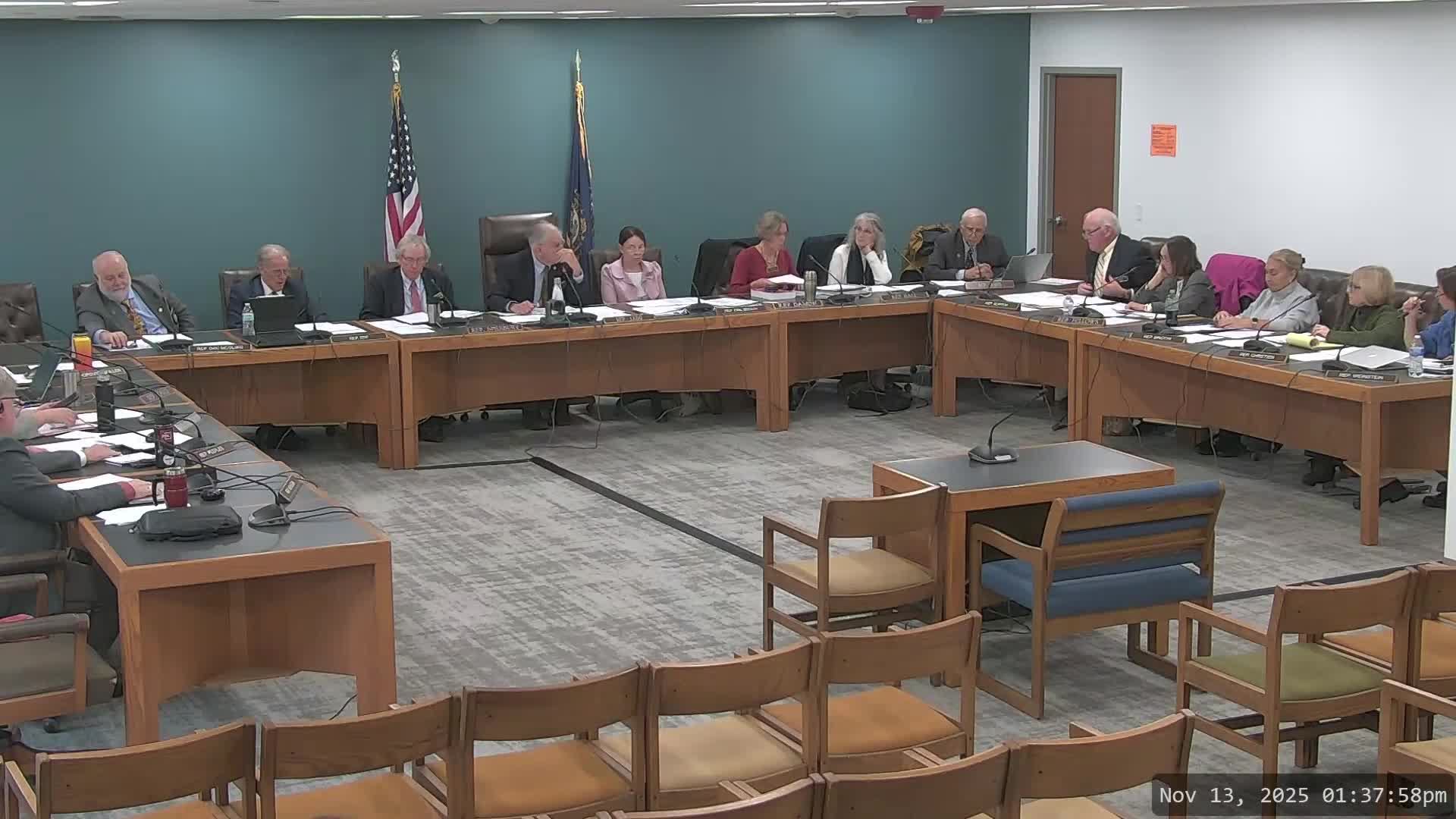
Lawmakers spent substantial time debating two related proposals to expand free school meals for students. HB665 would increase eligibility to a household income threshold (presented in committee as up to 300% of federal poverty guidelines) with costs paid from the Education Trust Fund; SB204 would make districts responsible for providing meals during school hours and appropriate state reimbursement.
"Feeding kids is important as almost anything," Representative Shin Hall, a 40‑year educator, said, adding that access to breakfast and lunch improves "health, mental and physical" readiness for learning. Representative Damon, a supporter, said the fiscal note overstates costs because it assumes 100% of eligible students would take both breakfast and lunch every school day: "The fiscal note would actually be substantially less than what is presented if that were the case."
Opponents emphasized budgetary constraints. Representative McGuire highlighted the fiscal note for HB665 that estimated roughly $7 million and cautioned added costs could feed into the adequacy formula and multiply future state aid obligations. "We just don't have the money to appropriate $7,000,000," he said. Laura Elkin of Huddl Solutions told the committee the Senate had substantially amended the fiscal assumptions and that optional participation and other changes would lower projected costs.
After debate the committee recommended 'Inexpedient to Legislate' on HB665 by roll call (10‑8). Later in the session the committee also voted ITL on SB204 (recorded as 9‑8). Supporters said the measures address food insecurity; opponents said the fiscal impact and possible downstream adequacy implications require fuller budgetary review and were grounds to pause the proposals.
"Feeding kids is important as almost anything," Representative Shin Hall, a 40‑year educator, said, adding that access to breakfast and lunch improves "health, mental and physical" readiness for learning. Representative Damon, a supporter, said the fiscal note overstates costs because it assumes 100% of eligible students would take both breakfast and lunch every school day: "The fiscal note would actually be substantially less than what is presented if that were the case."
Opponents emphasized budgetary constraints. Representative McGuire highlighted the fiscal note for HB665 that estimated roughly $7 million and cautioned added costs could feed into the adequacy formula and multiply future state aid obligations. "We just don't have the money to appropriate $7,000,000," he said. Laura Elkin of Huddl Solutions told the committee the Senate had substantially amended the fiscal assumptions and that optional participation and other changes would lower projected costs.
After debate the committee recommended 'Inexpedient to Legislate' on HB665 by roll call (10‑8). Later in the session the committee also voted ITL on SB204 (recorded as 9‑8). Supporters said the measures address food insecurity; opponents said the fiscal impact and possible downstream adequacy implications require fuller budgetary review and were grounds to pause the proposals.
View the Full Meeting & All Its Details
This article offers just a summary. Unlock complete video, transcripts, and insights as a Founder Member.
✓
Watch full, unedited meeting videos
✓
Search every word spoken in unlimited transcripts
✓
AI summaries & real-time alerts (all government levels)
✓
Permanent access to expanding government content
30-day money-back guarantee
