Council accepts Equal Rights Commission advisory report amid hours of public debate over short-term rental rules
November 12, 2025 | Green Bay, Brown County, Wisconsin
This article was created by AI summarizing key points discussed. AI makes mistakes, so for full details and context, please refer to the video of the full meeting. Please report any errors so we can fix them. Report an error »
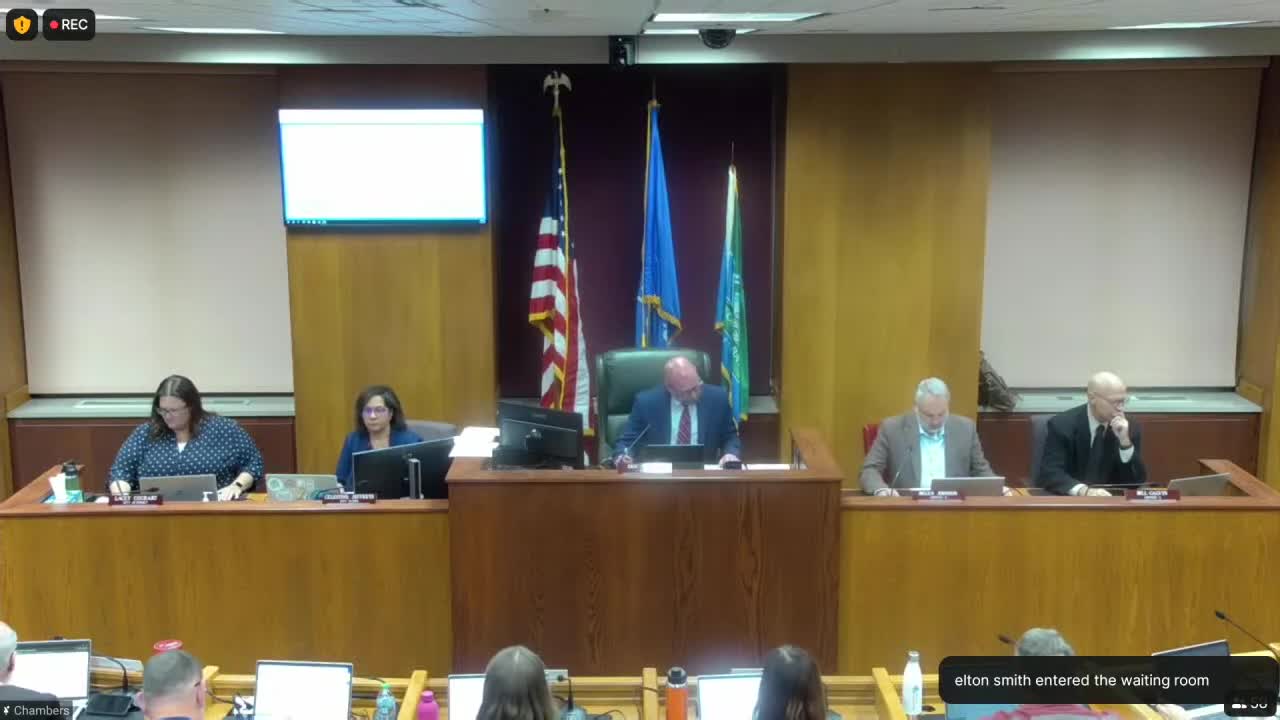
A long, sometimes emotional public-comment period dominated the Green Bay Common Council meeting on Nov. 11 as residents, short-term rental (STR) owners and civic groups testified about draft recommendations from the Equal Rights Commission (ERC) on regulating short-term rentals.
The ERC recommended measures including a 7-night minimum stay and a 180-day annual cap on STR operation in some cases; proponents said limits could free housing for local residents and slow conversions of homes into investment properties, while opponents — including the newly formed Green Bay STR Alliance and many small hosts — said those specific thresholds would shutter small local businesses, cost jobs for cleaners and maintenance workers, and reduce tax and tourism revenue.
"The 7-night, 180-day proposal is a blunt tool with severe unintended consequences," Ben DeBaker of the STR Alliance testified, arguing for fee-based reforms that fund affordable housing and stronger enforcement instead.
Equal Rights Commissioner John Shelton cited the city's housing study and said the ERC sought to balance entrepreneurship with residents' need for housing. State Rep. Amad Rivera Wagner told the council the 2017 state statute constrains municipal powers and that he will introduce legislation to restore more local options.
After hearing more than three dozen speakers over several hours, the council voted to accept the ERC report (procedural vote 10–2). Council members emphasized accepting the report does not by itself change the law; it places the ERC recommendations in the public record and directs staff to process any formal ordinance referrals or draft text through the planning and public-hearing process.
Council members also invited additional public hearings at the planning commission and asked staff to prepare comprehensive analyses of potential impacts, including jobs, tax revenue, housing supply modeling and legal constraints imposed by state law. Several alderpersons urged staff to propose alternatives to the specific 7-night and 180-day measures while preserving enforcement tools for nuisance properties.
The council's actions ensured the ERC's recommendations will be considered during scheduled plan-commission hearings and subsequent council votes; any final ordinance would require later votes and, where constrained by state law, could trigger requests to the legislature for broader municipal authority.
The ERC recommended measures including a 7-night minimum stay and a 180-day annual cap on STR operation in some cases; proponents said limits could free housing for local residents and slow conversions of homes into investment properties, while opponents — including the newly formed Green Bay STR Alliance and many small hosts — said those specific thresholds would shutter small local businesses, cost jobs for cleaners and maintenance workers, and reduce tax and tourism revenue.
"The 7-night, 180-day proposal is a blunt tool with severe unintended consequences," Ben DeBaker of the STR Alliance testified, arguing for fee-based reforms that fund affordable housing and stronger enforcement instead.
Equal Rights Commissioner John Shelton cited the city's housing study and said the ERC sought to balance entrepreneurship with residents' need for housing. State Rep. Amad Rivera Wagner told the council the 2017 state statute constrains municipal powers and that he will introduce legislation to restore more local options.
After hearing more than three dozen speakers over several hours, the council voted to accept the ERC report (procedural vote 10–2). Council members emphasized accepting the report does not by itself change the law; it places the ERC recommendations in the public record and directs staff to process any formal ordinance referrals or draft text through the planning and public-hearing process.
Council members also invited additional public hearings at the planning commission and asked staff to prepare comprehensive analyses of potential impacts, including jobs, tax revenue, housing supply modeling and legal constraints imposed by state law. Several alderpersons urged staff to propose alternatives to the specific 7-night and 180-day measures while preserving enforcement tools for nuisance properties.
The council's actions ensured the ERC's recommendations will be considered during scheduled plan-commission hearings and subsequent council votes; any final ordinance would require later votes and, where constrained by state law, could trigger requests to the legislature for broader municipal authority.
Don't Miss a Word: See the Full Meeting!
Go beyond summaries. Unlock every video, transcript, and key insight with a Founder Membership.
✓
Get instant access to full meeting videos
✓
Search and clip any phrase from complete transcripts
✓
Receive AI-powered summaries & custom alerts
✓
Enjoy lifetime, unrestricted access to government data
30-day money-back guarantee
