MCPS details HVAC, roof priorities and how state funding shapes phasing
November 12, 2025 | Montgomery County Public Schools, School Boards, Maryland
This article was created by AI summarizing key points discussed. AI makes mistakes, so for full details and context, please refer to the video of the full meeting. Please report any errors so we can fix them. Report an error »
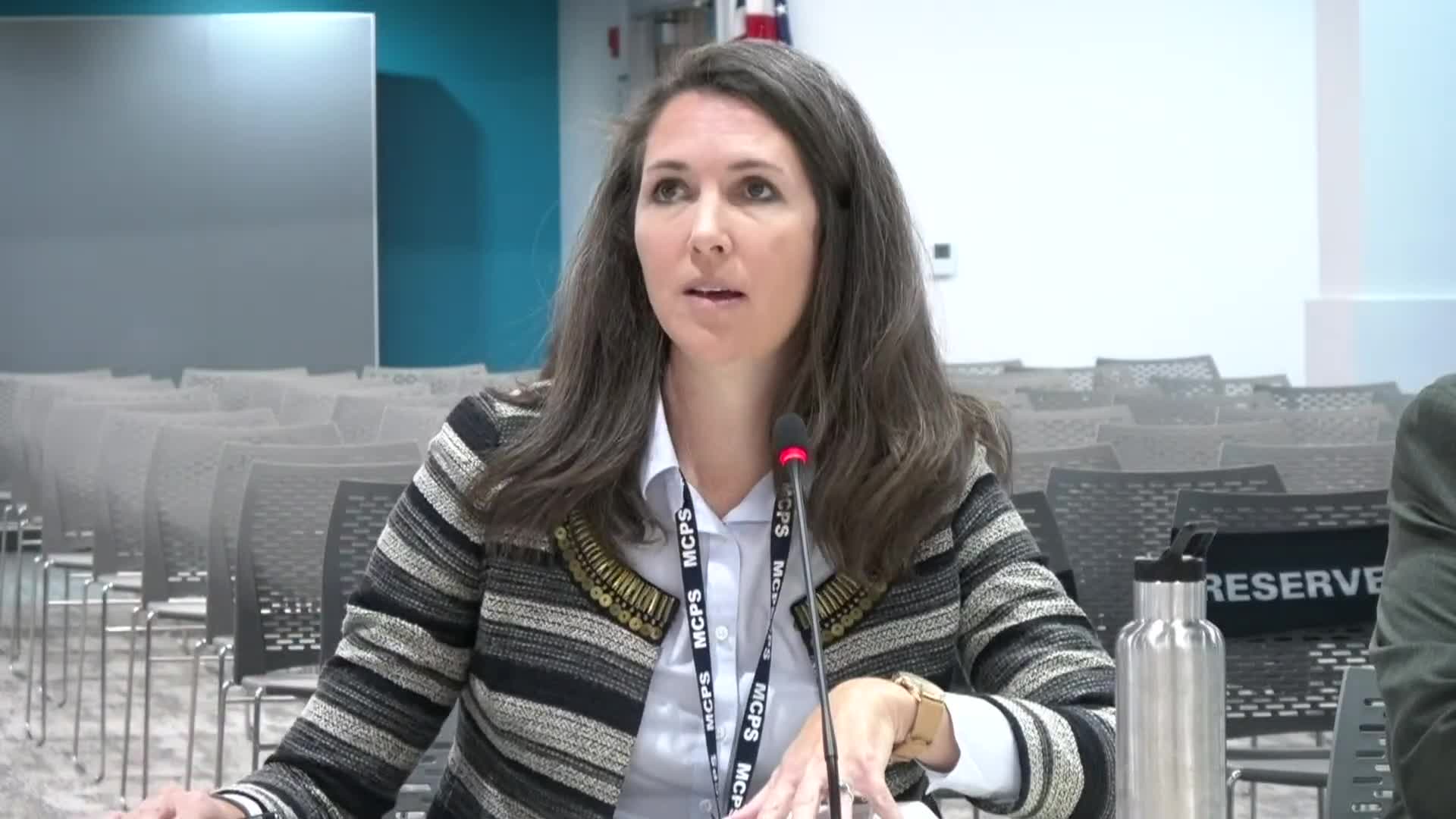
Montgomery County Public Schools staff used the work session to explain why HVAC and roof work is phased over multiple summers and how state funding rules affect which projects the district can afford.
A facilities presenter explained an elementary HVAC project typically takes one to two summers, a middle school two to three summers, and a high school at least four summers; the timeline reflects construction logistics and long lead times for equipment. "An elementary school typically takes us 1 summer if not 2 summers just depending on the size of an elementary school," the presenter said, and added that a typical high-school HVAC sequence can span several summers.
Board members pressed staff on costs and phasing. One board member observed that the FY27 HVAC projection for the system is about $55,000,000 and noted that a single high-school replacement was estimated at roughly $32,000,000. Staff explained they account for cost escalation across phases: later phases often show higher dollar amounts because of inflation and annual construction cost increases.
Staff also discussed state aid rules. Several presenters warned state funding formulas are enrollment-driven and can reduce aid for capacity projects as enrollment declines. To maximize eligibility for state matches, staff said the district sometimes packages multiple building systems into a single renovation (a "five-system" approach) so work qualifies as systemic and becomes more likely to receive a state match. The presenters said this packaging can also yield economies of scale and a larger state reimbursement but requires careful planning.
Board members asked for additional transparency on the interaction between the district's prioritization metrics (condition/utilization) and state-aid eligibility; staff pointed to exhibit tables on the CIP web page that show state funding requests and explained they will supply additional cost and eligibility detail as bids and permit timelines mature.
What happens next: the board will consider the FY27 CIP proposal on Nov. 20; staff said many HVAC projects in the plan will not begin construction until 2028 because of state approval, design and procurement timelines.
A facilities presenter explained an elementary HVAC project typically takes one to two summers, a middle school two to three summers, and a high school at least four summers; the timeline reflects construction logistics and long lead times for equipment. "An elementary school typically takes us 1 summer if not 2 summers just depending on the size of an elementary school," the presenter said, and added that a typical high-school HVAC sequence can span several summers.
Board members pressed staff on costs and phasing. One board member observed that the FY27 HVAC projection for the system is about $55,000,000 and noted that a single high-school replacement was estimated at roughly $32,000,000. Staff explained they account for cost escalation across phases: later phases often show higher dollar amounts because of inflation and annual construction cost increases.
Staff also discussed state aid rules. Several presenters warned state funding formulas are enrollment-driven and can reduce aid for capacity projects as enrollment declines. To maximize eligibility for state matches, staff said the district sometimes packages multiple building systems into a single renovation (a "five-system" approach) so work qualifies as systemic and becomes more likely to receive a state match. The presenters said this packaging can also yield economies of scale and a larger state reimbursement but requires careful planning.
Board members asked for additional transparency on the interaction between the district's prioritization metrics (condition/utilization) and state-aid eligibility; staff pointed to exhibit tables on the CIP web page that show state funding requests and explained they will supply additional cost and eligibility detail as bids and permit timelines mature.
What happens next: the board will consider the FY27 CIP proposal on Nov. 20; staff said many HVAC projects in the plan will not begin construction until 2028 because of state approval, design and procurement timelines.
View the Full Meeting & All Its Details
This article offers just a summary. Unlock complete video, transcripts, and insights as a Founder Member.
✓
Watch full, unedited meeting videos
✓
Search every word spoken in unlimited transcripts
✓
AI summaries & real-time alerts (all government levels)
✓
Permanent access to expanding government content
30-day money-back guarantee
