Utah Senate approves package of bills on water, corrections, licensing and scholarships
February 03, 2023 | 2023 Utah Legislature, Utah Legislature, Utah Legislative Branch, Utah
This article was created by AI summarizing key points discussed. AI makes mistakes, so for full details and context, please refer to the video of the full meeting. Please report any errors so we can fix them. Report an error »
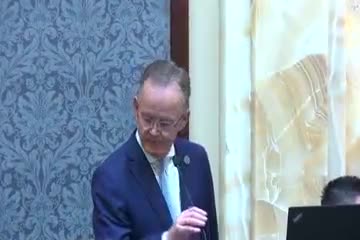
The Utah Senate passed a slate of bills Friday during a floor session at the State Capitol, advancing measures on water efficiency, county corrections contracting, professional licensing and a new scholarship for public safety officers.
The actions came after committee reports and floor debate; several measures were substituted and amended before third‑reading votes. Many bills were described by sponsors as technical fixes or stakeholder compromises while a few drew targeted questions about fiscal notes and long‑term consequences.
Votes at a glance:
- Second Substitute Senate Bill 35 (Reciprocal Professional Licensing Amendments): Passed; supporters said it creates a teacher mobility compact, a physician assistant compact and licensing by endorsement to help qualified immigrants enter the workforce. (motion to uncircle and pass recorded on the floor)
- Second Substitute Senate Bill 108 (Animal Shelter Revisions): Passed on a roll call announced as 20 yea, 3 nay, 6 absent. Sponsor said the measure addresses a de‑facto ban on gas chambers and reflects negotiation with the Farm Bureau, law enforcement and veterinarian associations.
- Senate Bill 119 (Per‑Capita Consumptive Use Metric): Passed; the bill establishes a new per‑capita water‑use standard to help water districts compare consumption across states. The clerk announced 22 yea, 1 nay, 6 absent.
- First Substitute Senate Bill 64 (Bureau of Emergency Medical Services amendments): As amended, passed and was referred to the House (announced 21 yea, 0 nay, 8 absent).
- Third Substitute Senate Bill 118 (Water‑Efficient Landscaping Incentives / turf buyback): Passed after substitution; sponsor described a $10 million appropriation request and a 50% match opportunity for local conservation districts. (announced for third read: 24 yea, 0 nay, 5 absent)
- Senate Bill 98 (Legal Cost Recovery Amendments): Moved to third reading; sponsor said the bill would make the state, rather than counties, responsible for certain legal costs when the state pursues charges that are later dismissed or result in acquittal.
- Senate Bill 114 (County Correctional Facility Contracting Amendments): Passed; sponsor described a 70/30 state‑county split for contracted inmates and said reimbursement issues will be addressed in future legislation. Senators noted an ongoing fiscal note reported in discussion (sponsor cited a one‑time setup of $3.5 million and an ongoing fiscal exposure reported in committee).
- Second Substitute Senate Bill 75 (Sand & Gravel Sales Tax Amendments): Substitute adopted to redirect an existing portion of tax receipts (about $7 million, not new revenue) toward counties that host extraction operations to help cover road impacts from hauling and processing.
- Third Substitute Senate Bill 128 (Karen Mayne Public Safety Officer Scholarship Program): Passed; the bill creates a scholarship program intended to help 18–21‑year‑olds enroll in POST or university‑based peace officer certification programs and carried a fiscal note the sponsor estimated at $5 million.
Why it matters: The package bundles technical corrections and policy changes that affect local governments, state budgeting and workforce pipelines. Several bills that passed create or clarify state‑local funding flows (SB114, SB75) or establish new programmatic incentives (SB118, SB128). Sponsors and some floor members described these as stakeholder‑driven compromises; others warned the Legislature may revisit funding questions in future sessions.
What’s next: Passed bills will be transmitted to the House where they will receive further consideration or concurrence. For items with outstanding fiscal questions (for example, the reimbursement side of corrections contracting), sponsors said follow‑up legislation is expected in a later session.
The actions came after committee reports and floor debate; several measures were substituted and amended before third‑reading votes. Many bills were described by sponsors as technical fixes or stakeholder compromises while a few drew targeted questions about fiscal notes and long‑term consequences.
Votes at a glance:
- Second Substitute Senate Bill 35 (Reciprocal Professional Licensing Amendments): Passed; supporters said it creates a teacher mobility compact, a physician assistant compact and licensing by endorsement to help qualified immigrants enter the workforce. (motion to uncircle and pass recorded on the floor)
- Second Substitute Senate Bill 108 (Animal Shelter Revisions): Passed on a roll call announced as 20 yea, 3 nay, 6 absent. Sponsor said the measure addresses a de‑facto ban on gas chambers and reflects negotiation with the Farm Bureau, law enforcement and veterinarian associations.
- Senate Bill 119 (Per‑Capita Consumptive Use Metric): Passed; the bill establishes a new per‑capita water‑use standard to help water districts compare consumption across states. The clerk announced 22 yea, 1 nay, 6 absent.
- First Substitute Senate Bill 64 (Bureau of Emergency Medical Services amendments): As amended, passed and was referred to the House (announced 21 yea, 0 nay, 8 absent).
- Third Substitute Senate Bill 118 (Water‑Efficient Landscaping Incentives / turf buyback): Passed after substitution; sponsor described a $10 million appropriation request and a 50% match opportunity for local conservation districts. (announced for third read: 24 yea, 0 nay, 5 absent)
- Senate Bill 98 (Legal Cost Recovery Amendments): Moved to third reading; sponsor said the bill would make the state, rather than counties, responsible for certain legal costs when the state pursues charges that are later dismissed or result in acquittal.
- Senate Bill 114 (County Correctional Facility Contracting Amendments): Passed; sponsor described a 70/30 state‑county split for contracted inmates and said reimbursement issues will be addressed in future legislation. Senators noted an ongoing fiscal note reported in discussion (sponsor cited a one‑time setup of $3.5 million and an ongoing fiscal exposure reported in committee).
- Second Substitute Senate Bill 75 (Sand & Gravel Sales Tax Amendments): Substitute adopted to redirect an existing portion of tax receipts (about $7 million, not new revenue) toward counties that host extraction operations to help cover road impacts from hauling and processing.
- Third Substitute Senate Bill 128 (Karen Mayne Public Safety Officer Scholarship Program): Passed; the bill creates a scholarship program intended to help 18–21‑year‑olds enroll in POST or university‑based peace officer certification programs and carried a fiscal note the sponsor estimated at $5 million.
Why it matters: The package bundles technical corrections and policy changes that affect local governments, state budgeting and workforce pipelines. Several bills that passed create or clarify state‑local funding flows (SB114, SB75) or establish new programmatic incentives (SB118, SB128). Sponsors and some floor members described these as stakeholder‑driven compromises; others warned the Legislature may revisit funding questions in future sessions.
What’s next: Passed bills will be transmitted to the House where they will receive further consideration or concurrence. For items with outstanding fiscal questions (for example, the reimbursement side of corrections contracting), sponsors said follow‑up legislation is expected in a later session.
Don't Miss a Word: See the Full Meeting!
Go beyond summaries. Unlock every video, transcript, and key insight with a Founder Membership.
✓
Get instant access to full meeting videos
✓
Search and clip any phrase from complete transcripts
✓
Receive AI-powered summaries & custom alerts
✓
Enjoy lifetime, unrestricted access to government data
30-day money-back guarantee
