Staff recommends combining R-2/R-3 zoning, allowing detached garages and permitting duplexes on larger lots
November 11, 2025 | Wyoming, Kent County, Michigan
This article was created by AI summarizing key points discussed. AI makes mistakes, so for full details and context, please refer to the video of the full meeting. Please report any errors so we can fix them. Report an error »
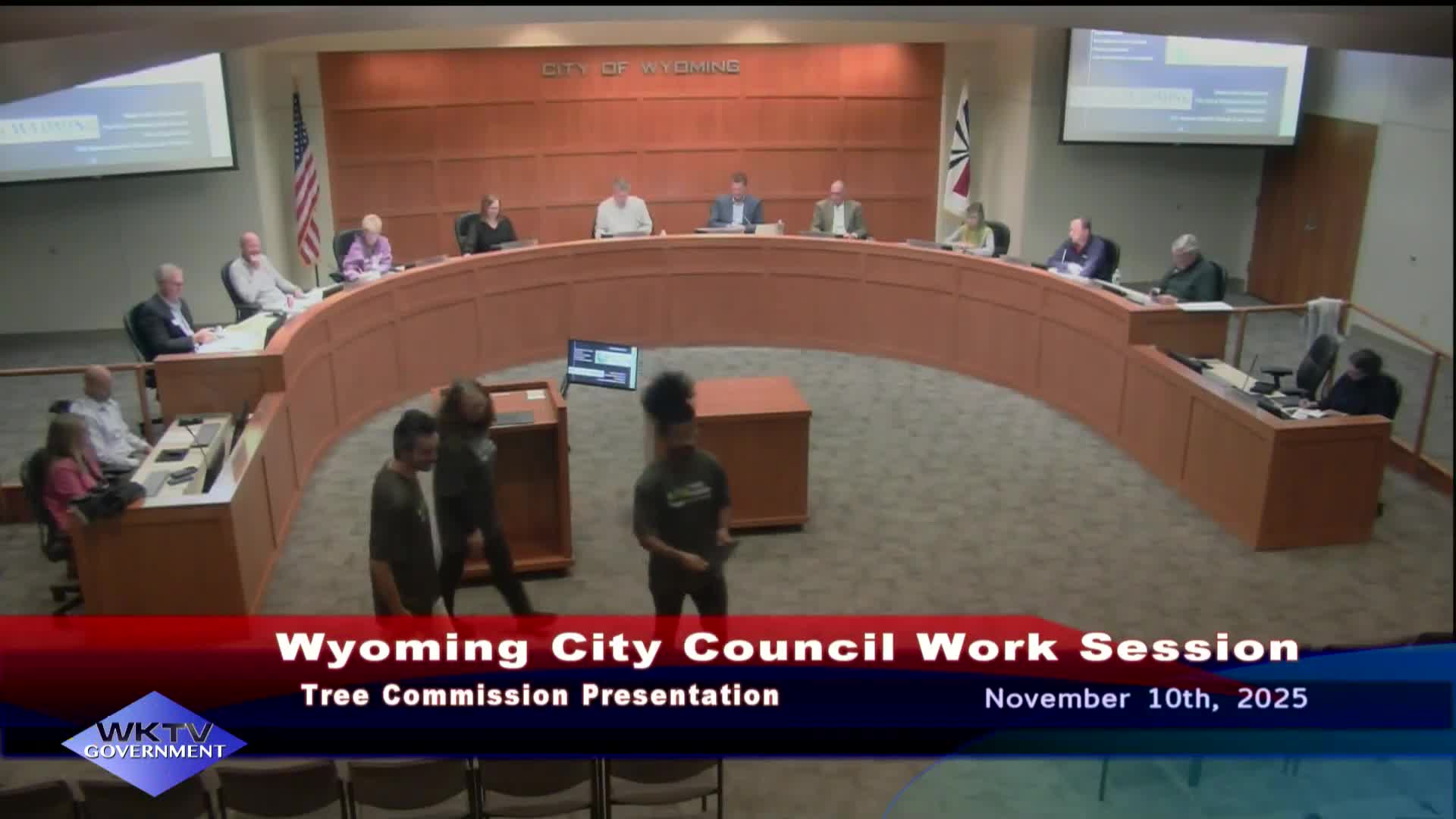
Nicole, a planning staff member, presented the second part of a zoning amendment series aimed at aligning R-2 and R-3 districts with Wyoming’s historic neighborhood patterns and reducing existing nonconformities.
Nicole explained that a combined R-2/R-3 district would set a minimum lot size of 4,000 square feet and standardize minimum ground-floor building area and dwelling-unit size to 700 square feet to accommodate the city’s many mid-20th-century starter homes. "We're gonna standardize the minimum size for both the minimum ground floor building area and the minimum dwelling unit size to 700 square foot," she said.
On garages, staff recommended permitting detached garages in the combined district to better reflect historic development. Nicole said the change would "allow for that more historic building pattern" and would apply only to the R-2/R-3 combined district; other residential districts would continue to require attached garages.
The largest policy shift discussed was duplexes. Nicole presented data showing Wyoming has 385 duplexes—about 71% of which are currently located in R-2 districts where duplexes are not permitted by right. Staff recommended permitting duplexes in the combined R-2/R-3 district but with a duplex minimum lot size of 6,000 square feet. Nicole said that figure reflects field analysis and SketchUp modeling showing duplexes on 4,000-square-foot lots often do not fit current setback and unit-size requirements; a 6,000-square-foot threshold, combined with setbacks, lot-coverage and minimum unit-size rules, would reduce nonconformity without significantly altering neighborhood character.
Council members raised questions about parking, whether accessory dwelling units would be treated as duplexes (Nicole said they would not), how many existing lots would qualify for duplex conversion and whether limiting lot size or relying on setbacks is the better regulatory approach. Nicole and others said many of the existing nonconforming duplexes are grandfathered as legal nonconforming structures and would remain so.
No ordinance was adopted during the session; staff indicated the package would return to the planning commission for further formulation and council feedback.
What happens next: Staff will take council feedback into the planning-commission process and return with ordinance language and clarified statistics on how many existing R-2/R-3 lots would be eligible under a 6,000-square-foot duplex threshold.
Nicole explained that a combined R-2/R-3 district would set a minimum lot size of 4,000 square feet and standardize minimum ground-floor building area and dwelling-unit size to 700 square feet to accommodate the city’s many mid-20th-century starter homes. "We're gonna standardize the minimum size for both the minimum ground floor building area and the minimum dwelling unit size to 700 square foot," she said.
On garages, staff recommended permitting detached garages in the combined district to better reflect historic development. Nicole said the change would "allow for that more historic building pattern" and would apply only to the R-2/R-3 combined district; other residential districts would continue to require attached garages.
The largest policy shift discussed was duplexes. Nicole presented data showing Wyoming has 385 duplexes—about 71% of which are currently located in R-2 districts where duplexes are not permitted by right. Staff recommended permitting duplexes in the combined R-2/R-3 district but with a duplex minimum lot size of 6,000 square feet. Nicole said that figure reflects field analysis and SketchUp modeling showing duplexes on 4,000-square-foot lots often do not fit current setback and unit-size requirements; a 6,000-square-foot threshold, combined with setbacks, lot-coverage and minimum unit-size rules, would reduce nonconformity without significantly altering neighborhood character.
Council members raised questions about parking, whether accessory dwelling units would be treated as duplexes (Nicole said they would not), how many existing lots would qualify for duplex conversion and whether limiting lot size or relying on setbacks is the better regulatory approach. Nicole and others said many of the existing nonconforming duplexes are grandfathered as legal nonconforming structures and would remain so.
No ordinance was adopted during the session; staff indicated the package would return to the planning commission for further formulation and council feedback.
What happens next: Staff will take council feedback into the planning-commission process and return with ordinance language and clarified statistics on how many existing R-2/R-3 lots would be eligible under a 6,000-square-foot duplex threshold.
Don't Miss a Word: See the Full Meeting!
Go beyond summaries. Unlock every video, transcript, and key insight with a Founder Membership.
✓
Get instant access to full meeting videos
✓
Search and clip any phrase from complete transcripts
✓
Receive AI-powered summaries & custom alerts
✓
Enjoy lifetime, unrestricted access to government data
30-day money-back guarantee
