Douglas County warns of multi‑million dollar shortfall and possible severe financial emergency
November 11, 2025 | 2025 Legislature NV, Nevada
This article was created by AI summarizing key points discussed. AI makes mistakes, so for full details and context, please refer to the video of the full meeting. Please report any errors so we can fix them. Report an error »
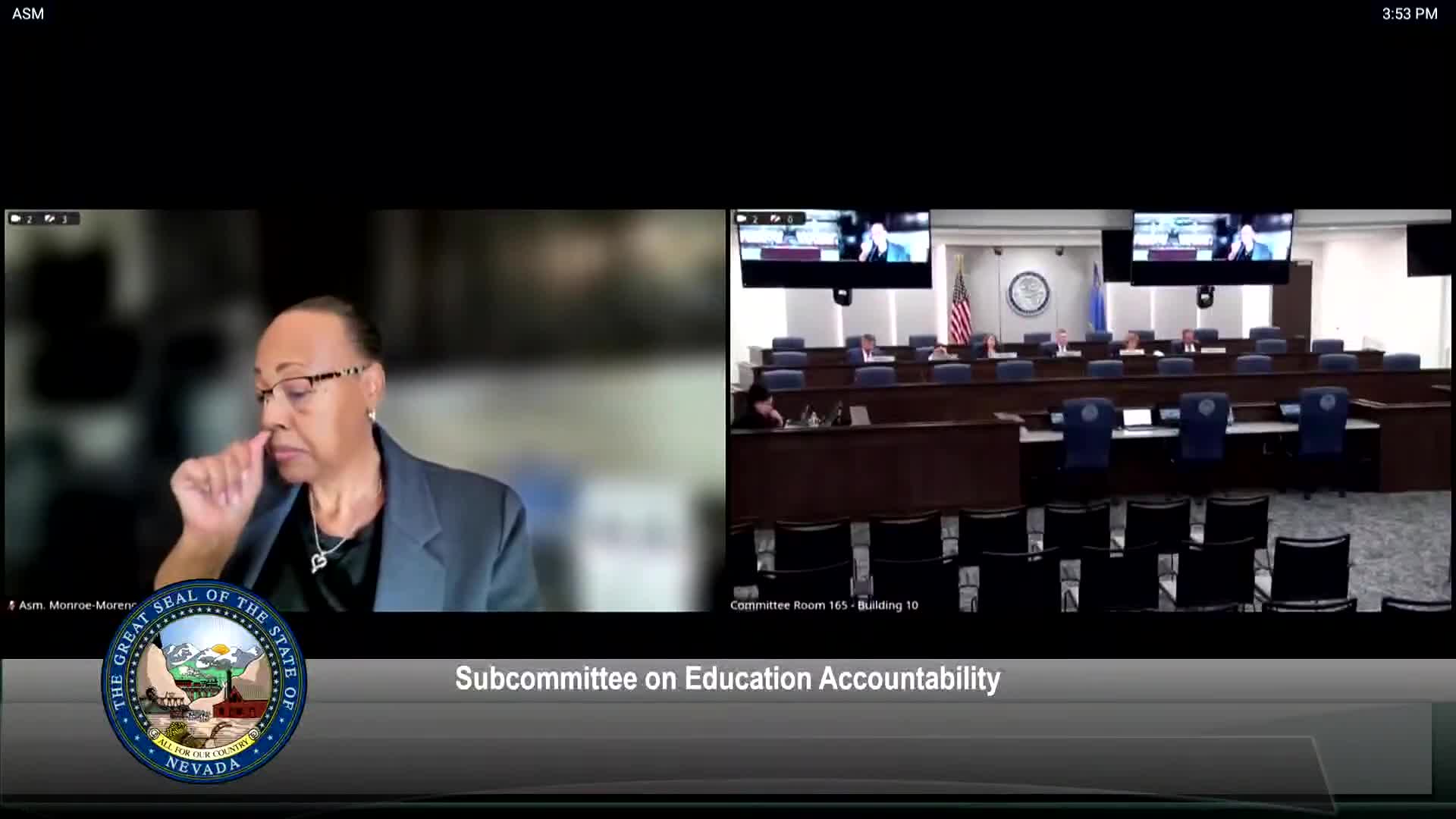
Frankie Alvarado, superintendent of the rural Douglas County School District, told the Interim Finance Committee’s Subcommittee on Education Accountability that while academic indicators improved across most metrics, the district is confronting a significant fiscal shortfall driven by declining enrollment, escalating special‑education costs and rising transportation and insurance expenses.
Alvarado said Douglas reduced staff by approximately 47 positions going into FY26 and reported that the district had lost close to $5 million in revenue over three fiscal years. He said the district anticipates an FY26 ending fund balance roughly negative $5.2 million and an FY25 shortfall near $1.2 million. The district calculated it would need to recapture about $7.5 million (over 10% of the general fund) to return to a sound fiscal position and warned it may need to consider service reductions, school consolidation or other significant cuts.
Sue Estes, Douglas’s director of business services, told the committee that special‑education costs—driven by an increase in students identified with disabilities and associated one‑to‑one aids and transportation—are a primary pressure; she said the district submitted unusual case files to the Nevada Department of Education and recovered one award (~$200,000) but still faces a remaining special‑ed shortfall. Alvarado said the district is exploring Medicaid billing for eligible services and is in ongoing discussions with the Nevada Department of Education and Department of Taxation about supports, but no timeline was provided.
Legislators pressed on demographic drivers (a large retiree population and more than 700 registered homeschool students), whether cost‑of‑living pushed young families away, and opportunities to partner with state agencies for Medicaid reimbursement or shared billing supports. Douglas said a homeschool town hall is underway to improve partial‑enrollment options and outreach to families.
Alvarado said Douglas reduced staff by approximately 47 positions going into FY26 and reported that the district had lost close to $5 million in revenue over three fiscal years. He said the district anticipates an FY26 ending fund balance roughly negative $5.2 million and an FY25 shortfall near $1.2 million. The district calculated it would need to recapture about $7.5 million (over 10% of the general fund) to return to a sound fiscal position and warned it may need to consider service reductions, school consolidation or other significant cuts.
Sue Estes, Douglas’s director of business services, told the committee that special‑education costs—driven by an increase in students identified with disabilities and associated one‑to‑one aids and transportation—are a primary pressure; she said the district submitted unusual case files to the Nevada Department of Education and recovered one award (~$200,000) but still faces a remaining special‑ed shortfall. Alvarado said the district is exploring Medicaid billing for eligible services and is in ongoing discussions with the Nevada Department of Education and Department of Taxation about supports, but no timeline was provided.
Legislators pressed on demographic drivers (a large retiree population and more than 700 registered homeschool students), whether cost‑of‑living pushed young families away, and opportunities to partner with state agencies for Medicaid reimbursement or shared billing supports. Douglas said a homeschool town hall is underway to improve partial‑enrollment options and outreach to families.
Don't Miss a Word: See the Full Meeting!
Go beyond summaries. Unlock every video, transcript, and key insight with a Founder Membership.
✓
Get instant access to full meeting videos
✓
Search and clip any phrase from complete transcripts
✓
Receive AI-powered summaries & custom alerts
✓
Enjoy lifetime, unrestricted access to government data
30-day money-back guarantee
