Lisle board approves police reorganization: commander rank reinstated, two sergeants added
November 04, 2025 | Lisle, DuPage County, Illinois
This article was created by AI summarizing key points discussed. AI makes mistakes, so for full details and context, please refer to the video of the full meeting. Please report any errors so we can fix them. Report an error »
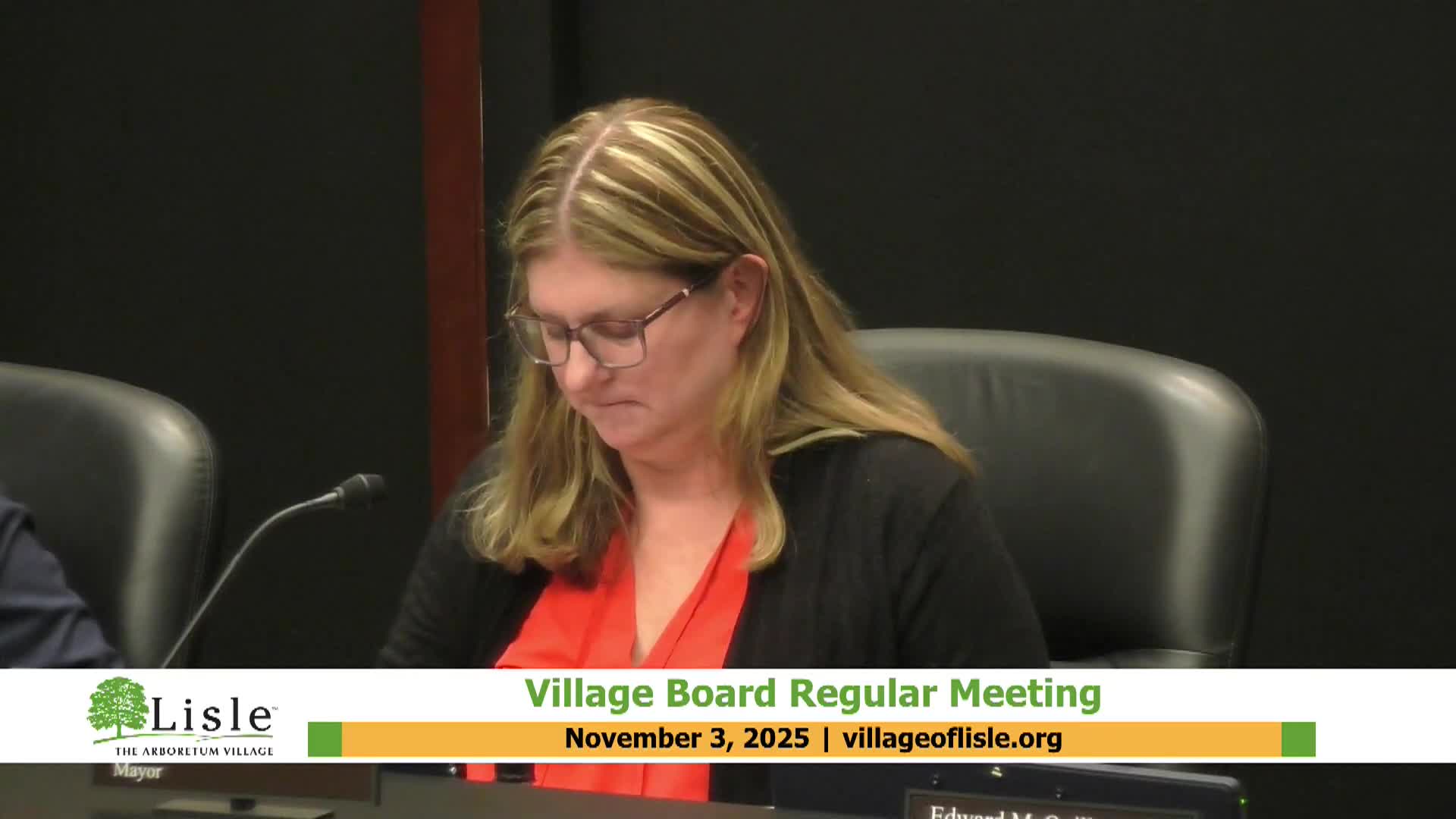
The Village of Lisle on Nov. 3 approved two ordinances to restructure the police department, reintroducing the commander rank and adding two sergeant positions to strengthen supervision and leadership development.
Chief of Police Rodriguez told the board he conducted an internal review after taking command in May and that an independent organizational analysis earlier this year reached the same conclusion: the department has "too few supervisors," an "overreliance on officers in charge," and a gap between sergeants and the deputy chief. "We'd like to reintroduce the commander rank," he said, noting the rank previously existed and "sunset" in 2016.
Rodriguez said commanders would oversee day-to-day operations, manage administrative functions and policy, provide stronger supervision and mentor sergeants so sergeants can spend more time leading in the field. He said the change "is cost, fairly cost neutral" because the village is replacing one deputy chief position with two commander positions and is working within the previously allocated structure of three new positions.
CFO Mitchell explained the pay-grade changes required by the restructuring: sergeants would remain at grade 10; commanders would be placed at grade 11; and the deputy chief would move to grade 12. Mitchell said no budget adjustment was necessary for the current fiscal year because of existing vacancies and the elimination of the deputy chief position.
The board first approved an ordinance amending the FY2025–26 budget to incorporate updated compensation and staffing plans and then approved an ordinance amending Title 9, Chapter 1 of the Village Code to reflect the department structure change. Roll calls recorded aye votes from the trustees present for both measures; the clerk announced the motions passed.
The change is intended to provide closer supervision, consistent leadership and internal mentoring to prepare sergeants for field leadership. The chief and several trustees characterized the change as a management and continuity measure rather than a new recurring budget burden for the current fiscal year.
Chief of Police Rodriguez told the board he conducted an internal review after taking command in May and that an independent organizational analysis earlier this year reached the same conclusion: the department has "too few supervisors," an "overreliance on officers in charge," and a gap between sergeants and the deputy chief. "We'd like to reintroduce the commander rank," he said, noting the rank previously existed and "sunset" in 2016.
Rodriguez said commanders would oversee day-to-day operations, manage administrative functions and policy, provide stronger supervision and mentor sergeants so sergeants can spend more time leading in the field. He said the change "is cost, fairly cost neutral" because the village is replacing one deputy chief position with two commander positions and is working within the previously allocated structure of three new positions.
CFO Mitchell explained the pay-grade changes required by the restructuring: sergeants would remain at grade 10; commanders would be placed at grade 11; and the deputy chief would move to grade 12. Mitchell said no budget adjustment was necessary for the current fiscal year because of existing vacancies and the elimination of the deputy chief position.
The board first approved an ordinance amending the FY2025–26 budget to incorporate updated compensation and staffing plans and then approved an ordinance amending Title 9, Chapter 1 of the Village Code to reflect the department structure change. Roll calls recorded aye votes from the trustees present for both measures; the clerk announced the motions passed.
The change is intended to provide closer supervision, consistent leadership and internal mentoring to prepare sergeants for field leadership. The chief and several trustees characterized the change as a management and continuity measure rather than a new recurring budget burden for the current fiscal year.
View the Full Meeting & All Its Details
This article offers just a summary. Unlock complete video, transcripts, and insights as a Founder Member.
✓
Watch full, unedited meeting videos
✓
Search every word spoken in unlimited transcripts
✓
AI summaries & real-time alerts (all government levels)
✓
Permanent access to expanding government content
30-day money-back guarantee
