Juneau staff brief assembly on cruise‑ship birthing agreements and legal pathway for limits
November 04, 2025 | Juneau City and Borough, Alaska
This article was created by AI summarizing key points discussed. AI makes mistakes, so for full details and context, please refer to the video of the full meeting. Please report any errors so we can fix them. Report an error »
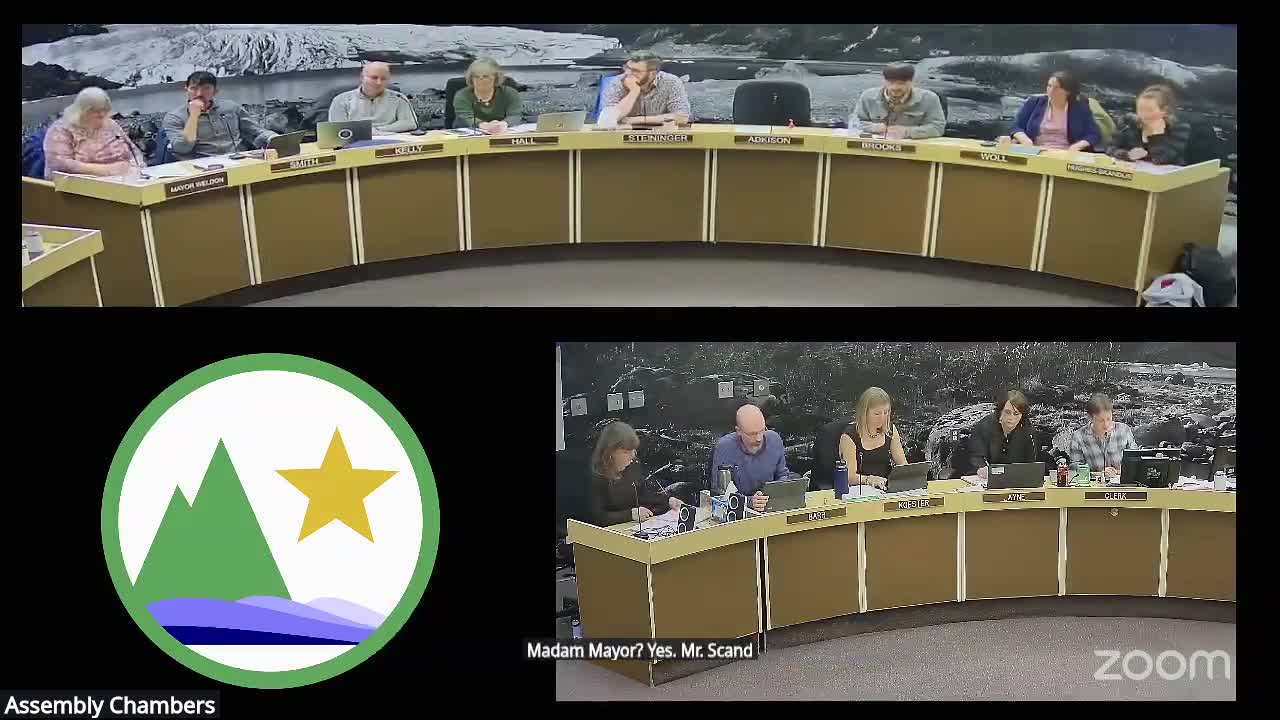
Visitor Industry Director Pierce briefed the Assembly Committee of the Whole on Nov. 3 about two policy tools for managing cruise tourism: (1) more formal birthing (berth) agreements with cruise lines for city docks and (2) the possibility of legislated limits on ships or passenger numbers supported by data.
Pierce said Juneau currently operates under negotiated constraints that include a five‑ship limit and daily passenger caps used in scheduling for the region. “We currently have two negotiated limits, a 5 ship limit, and daily passenger caps,” Pierce said, noting examples of 16,000 passengers on some days and a 12,000 cap on Saturdays. She described how the scheduling framework used by Cruise Line Agencies of Alaska relies on historical priority and that formal birthing agreements would provide CBJ more predictability and the ability to impose contract terms, while leaving scheduling primarily in the hands of the industry.
The legal context: Pierce summarized the Bar Harbor, Maine litigation and the Alaska Municipal League analysis included in the meeting packet. She said the Bar Harbor decision indicates communities can pursue legislation limiting cruise visits if supported by appropriate data, but that the ruling remains legally consequential and could invite litigation. Pierce told the assembly the Bar Harbor litigation ran into seven‑figure costs and emphasized the need for robust, multi‑agency data should the city consider legislation.
Assembly reaction: Members asked clarifying questions about the duration and scope of birthing agreements, whether new cruise lines would be required to join MOAs, and what metrics would be used to justify legislative limits. Several members expressed support for developing measured, data‑driven thresholds tied to infrastructure capacity and emergency services; others cautioned that binding limits could leave docks underused if future capacity expansions (for example, new docks at North Douglas) came online.
Next steps: Pierce recommended the visitor‑industry task force consider specific data collection and multi‑agency coordination (including CBJ, DOT, US Forest Service and others) to support any future legislative or contract changes. The briefing was informational; no assembly action was taken on legislation or birthing contracts at the Nov. 3 meeting.
Pierce said Juneau currently operates under negotiated constraints that include a five‑ship limit and daily passenger caps used in scheduling for the region. “We currently have two negotiated limits, a 5 ship limit, and daily passenger caps,” Pierce said, noting examples of 16,000 passengers on some days and a 12,000 cap on Saturdays. She described how the scheduling framework used by Cruise Line Agencies of Alaska relies on historical priority and that formal birthing agreements would provide CBJ more predictability and the ability to impose contract terms, while leaving scheduling primarily in the hands of the industry.
The legal context: Pierce summarized the Bar Harbor, Maine litigation and the Alaska Municipal League analysis included in the meeting packet. She said the Bar Harbor decision indicates communities can pursue legislation limiting cruise visits if supported by appropriate data, but that the ruling remains legally consequential and could invite litigation. Pierce told the assembly the Bar Harbor litigation ran into seven‑figure costs and emphasized the need for robust, multi‑agency data should the city consider legislation.
Assembly reaction: Members asked clarifying questions about the duration and scope of birthing agreements, whether new cruise lines would be required to join MOAs, and what metrics would be used to justify legislative limits. Several members expressed support for developing measured, data‑driven thresholds tied to infrastructure capacity and emergency services; others cautioned that binding limits could leave docks underused if future capacity expansions (for example, new docks at North Douglas) came online.
Next steps: Pierce recommended the visitor‑industry task force consider specific data collection and multi‑agency coordination (including CBJ, DOT, US Forest Service and others) to support any future legislative or contract changes. The briefing was informational; no assembly action was taken on legislation or birthing contracts at the Nov. 3 meeting.
View the Full Meeting & All Its Details
This article offers just a summary. Unlock complete video, transcripts, and insights as a Founder Member.
✓
Watch full, unedited meeting videos
✓
Search every word spoken in unlimited transcripts
✓
AI summaries & real-time alerts (all government levels)
✓
Permanent access to expanding government content
30-day money-back guarantee
