Clermont County food pantries report surge after SNAP pause; county coordinates emergency distribution
November 03, 2025 | Clermont County, Ohio
This article was created by AI summarizing key points discussed. AI makes mistakes, so for full details and context, please refer to the video of the full meeting. Please report any errors so we can fix them. Report an error »
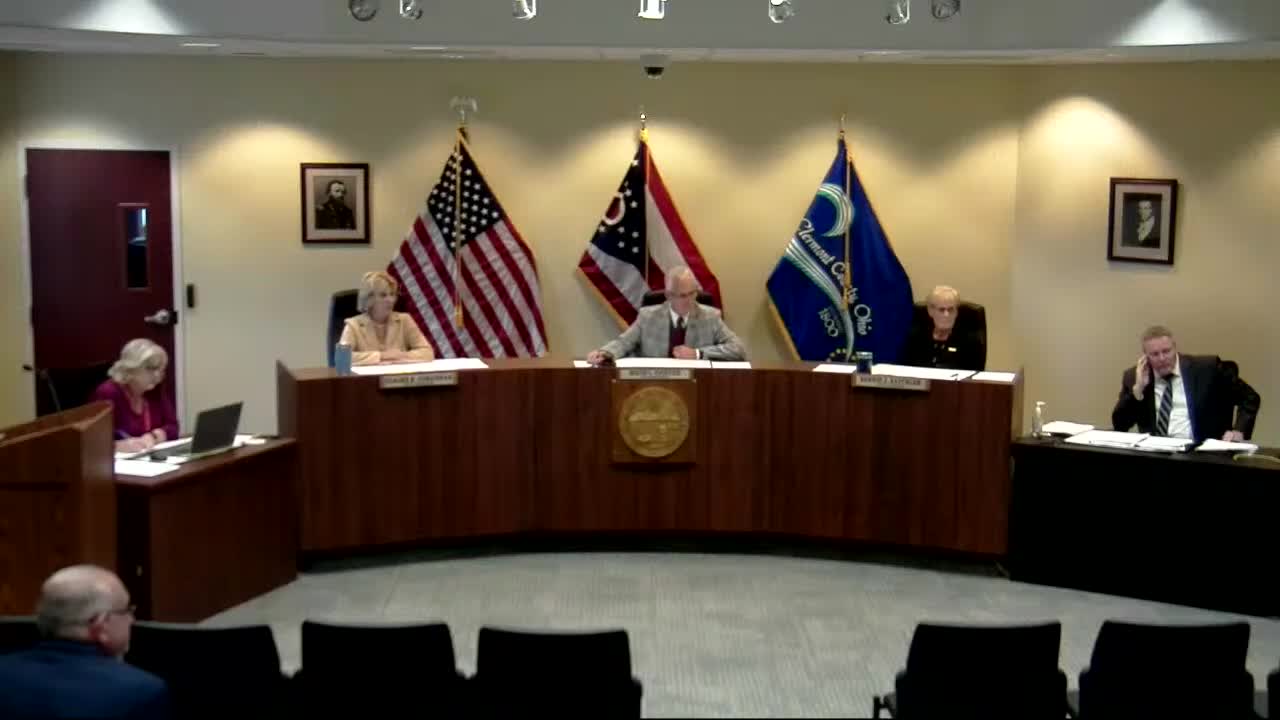
Clermont County pantry leaders told the Board of Commissioners on Nov. 3 that a pause in federal SNAP benefits has driven a marked increase in demand at local food pantries and prompted the county to coordinate emergency distribution efforts.
"Last week alone, we served 743 families," said Nicole Jaquez, senior director of strategic initiatives at IPM Food Pantry. "A typical week for us is about 450 to 500 families." Melissa Meyer, IPM's president and CEO, said pantries had hit capacity twice and were forced to turn people away even while making other arrangements to provide food.
County Director of Job and Family Services Dottie Meyer told commissioners the pause affects roughly 14,962 SNAP recipients in Clermont County and is estimated to remove about $2.7 million in local spending that normally flows to grocers and other retailers. She said the county and pantry leaders formed a collaborative group to assess needs and coordinate distribution while the federal funding situation remains unsettled.
Why it matters: SNAP reductions can translate quickly into increased demand on local charitable food systems, more strain on volunteers and tighter supply lines for retailers that accept benefits. County staff emphasized that state and federal steps so far leave coverage gaps for many recipients.
State and federal updates cited in the briefing: On Oct. 30, the state announced a plan to provide up to $25 million in food assistance in response to the pause. Dottie Meyer said the state described $7 million as targeted to food banks that use TANF (Temporary Assistance for Needy Families) funding and $18 million to Ohio Works First (OWF) recipients. County staff noted those distributions are restricted by program eligibility and will not reach most SNAP households: "That is only 4% of the Clermont County SNAP recipients," Dottie Meyer said.
Melissa Meyer explained why the TANF restriction matters to pantries: "We are a food pantry. We do not receive TANF," she said. "Many families who rely on SNAP do not meet TANF eligibility requirements but still need support from a pantry in their community."
County actions: DJFS and partner agencies outlined steps the county has taken or will take while the pause continues:
- Formed a weekly collaborative of county staff and pantry leaders to share supply needs, referral lists and distribution logistics.
- Organized two food drives: a voluntary county-employee drive and a public drive accepting nonperishable donations at the Department of Job and Family Services building.
- Authorized DJFS to serve as a triage/collection site for shelf-stable, nonexpired food (DJFS is not collecting funds or nonfood items).
- Committed to ongoing public communications via the county website and 2-1-1 to list pantry locations and hours.
"We are coordinating our resources to see which food pantries are in need of which items so that we can best serve their needs," said Paige Sheridan, head of the county's OhioMeansJobs division.
Legal, programmatic limits discussed: County staff warned that the state distribution plan is not equivalent to restoring full SNAP benefits. Dottie Meyer summarized pending federal litigation and contingency-fund discussions, noting a federal judge had directed the U.S. Department of Agriculture to consider contingency funds. County staff added that the emergency dollars discussed in litigation are small compared with annual SNAP expenditures nationally.
Requests and community needs: Local pantry leaders asked for food, funds and volunteers. "It really does take a community to help support our community," said Nicole Jaquez. County staff urged residents who want to help to give directly to pantries when possible; DJFS will accept only nonperishable, shelf-stable donations at its collection point.
What’s next: The county said it will continue weekly coordination with pantries and update the public on the county website and through regular communications. County officials also urged residents to use 2-1-1 for referrals to nearby pantries and posted lists of pantry locations and hours.
Ending: Commissioners praised collaborative efforts and encouraged residents to contact their federal representatives about resolving the funding pause. No new county cash appropriation was reported at the Nov. 3 meeting.
"Last week alone, we served 743 families," said Nicole Jaquez, senior director of strategic initiatives at IPM Food Pantry. "A typical week for us is about 450 to 500 families." Melissa Meyer, IPM's president and CEO, said pantries had hit capacity twice and were forced to turn people away even while making other arrangements to provide food.
County Director of Job and Family Services Dottie Meyer told commissioners the pause affects roughly 14,962 SNAP recipients in Clermont County and is estimated to remove about $2.7 million in local spending that normally flows to grocers and other retailers. She said the county and pantry leaders formed a collaborative group to assess needs and coordinate distribution while the federal funding situation remains unsettled.
Why it matters: SNAP reductions can translate quickly into increased demand on local charitable food systems, more strain on volunteers and tighter supply lines for retailers that accept benefits. County staff emphasized that state and federal steps so far leave coverage gaps for many recipients.
State and federal updates cited in the briefing: On Oct. 30, the state announced a plan to provide up to $25 million in food assistance in response to the pause. Dottie Meyer said the state described $7 million as targeted to food banks that use TANF (Temporary Assistance for Needy Families) funding and $18 million to Ohio Works First (OWF) recipients. County staff noted those distributions are restricted by program eligibility and will not reach most SNAP households: "That is only 4% of the Clermont County SNAP recipients," Dottie Meyer said.
Melissa Meyer explained why the TANF restriction matters to pantries: "We are a food pantry. We do not receive TANF," she said. "Many families who rely on SNAP do not meet TANF eligibility requirements but still need support from a pantry in their community."
County actions: DJFS and partner agencies outlined steps the county has taken or will take while the pause continues:
- Formed a weekly collaborative of county staff and pantry leaders to share supply needs, referral lists and distribution logistics.
- Organized two food drives: a voluntary county-employee drive and a public drive accepting nonperishable donations at the Department of Job and Family Services building.
- Authorized DJFS to serve as a triage/collection site for shelf-stable, nonexpired food (DJFS is not collecting funds or nonfood items).
- Committed to ongoing public communications via the county website and 2-1-1 to list pantry locations and hours.
"We are coordinating our resources to see which food pantries are in need of which items so that we can best serve their needs," said Paige Sheridan, head of the county's OhioMeansJobs division.
Legal, programmatic limits discussed: County staff warned that the state distribution plan is not equivalent to restoring full SNAP benefits. Dottie Meyer summarized pending federal litigation and contingency-fund discussions, noting a federal judge had directed the U.S. Department of Agriculture to consider contingency funds. County staff added that the emergency dollars discussed in litigation are small compared with annual SNAP expenditures nationally.
Requests and community needs: Local pantry leaders asked for food, funds and volunteers. "It really does take a community to help support our community," said Nicole Jaquez. County staff urged residents who want to help to give directly to pantries when possible; DJFS will accept only nonperishable, shelf-stable donations at its collection point.
What’s next: The county said it will continue weekly coordination with pantries and update the public on the county website and through regular communications. County officials also urged residents to use 2-1-1 for referrals to nearby pantries and posted lists of pantry locations and hours.
Ending: Commissioners praised collaborative efforts and encouraged residents to contact their federal representatives about resolving the funding pause. No new county cash appropriation was reported at the Nov. 3 meeting.
Don't Miss a Word: See the Full Meeting!
Go beyond summaries. Unlock every video, transcript, and key insight with a Founder Membership.
✓
Get instant access to full meeting videos
✓
Search and clip any phrase from complete transcripts
✓
Receive AI-powered summaries & custom alerts
✓
Enjoy lifetime, unrestricted access to government data
30-day money-back guarantee
