Chandler Unified outlines K–12 CTE expansion and launches two‑year semiconductor program pilot
February 27, 2025 | Chandler Unified District #80 (4242), School Districts, Arizona
This article was created by AI summarizing key points discussed. AI makes mistakes, so for full details and context, please refer to the video of the full meeting. Please report any errors so we can fix them. Report an error »
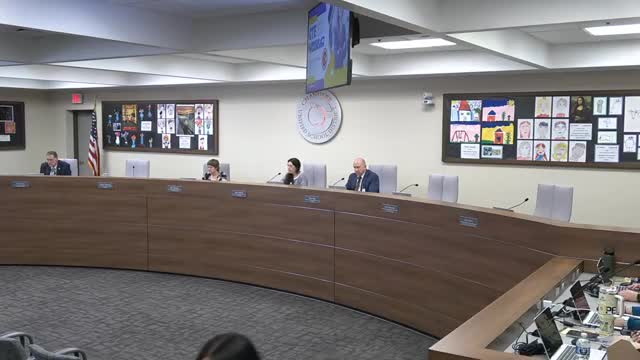
Chandler Unified School District officials on Feb. 26 presented an update on Career and Technical Education (CTE) expansion across K–12 and detailed plans to pilot a two‑year semiconductor technologies program at Hamilton High School.
CTE director Lindsay Duran and Emerging Technologies coordinator Janet Harkoff walked the governing board through a multi‑year, K–12 pathway that the district is rolling out: career awareness in K–5, career exploration in grades 6–8 and CTE professional skills and technical courses in grades 9–12. Doctor Jessica Edgar opened the session describing district work since 2019 to align career literacy standards and to add pilot sites at the elementary and junior‑high levels.
Duran said Chandler currently operates 21 CTE programs across its six high schools and described program design as “more than just a class,” explaining programs are typically two‑year sequences combining core academic knowledge, program‑specific technical skills and professional (employability) standards. She said district funding mixes federal Perkins funds, state CTE funding, CTED funds generated via EVIT partnerships and a governor’s incentive grant that the district has been phasing down. Duran said last year students earned 3,419 industry credentials across CTE programs and that the district subsidizes credential costs (from about $25 up to $2,300 per student depending on the credential).
Janet Harkoff described work begun in 2023 to assemble an advisory panel of more than 25 industry and academic partners — including the University of Arizona, Northern Arizona University partners and major local companies — to develop Chandler’s semiconductor curriculum. Harkoff said the district completed a Local Occupational Program (LOP) filing required by EVIT and the state and signed an MOU with the University of Arizona’s Center for Semiconductor Manufacturing to co‑develop curriculum and materials for a technician pathway modeled on existing community‑college frameworks. Harkoff said the aim is a two‑year technician pathway that includes applied math, root cause analysis, mechatronics, supply‑chain concepts, basic IC manufacturing and cybersecurity fundamentals.
Hamilton High will host the district’s first semiconductor classes next school year, with a program cap of 30 students per cohort and initial shared staffing across semiconductor and a new automation/robotics engineering offering. Harkoff described hands‑on labs, modular classroom design, and an online interactive curriculum being developed with U of A. She said the district is running summer “chips and wafers” camps for rising ninth‑ and tenth‑graders and reported strong community interest: one camp drew almost 100 signups for 40 slots.
Board members asked about internship and co‑op placements. Duran said the district’s workforce development coordinator, Patrick Brown, is building employer relationships and a new capstone course, “Mentorship, Internship and Careers” (the “MyClass” capstone), will support placements and work‑readiness instruction. Duran acknowledged challenges with senior scheduling and “half‑day” students who are less likely to pursue internships during school hours, and said the district is pursuing paid placements where possible but some opportunities will be unpaid depending on the employer.
Harkoff and Duran emphasized that the semiconductor curriculum will be developed to make graduates employable across manufacturing sectors (not only at one firm) and that curriculum and credentialing work is ongoing with industry and higher‑education partners. Harkoff said the district’s advisory is open and that additional industry partners are welcome to join. The board and presenters also discussed enrollment caps, candidate hiring for a teacher with industry background at Hamilton, and the district’s plans to expand junior‑high career exploration offerings to reduce premature specialization.
District staff said funding for CTE programs comes from a mix of Perkins (federal), state CTE priority funds (based on prior year 9–12 CTE enrollment), CTED funds generated through EVIT partnerships and limited governor incentive dollars. Duran noted Perkins allocations in Chandler are lower than in some districts because the formula is tied to county poverty measures rather than district CTE enrollment.
CTE director Lindsay Duran and Emerging Technologies coordinator Janet Harkoff walked the governing board through a multi‑year, K–12 pathway that the district is rolling out: career awareness in K–5, career exploration in grades 6–8 and CTE professional skills and technical courses in grades 9–12. Doctor Jessica Edgar opened the session describing district work since 2019 to align career literacy standards and to add pilot sites at the elementary and junior‑high levels.
Duran said Chandler currently operates 21 CTE programs across its six high schools and described program design as “more than just a class,” explaining programs are typically two‑year sequences combining core academic knowledge, program‑specific technical skills and professional (employability) standards. She said district funding mixes federal Perkins funds, state CTE funding, CTED funds generated via EVIT partnerships and a governor’s incentive grant that the district has been phasing down. Duran said last year students earned 3,419 industry credentials across CTE programs and that the district subsidizes credential costs (from about $25 up to $2,300 per student depending on the credential).
Janet Harkoff described work begun in 2023 to assemble an advisory panel of more than 25 industry and academic partners — including the University of Arizona, Northern Arizona University partners and major local companies — to develop Chandler’s semiconductor curriculum. Harkoff said the district completed a Local Occupational Program (LOP) filing required by EVIT and the state and signed an MOU with the University of Arizona’s Center for Semiconductor Manufacturing to co‑develop curriculum and materials for a technician pathway modeled on existing community‑college frameworks. Harkoff said the aim is a two‑year technician pathway that includes applied math, root cause analysis, mechatronics, supply‑chain concepts, basic IC manufacturing and cybersecurity fundamentals.
Hamilton High will host the district’s first semiconductor classes next school year, with a program cap of 30 students per cohort and initial shared staffing across semiconductor and a new automation/robotics engineering offering. Harkoff described hands‑on labs, modular classroom design, and an online interactive curriculum being developed with U of A. She said the district is running summer “chips and wafers” camps for rising ninth‑ and tenth‑graders and reported strong community interest: one camp drew almost 100 signups for 40 slots.
Board members asked about internship and co‑op placements. Duran said the district’s workforce development coordinator, Patrick Brown, is building employer relationships and a new capstone course, “Mentorship, Internship and Careers” (the “MyClass” capstone), will support placements and work‑readiness instruction. Duran acknowledged challenges with senior scheduling and “half‑day” students who are less likely to pursue internships during school hours, and said the district is pursuing paid placements where possible but some opportunities will be unpaid depending on the employer.
Harkoff and Duran emphasized that the semiconductor curriculum will be developed to make graduates employable across manufacturing sectors (not only at one firm) and that curriculum and credentialing work is ongoing with industry and higher‑education partners. Harkoff said the district’s advisory is open and that additional industry partners are welcome to join. The board and presenters also discussed enrollment caps, candidate hiring for a teacher with industry background at Hamilton, and the district’s plans to expand junior‑high career exploration offerings to reduce premature specialization.
District staff said funding for CTE programs comes from a mix of Perkins (federal), state CTE priority funds (based on prior year 9–12 CTE enrollment), CTED funds generated through EVIT partnerships and limited governor incentive dollars. Duran noted Perkins allocations in Chandler are lower than in some districts because the formula is tied to county poverty measures rather than district CTE enrollment.
Don't Miss a Word: See the Full Meeting!
Go beyond summaries. Unlock every video, transcript, and key insight with a Founder Membership.
✓
Get instant access to full meeting videos
✓
Search and clip any phrase from complete transcripts
✓
Receive AI-powered summaries & custom alerts
✓
Enjoy lifetime, unrestricted access to government data
30-day money-back guarantee
