Sioux Falls School District board acknowledges updated student cell‑phone expectations for 2025–26
May 12, 2025 | Sioux Falls School District 49-5, School Districts, South Dakota
This article was created by AI summarizing key points discussed. AI makes mistakes, so for full details and context, please refer to the video of the full meeting. Please report any errors so we can fix them. Report an error »
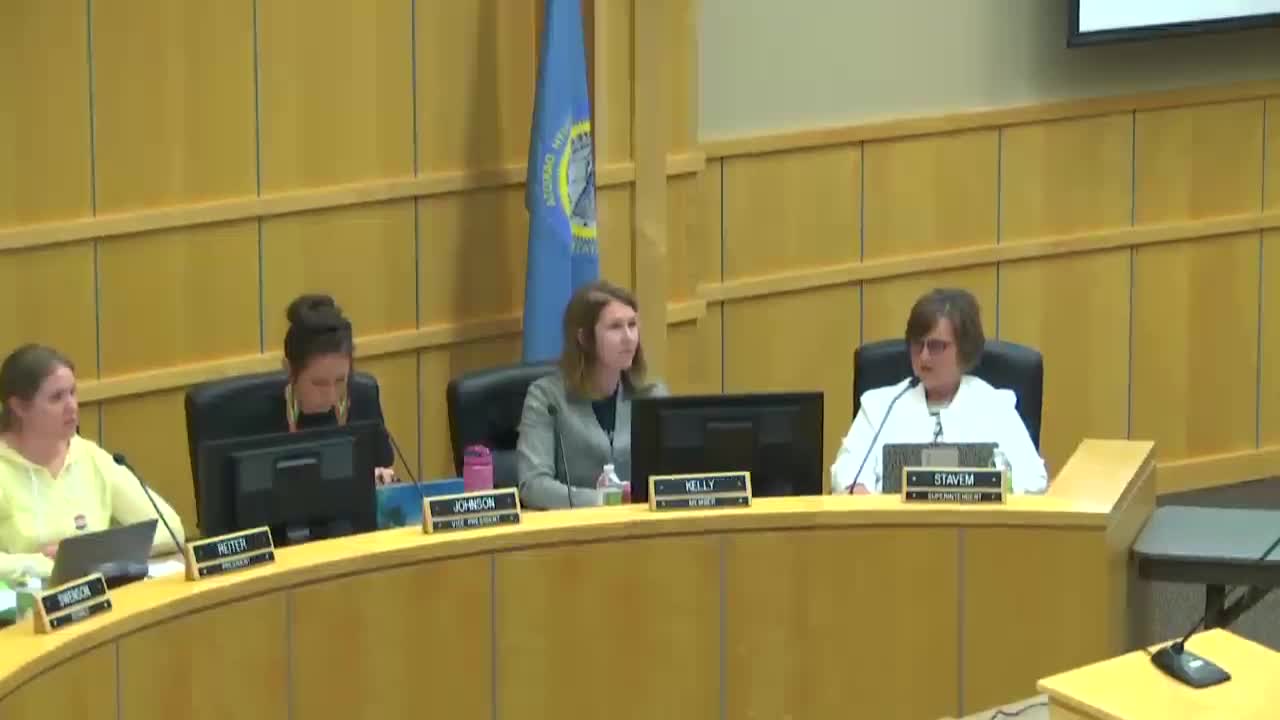
The Sioux Falls School District 49‑5 board acknowledged an administrative update to student cell‑phone expectations for the 2025–26 school year that prohibits phone use in high‑school academic hallways and classrooms but allows students to use phones in the lunchroom during their lunch period.
Superintendent Dr. Knowles presented the update as an administrative recommendation developed by a 36‑member committee that included parents, students, teachers, principals and district administrators and informed by more than 12,000 survey responses. "It is expected that cell phones not be used during the school day," Dr. Knowles said while summarizing the proposed rules for elementary, middle and high schools.
The update leaves elementary and middle‑school expectations unchanged: phones are not to be used during the academic day. The change for high schools removes permitted phone use in academic hallways during the school day but maintains limited use in lunchrooms during a student's assigned lunch period. The district clarified that phone use on school buses is discouraged but would not automatically trigger disciplinary action unless the device was used inappropriately and reported.
Board members who spoke during the discussion said enforcement and consistent communication will be critical. One board member warned that piecemeal enforcement could burden teachers: "Every 50 minutes, teachers are gonna have to be reminding students because they had their phone out for 7 minutes," the member said, urging a workable and enforceable approach. Another board member asked for a midyear report to the board so the district can review how the new expectations are working across schools.
District administrators said building principals will include the updated expectations in handbooks and in direct communications to families. The superintendent noted that if families have urgent messages for students, the parent should contact the school office for staff to relay the information, and that students have Chromebooks that can be used for non‑phone communication when appropriate.
A motion to acknowledge the update was made and seconded; the board approved the acknowledgment by voice vote. The motion was recorded as a voice vote and no roll‑call tally was specified.
Board members asked the administration to monitor implementation and report back if enforcement problems arise or if adjustments are needed.
Superintendent Dr. Knowles presented the update as an administrative recommendation developed by a 36‑member committee that included parents, students, teachers, principals and district administrators and informed by more than 12,000 survey responses. "It is expected that cell phones not be used during the school day," Dr. Knowles said while summarizing the proposed rules for elementary, middle and high schools.
The update leaves elementary and middle‑school expectations unchanged: phones are not to be used during the academic day. The change for high schools removes permitted phone use in academic hallways during the school day but maintains limited use in lunchrooms during a student's assigned lunch period. The district clarified that phone use on school buses is discouraged but would not automatically trigger disciplinary action unless the device was used inappropriately and reported.
Board members who spoke during the discussion said enforcement and consistent communication will be critical. One board member warned that piecemeal enforcement could burden teachers: "Every 50 minutes, teachers are gonna have to be reminding students because they had their phone out for 7 minutes," the member said, urging a workable and enforceable approach. Another board member asked for a midyear report to the board so the district can review how the new expectations are working across schools.
District administrators said building principals will include the updated expectations in handbooks and in direct communications to families. The superintendent noted that if families have urgent messages for students, the parent should contact the school office for staff to relay the information, and that students have Chromebooks that can be used for non‑phone communication when appropriate.
A motion to acknowledge the update was made and seconded; the board approved the acknowledgment by voice vote. The motion was recorded as a voice vote and no roll‑call tally was specified.
Board members asked the administration to monitor implementation and report back if enforcement problems arise or if adjustments are needed.
Don't Miss a Word: See the Full Meeting!
Go beyond summaries. Unlock every video, transcript, and key insight with a Founder Membership.
✓
Get instant access to full meeting videos
✓
Search and clip any phrase from complete transcripts
✓
Receive AI-powered summaries & custom alerts
✓
Enjoy lifetime, unrestricted access to government data
30-day money-back guarantee
